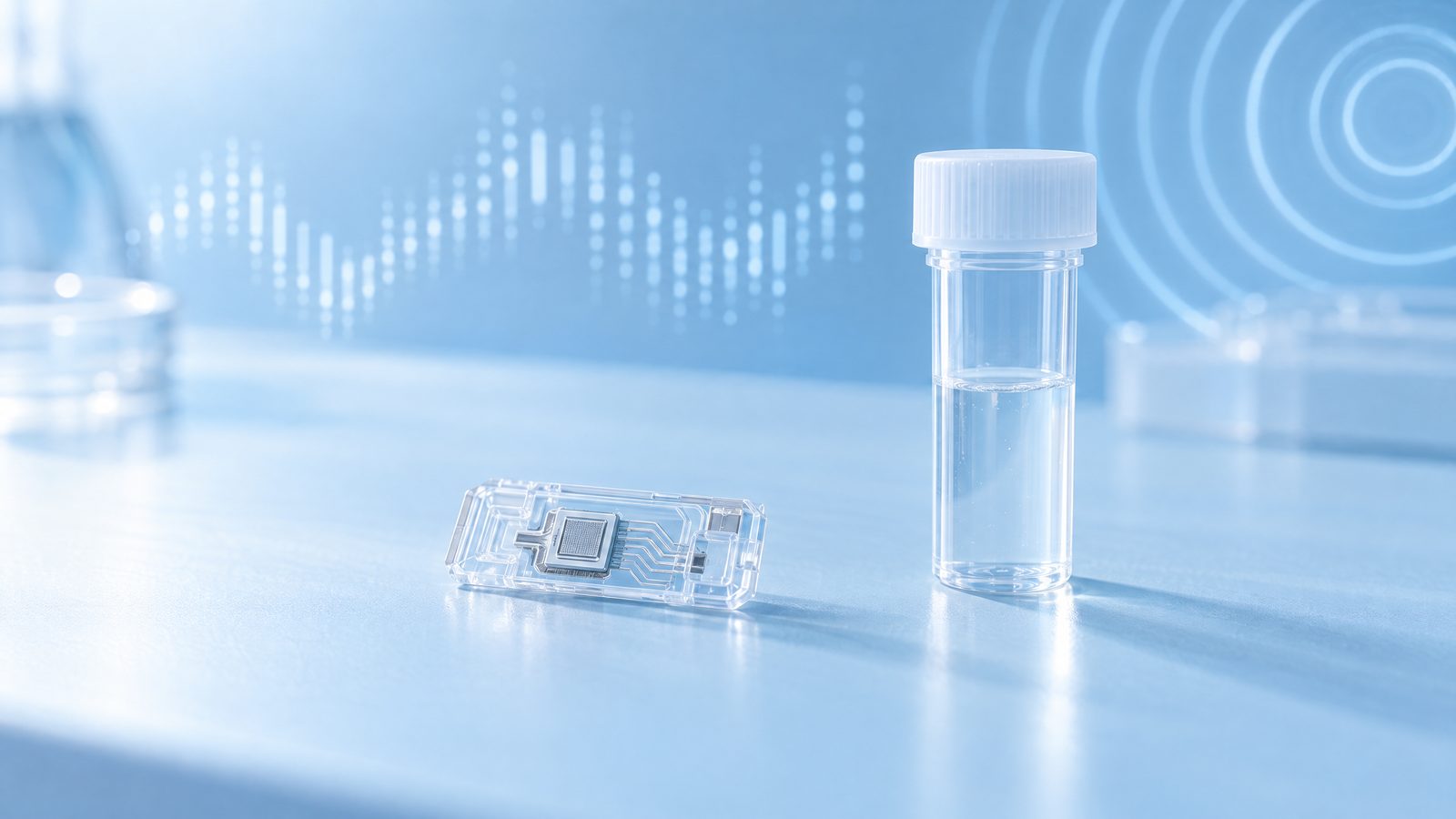

London health-technology startup Unravel Health has announced €2.96 million (£2.5 million) in funding to advance the Micro Lab, a proposed palm-sized device designed to read multiple hormones from a saliva sample at home.
The company says the device is being developed to produce results in minutes and to support repeated measurement over time, rather than a single laboratory result. Its initial focus is women’s hormone health, an area in which people may seek to understand changes associated with different life stages and symptoms. The announcement does not say that the device has received regulatory clearance or that it can diagnose or treat any condition.
Moving beyond a single test
Unravel Health says the Micro Lab is being built to measure oestradiol, the main form of oestrogen, alongside three other hormones at the same time. The company’s case for repeated testing is that hormone concentrations can change from day to day, while a conventional blood test captures one point in time. A saliva-based format, it says, could make it easier to collect a sequence of readings without a blood draw.
That is the intended use, not a proven outcome. The company says its biosensor technology grew out of nearly a decade of research at the University of Glasgow and is covered by three granted patents. Its own website describes a saliva-based sensor with trace-level sensitivity and longitudinal tracking, but it does not publish evidence here that establishes a particular clinical use or performance threshold for the planned consumer device.
The distinction is important as the business moves from a technical platform towards a product. Being able to detect an analyte, provide a result consistently, explain what that result means and meet the requirements for a particular market are related but separate tasks. The new funding is intended to address some of those practical stages.
Studies, additional markers and regulatory work
Unravel Health says the money will pay for external equivalency studies, development of additional markers and the start of its regulatory approval process. External studies should provide a more independent test of how the system’s results compare with the method chosen for assessment. The announcement does not identify a regulator, territory, clinical claim or clearance timetable, so it would be premature to treat regulatory work as approval.
The announced €2.96 million is the headline size of the financing. The company said it completed a first close of more than €2.36 million (£2 million) on 14 October and expected to complete the round with final investors in the coming weeks. That means the first-close figure and the total announced round should not be treated as the same number.
Conduit EIS Impact Fund and Wrightwood led the investment, with Leo Capital, Embryo Ventures and Hermesa also participating, alongside returning investor Zinc VC. The financing follows more than €1.18 million (£1 million) in prior support from Innovate UK, the Medical Research Council, SBRI, strategic angels and Zinc, according to the company’s announcement. Those earlier funds are a separate cumulative baseline, rather than part of the newly announced round.
Early access remains a 2027 target
The company’s stated next commercial milestone is a first group of early-access devices in 2027, working through partners in pharmacy, digital health and clinical research. It has not set out which partners will distribute the devices, how many will be available or where they will be offered. The 2027 date is therefore a development target rather than a confirmed public launch.
For a young company, the significance of the financing lies less in an immediate retail product than in the sequence it enables: further technical development, external comparison work and regulatory preparation. If those stages progress as planned, the Micro Lab could give researchers and users a way to build a more detailed record of hormone patterns at home. For now, the company is presenting that as the purpose of a device still under development, not as an established medical service.