
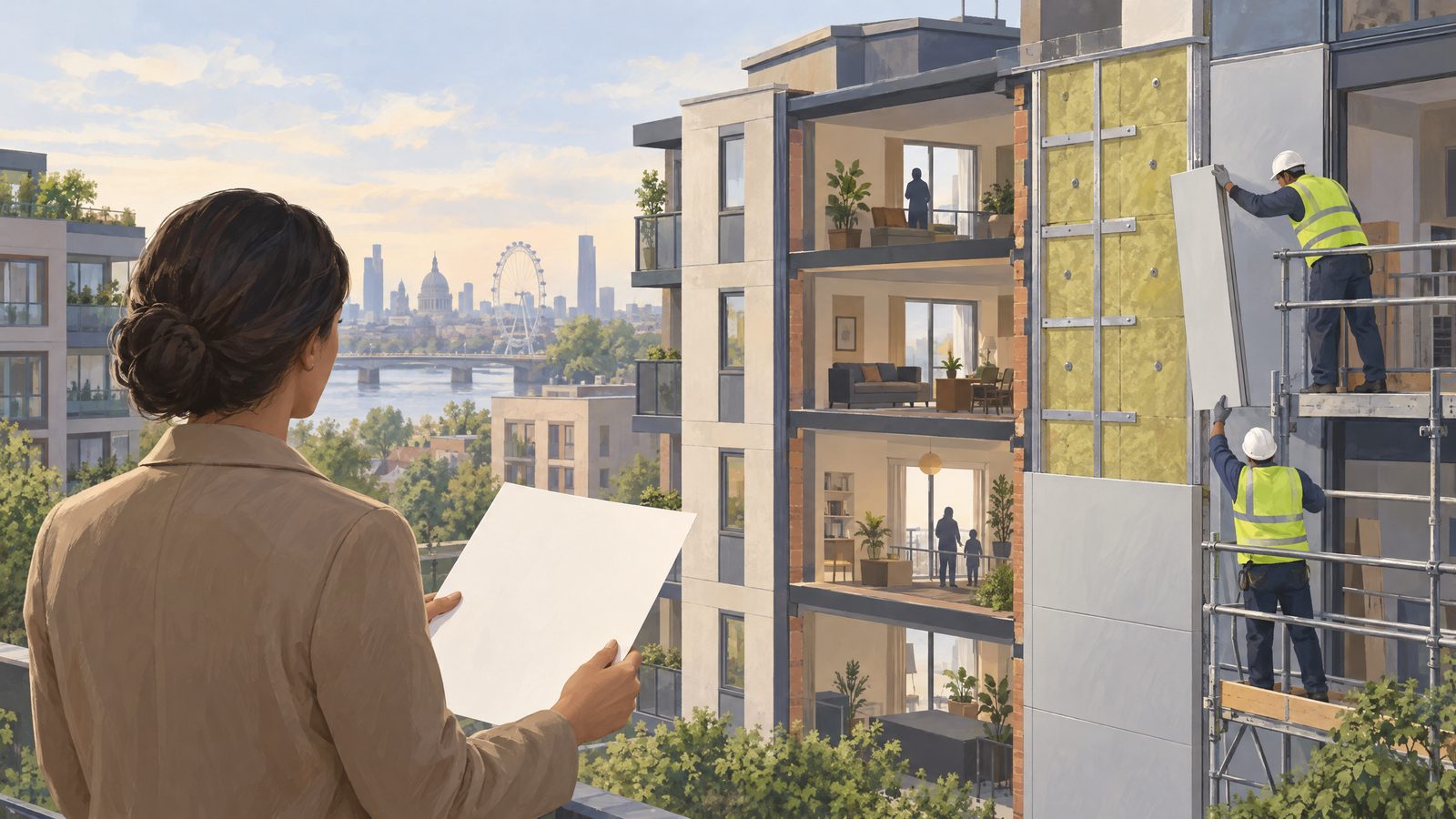

A new Bill to speed up the assessment and repair of unsafe external cladding has been introduced to Parliament, proposing legal duties for those responsible for affected residential buildings and stronger routes for enforcement. The Building Safety (Remediation of Unsafe Cladding etc) Bill is legislation under consideration, not a law already in force.
The Bill was introduced on 14 October. Its proposals cover buildings in England and are intended to address delays in identifying buildings that need work, deciding what should be done and ensuring remediation is carried out. Residents’ eventual protections will depend on Parliament’s consideration of the text and any later implementation measures.
Proposed duties and a building register
The legislation would require a register of residential buildings between 11 and 18 metres high in England. Those responsible for the buildings would have to arrange assessments of external-wall fire risks within 12 months of the legislation coming into force. Assessments would follow a consistent approach and be subject to auditing, according to the accompanying government guide.
A separate proposed legal duty would apply to responsible entities for multi-occupied residential buildings above 11 metres or with at least five storeys, completed before 28 June 2022. The guide says the duty would require assessment and remediation of life-critical external-wall fire-safety risks in line with assessment recommendations. It describes exceptions, including buildings covered by the Developer Remediation Contract, where equivalent requirements already apply. The register’s 11-to-18-metre scope and the proposed remediation duty therefore are not identical.
Where work is recommended, responsible entities would have to give residents a plan setting out steps and proposed timescales. The intended effect is to make the required work and responsibility clearer, but the Bill does not mean every building has already been assessed or repaired. The government guide says some measures would need secondary legislation, anticipated within a year of Royal Assent.
Enforcement and a last-resort route
The proposal would strengthen the ability of regulators to act when those responsible fail to meet remediation obligations. The government announcement says obstruction could attract criminal penalties and that the First-tier Tribunal could impose financial penalties of up to £500,000 for failure to comply with a Remediation Order. These are proposed powers, not penalties that have already been imposed under this Bill.
For cases where a building has no effective owner or a responsible party persistently fails to act, the Bill would create a last-resort route for a public authority to undertake remediation. A tribunal could use a remediation management order to let a relevant authority take control of the work and recover costs from the responsible party. Homes England or a local authority are among the examples identified in the government’s announcement. The measure is designed as a backstop; it is not a promise that authorities will immediately take over every delayed project.
The Bill also proposes changes intended to make it easier for claims to be brought against manufacturers whose unsafe construction products contributed to a building being unsafe. Developers and other parties that have paid for safety work could gain a simpler route to seek recovery of costs. The government says more than £5 billion has been committed to remediation in England, while manufacturers have yet to contribute; those figures and the case for change are the government’s account.
What happens next
Parliament must scrutinise the proposed provisions before they can become law. The Bill’s introduction marks a legislative step, but its requirements do not take effect simply because it has been presented. Royal Assent, commencement arrangements and, for some measures, further regulations would be needed. Details may also change as the Bill progresses.
The government says more than 470 additional buildings have completed cladding remediation since its Remediation Acceleration Plan was published, helping around 35,000 residents. It also estimates that the Bill could accelerate remediation for around 12,000 residents, including about 3,000 in buildings that might benefit from the proposed backstop. Those are reported progress figures and projections, not a guarantee of when any particular building will be made safe.







