

Residents in several Venezuelan states have taken to the streets after prolonged electricity cuts, blocking roads and banging pots to demand a more reliable supply.
In Los Guayos, in the central state of Carabobo, residents said they had been without electricity for about a day before demonstrating on the night of 3 November. People blocked main roads and sounded pots and pans in a form of protest known as a cacerolazo.
Residents in western Barquisimeto, in Lara, also protested against repeated rationing, which they said could last up to 12 hours a day. Protests took place in Aragua and Cojedes too, although the full list of states affected has not been established.
The demonstrations were local. A comprehensive official tally of the outages and protests was not available, and it is not established how many people were affected or whether every area lost power at the same time.
Pressure on healthcare and water
In Guanare, the capital of Portuguesa state, opposition activist María Oropeza said a power cut interrupted treatment at a haemodialysis unit. She said patients who had been connected from 11pm were taken off the machines with around an hour and a half of treatment remaining. Their subsequent medical outcomes are not established.
Residents of Villa Araure II in Portuguesa also blocked a road with burning tyres and banged pots on 3 November. They said they had been without electricity for more than 12 consecutive hours.
Electricity problems have coincided with disruption to water services. Darwin González, mayor of Baruta, said power failures had left two water supply systems serving the Caracas area operating at very low pressure. In Valencia, residents also reported a loss of water service linked to the effect of voltage fluctuations on pumping systems.
A longer-running crisis
The latest demonstrations follow months of protests over electricity and other services. The Venezuelan Observatory of Social Conflict, a civil-society group that monitors social conflict, documented 1,101 protests across the country in September 2026. It said 531 of them concerned electricity cuts or related problems; the total included demonstrations about other issues as well.
The group said prolonged interruptions and voltage fluctuations affected activities including work, access to water and the preservation of food and medicines. It also recorded 376 protests at night during September, many connected to electricity cuts. Those figures describe the monitor’s documented cases for an earlier month, not the number of protests this week.
Venezuelan authorities have announced plans intended to improve the system. In late September, electricity minister Rolando Alcalá said the government planned to add 1,300 megawatts of generating capacity during the final quarter of 2026, as part of efforts to reduce interruptions. The plan includes work at thermal and hydroelectric facilities.
The target was a government promise, not confirmation that the capacity had already been added or that the affected communities would immediately see an improvement. Officials have also pointed to high temperatures and rising demand, while critics have raised concerns about maintenance and investment in the electricity system.
For the communities that protested this week, the immediate demand is for supply to be restored and made more dependable. A full restoration timetable for the affected areas was not available.
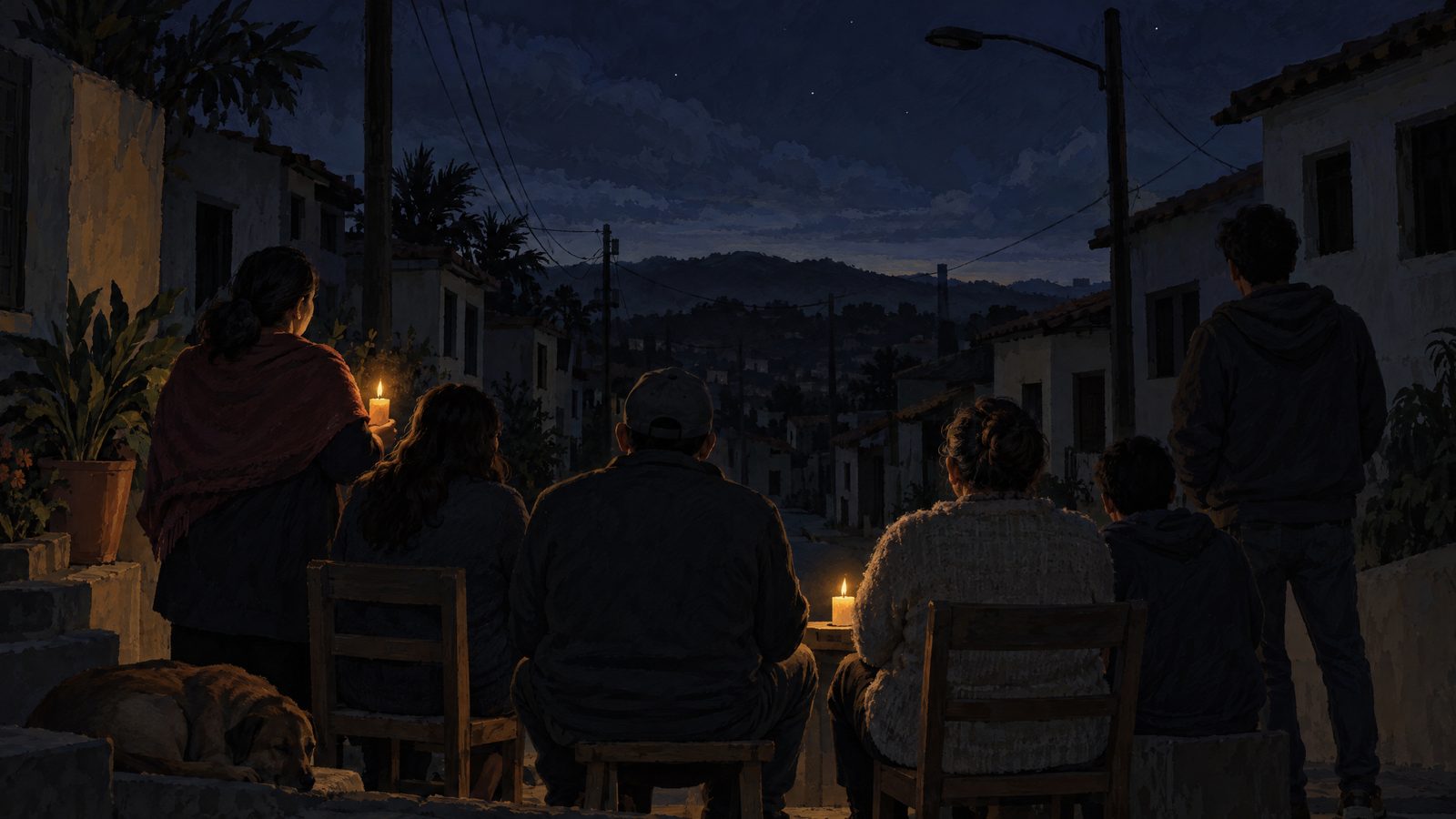
Featured image: AI-generated illustration.







