
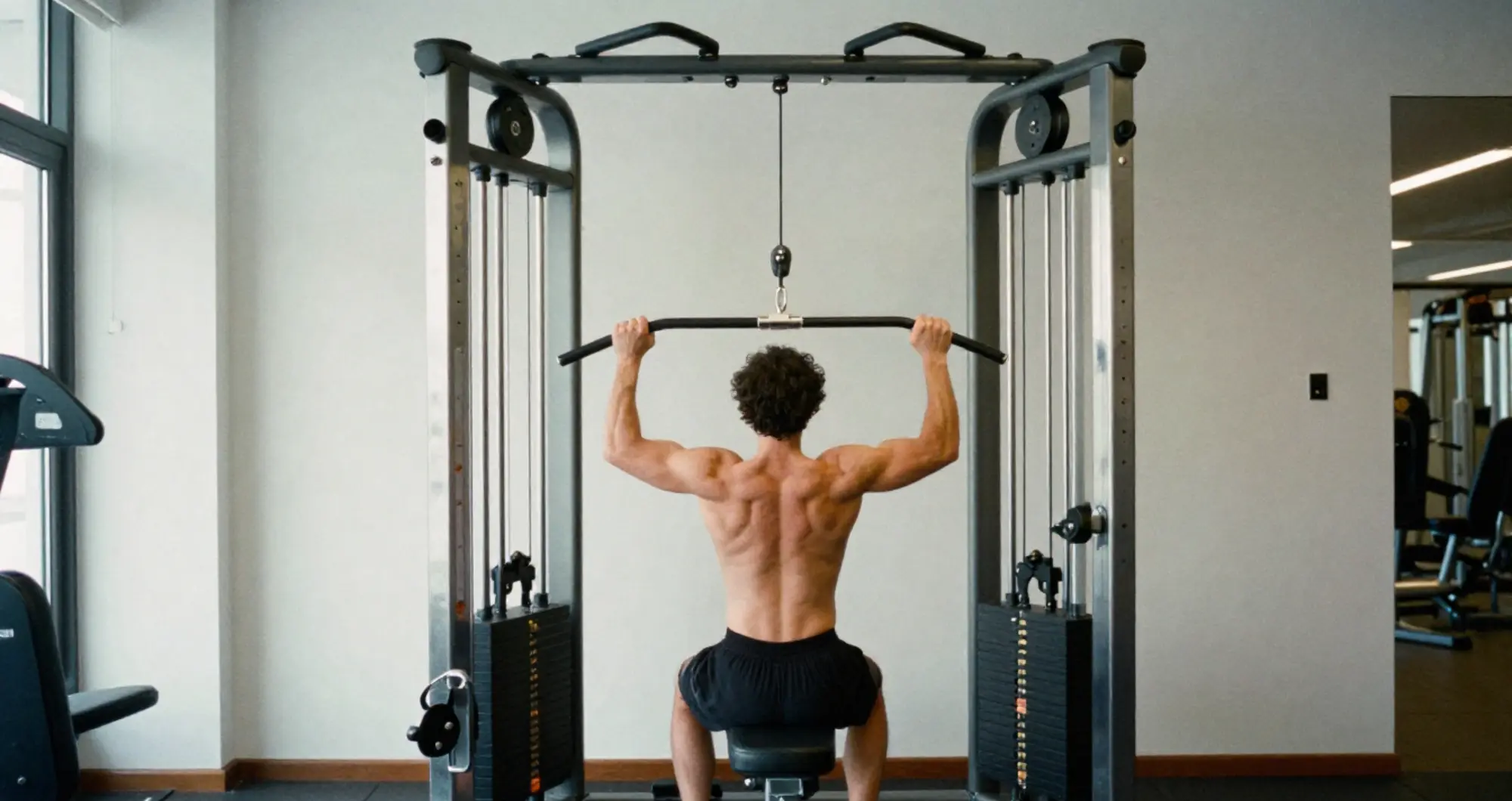

The home gym revolution has accelerated dramatically in recent years, with millions of fitness enthusiasts transforming spare rooms, garages, and even closets into personal training spaces. Yet two persistent challenges remain for those who work out at home: limited square footage and the absence of a coach providing real-time feedback on exercise form. Without professional guidance, poor technique can go unchecked, increasing injury risk and limiting progress. Adjustable barbells have emerged as a versatile solution that directly addresses both concerns. By consolidating an entire rack of weights into a single, compact system, they free up valuable floor space while enabling precise load adjustments that help users self-correct their lifting mechanics. This article explores why adjustable barbells are uniquely suited to the home gym environment, examining their space-saving design, their adaptability across weight training disciplines, and their surprising role in facilitating feedback correction for solo lifters striving to perfect their form.
The Evolution of Home Gym Equipment and Core Needs
The shift toward home fitness didn’t happen overnight. For decades, dedicated exercisers relied on commercial gyms for access to comprehensive equipment collections. But rising membership costs, commute times, and the desire for workout flexibility gradually pushed people toward building personal training spaces. The pandemic accelerated this trend exponentially, and even as public gyms reopened, millions discovered they preferred the convenience and privacy of exercising at home. This surge in demand reshaped the fitness equipment market, driving manufacturers to develop solutions tailored specifically to residential environments.
Home gym users consistently identify two core needs above all others. First, space efficiency matters enormously when your training area doubles as a living space or shares square footage with a parked car. Every piece of gym equipment must justify its footprint. Second, solo lifters need reliable methods for feedback correction since no trainer is watching their deadlift descent or monitoring their overhead press alignment. Without immediate cues to fix technique errors, bad habits solidify quickly. Adjustable barbells address both demands simultaneously, functioning as a multifunctional tool that replaces entire weight collections while enabling the precise, incremental loading that helps individuals self-assess and refine their movement patterns during weight training sessions.
Space Efficiency: How Adjustable Barbells Maximise Your Home Gym
Consider what a complete fixed-weight barbell collection actually looks like: dozens of bars pre-loaded at different weights, each demanding its own storage space on a rack that stretches several feet wide and deep. For a commercial facility with thousands of square feet, this arrangement works fine. For a home gym carved out of a spare bedroom or a single-car garage, it’s simply impractical. Adjustable barbells collapse that entire collection into one bar and a set of modular plates or a dial-based mechanism that occupies roughly the footprint of a single piece of gym equipment.
The space savings extend beyond the barbell itself. When you eliminate the need for a full-size weight rack, you reclaim floor area for movement-based exercises, stretching, or additional equipment like a bench or pull-up station. Many adjustable systems store vertically or tuck against a wall when not in use, making them compatible with multipurpose rooms that serve as offices or living spaces during non-training hours. This versatility means you can design a functional training environment in areas as small as six feet by six feet, provided the ceiling height accommodates overhead movements.
Comparing Adjustable vs. Fixed Barbells for Space Savings
A typical adjustable barbell system covering a range from 20 to 100-plus pounds replaces what would otherwise be eight to twelve individual fixed bars. The modularity of plate-loaded or selectorized designs means one compact station does the work of an entire gym equipment wall. Rather than navigating around cluttered weight trees, you simply rotate a dial, slide a pin, or swap plates in seconds—keeping your training area open and organised without sacrificing the load variety serious lifters require.
Weight Training Versatility with Adjustable Barbells
One of the most compelling reasons adjustable barbells thrive in home gyms is their ability to support an extraordinarily wide range of weight training protocols without requiring separate equipment for each approach. A single adjustable barbell transitions seamlessly from heavy compound lifts demanding maximum load to lighter, high-repetition endurance sets—all within the same workout session. This flexibility mirrors what you’d find in a fully equipped commercial facility, compressed into one adaptable tool.
The speed of resistance changes matters more than most people realise. When performing supersets or drop sets, the ability to shed or add weight in seconds keeps your heart rate elevated and maintains workout intensity. Traditional plate-loaded bars require fumbling with collars and swapping heavy discs between sets, which disrupts training flow and extends session length unnecessarily. Modern adjustable barbells with dial or pin-selector mechanisms eliminate this friction, letting you shift from a heavy set of five to a burnout set of fifteen in under ten seconds. This rapid transition capability transforms how you structure weight training at home, enabling programming techniques that previously required a training partner or multiple pre-loaded bars.
Progressive overload—the foundational principle of strength development—also becomes more manageable with fine-tuned increments. Many adjustable systems offer jumps as small as 2.5 pounds, allowing you to increase load gradually without the dramatic leaps that fixed-weight collections often impose. Smaller increments reduce the temptation to lift beyond your current capacity, which directly supports both long-term strength gains and injury prevention.
Key Exercises Enhanced by Adjustable Resistance
Squats benefit enormously from micro-loading, as lower-body strength develops incrementally and demands precise progression. Overhead presses, notoriously sensitive to weight jumps, become more approachable when you can add just a couple of pounds per session rather than five or ten. Bent-over rows allow you to find the exact resistance where your back muscles engage fully without your lower back compensating. Even Romanian deadlifts and lunges gain new training dimensions when you can fine-tune the load to match each leg’s individual capacity, addressing imbalances that fixed-weight options often mask.
Feedback Correction: Improving Exercise Form with Adjustable Barbells
For solo lifters without a coach watching every repetition, feedback correction becomes a self-directed process—and adjustable barbells make this process far more effective than most people realise. The fundamental principle is simple: when weight exceeds your ability to maintain proper mechanics, your body compensates with faulty movement patterns. By controlling load with surgical precision, adjustable barbells let you identify exactly where your form breaks down and address those weaknesses systematically.
Think of incremental weight adjustment as a diagnostic tool. When you add just 2.5 pounds to your bench press and suddenly notice your elbows flaring or your lower back arching off the pad, you’ve found your current technical threshold. This immediate, physical feedback tells you something no mirror alone can reveal—it exposes the gap between what your muscles can handle with proper form and what they cannot. Fixed-weight jumps of five or ten pounds often overshoot this threshold entirely, making it impossible to pinpoint where technique deteriorates. Adjustable barbells create a gradient of challenge that functions like a built-in feedback correction system, giving you real-time information about your movement quality through the sensation of the lift itself.
This approach also builds body awareness over time. As you train consistently with precise loads, you develop an internal sense for when a rep feels mechanically sound versus when compensations creep in. That kinesthetic intelligence becomes your personal coach, alerting you to form deviations before they become ingrained habits or lead to injury. Some smart home gym systems, like those offered by Speediance, take this concept further by integrating digital feedback mechanisms that track your movement patterns and provide real-time form cues alongside adjustable resistance.
Step-by-Step Guide to Self-Correction Techniques
Start each exercise at roughly sixty percent of your estimated maximum, focusing entirely on movement quality rather than load. Record yourself from the side and front angles using a phone propped on a stable surface. Perform three to five reps, then review the footage for common deviations—knee cave during squats, excessive forward lean in presses, or rounded shoulders during rows. Add weight in the smallest available increment and repeat, filming again at each new load. When you spot the first sign of form breakdown, dial back one increment and train at that weight until the movement feels automatic. Revisit your recordings weekly to track improvements, and only progress the load when your technique remains clean across all repetitions. This methodical process transforms your adjustable barbell into both training tool and feedback mechanism, replacing the external eye of a coach with objective visual evidence paired with precise load management.
Choosing and Implementing the Right Adjustable Barbell
Selecting an adjustable barbell that genuinely serves your training goals requires looking beyond marketing claims and focusing on how the equipment will perform under real-world use in your home gym. The weight range should match both your current strength level and where you reasonably expect to be in two to three years. A system that maxes out too quickly forces you to purchase additional equipment, negating the space and cost advantages that drew you to adjustable barbells in the first place. Conversely, a system with excessive maximum capacity that you’ll never approach adds unnecessary bulk and complexity.
The adjustment mechanism deserves careful consideration because it directly affects your workout flow. Dial-based systems offer the fastest transitions, ideal for drop sets and circuit-style training. Pin-selector designs provide a satisfying mechanical simplicity with fewer parts that could wear over time. Traditional plate-loaded adjustable barbells with spin-lock collars cost less upfront but require more time between weight changes, which may disrupt intensity-dependent programming. Whichever system you choose, test the adjustment mechanism mentally against your typical training session—if you frequently change loads mid-workout, speed of transition should rank high in your priorities.
Integration into your existing space matters as much as the barbell itself. Measure your available floor area and ceiling height before purchasing, ensuring you can perform overhead movements safely. Position your adjustable barbell station near a wall-mounted mirror or camera setup to support the feedback correction techniques discussed earlier, creating a cohesive training environment where form monitoring happens naturally alongside every set.
Key Features to Consider for Optimal Use
Prioritise bar construction from materials that resist bending under heavy loads—steel cores with comfortable knurling patterns prevent slipping during sweaty sessions. Safety locks should engage positively and audibly, confirming that plates are secure before you lift. Check compatibility with standard or Olympic plate sizes if you plan to expand your collection later. For maintenance, wipe down adjustment mechanisms after each session to prevent sweat corrosion, inspect locking pins monthly for wear, and store the system in a dry environment to preserve longevity across years of consistent use.
Why Adjustable Barbells Are the Ultimate Home Gym Investment
Adjustable barbells represent one of the smartest investments a home gym owner can make, addressing the fundamental challenges that solo lifters face every training session. Their space-efficient design eliminates the need for sprawling weight collections, freeing up precious square footage in rooms that often serve multiple purposes beyond fitness. Their versatility across weight training disciplines—from heavy compound movements to precise isolation work—means a single piece of equipment supports every phase of your programming without compromise. Perhaps most importantly, their fine-tuned load adjustments create a built-in feedback correction system that helps you identify technical breakdowns, refine your movement patterns, and progress safely without a coach standing beside you. Together, these advantages make adjustable barbells uniquely aligned with the realities of training at home, where space is limited, budgets matter, and self-reliance defines your fitness journey. If you’re building or upgrading a home gym, prioritise an adjustable barbell that matches your current strength and future ambitions—it will likely become the single most-used piece of equipment in your training space for years to come.







