

Sleep expert and TEDx speaker, James Leinhardt, explains how sleep quality directly impacts mental wellbeing:
Around Mental Health Awareness Week, we talk a lot about stress and anxiety (and rightly so), but one of the most overlooked contributors is poor sleep. It’s also one of the most practical ways people can support their mental health on a daily basis, yet it’s usually the first thing to slip when life gets busy. When we don’t get consistent, high-quality rest, the brain struggles to regulate emotions, making us more reactive, more irrational, more anxious, and ultimately less able to deal with everyday pressures.
With increasing work and social commitments, a lot of people aren’t giving themselves a proper chance to wind down. We’re spending more time on screens and working irregular hours, meaning we’re going to bed tired but wired. This makes good-quality sleep much harder to achieve. What I see all the time is people trying to manage stress during the day with things like exercise or supplements, while running on empty. If you’re starting the day sleep-deprived, you’re already on the back foot.
That’s why sleep needs to be seen as a foundation, not an afterthought. We’re losing over 22 million working days a year to stress, depression and anxiety, according to the Health and Safety Executive (2024/25). While there’s no single solution, improving sleep is one of the simplest places to start. One of the biggest misconceptions is that sleep is just about how long you’re in bed. We can get really bogged down in tracking hours but this isn’t what it’s all about. You can get seven or eight hours and still wake up exhausted if your body hasn’t properly switched off and recovered.
Small, consistent changes can make a real difference. Sleep position is especially important, as it can significantly affect sleep quality. When your body is supported properly at night, you’re more likely to sleep deeply and wake up feeling genuinely restored, which has a direct impact on how you feel and function the next day.
The benefits of optimising your sleep posture could include:
- Reduced chronic pain
- Improved circulation and digestion
- Less tension through the neck, shoulders and spine
- Improved mental health through lower stress and anxiety
Many people don’t realise their sleep is the issue until it’s pointed out. Some of the signs I tell people to look for include waking up still feeling tired, increased irritability, difficulty concentrating, or finding everyday tasks more overwhelming than usual. If that sounds familiar, it’s often not just stress-related; it can be the impact of poor quality sleep. The good news is you don’t need to overhaul your entire routine to see benefits. Start with a few simple changes:
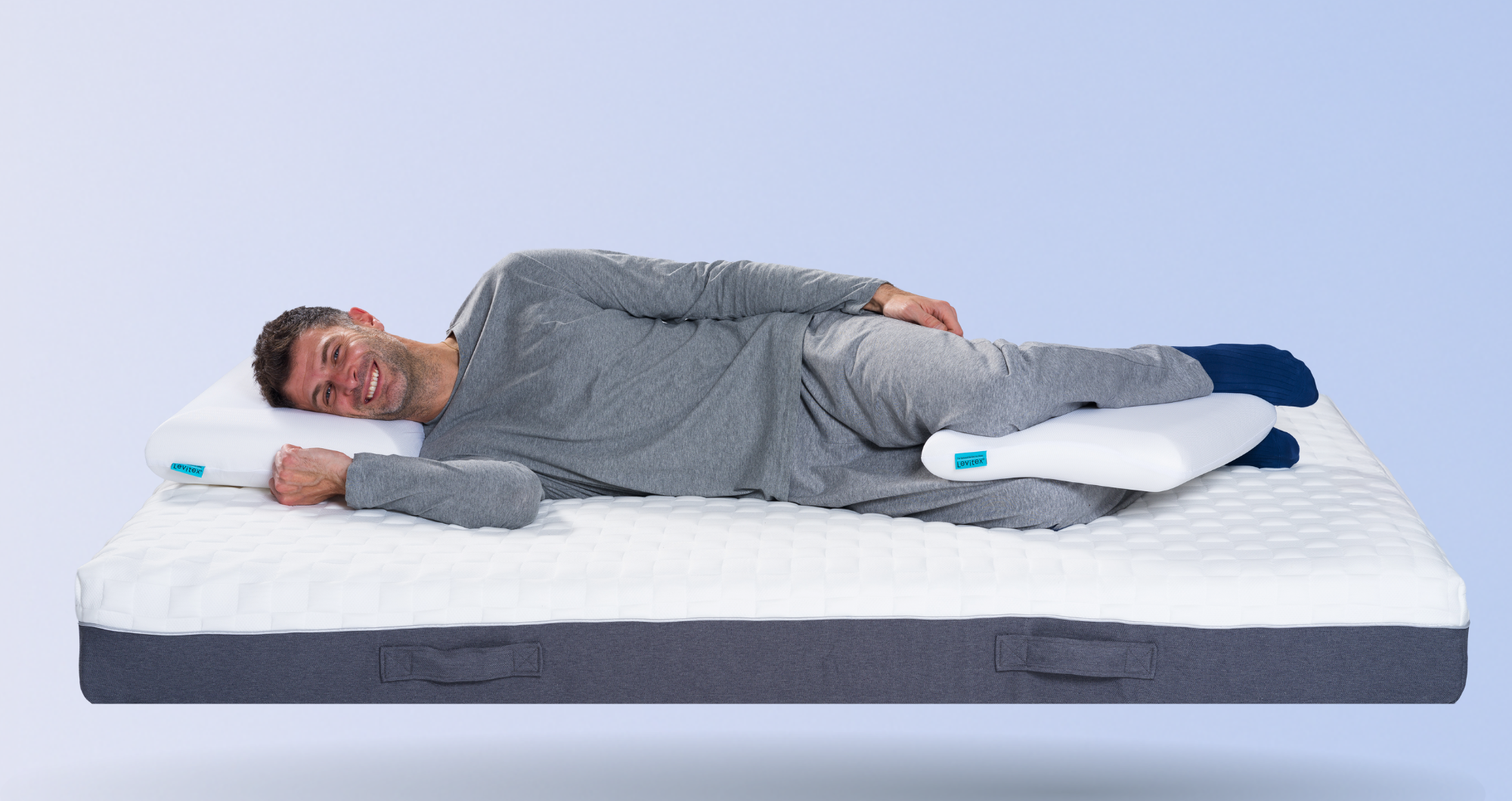
- Focus on alignment: Make sure your spine is supported. Something as simple as adding a pillow between your knees and ankles or under your knees can reduce physical tension and help the body relax.
- Keep a consistent sleep schedule: Going to bed and waking up at roughly the same time each day helps regulate your body clock, which plays a key role in mood.
- Create a wind-down routine: Reducing screen time and giving your mind a chance to slow down before bed can improve both sleep quality and how you feel the next day.
There are two sleeping positions that I recommend, which I like to call ‘the Dreamer’ and ‘the Soldier.

The Dreamer is when you lie in the semi-foetal position with your knees bent. This is well evidenced to put the least amount of tension through your spine whilst you sleep. If you can sleep with a pillow in between your knees and ankles, that’s even better, as it will help keep you aligned through the spine and is brilliant for better posture and rest. Think of a good seating posture – the Dreamer is the same, just on your bed.

The Soldier involves sleeping on your back with a pillow under your knees, ensuring your spine stays in an optimum, straight position, ultimately reducing morning aches, fatigue and improving your overall sleep quality. Think of a good standing posture – it’s the same, just on your bed.
At the end of the day, sleep shouldn’t be a luxury. It’s the foundation everything else relies on. If we’re serious about improving mental health, we can’t afford to ignore it. Improving sleep quality, starting with something as simple as sleep position, is one of the most accessible ways people can support themselves day to day and see lasting benefits.







