
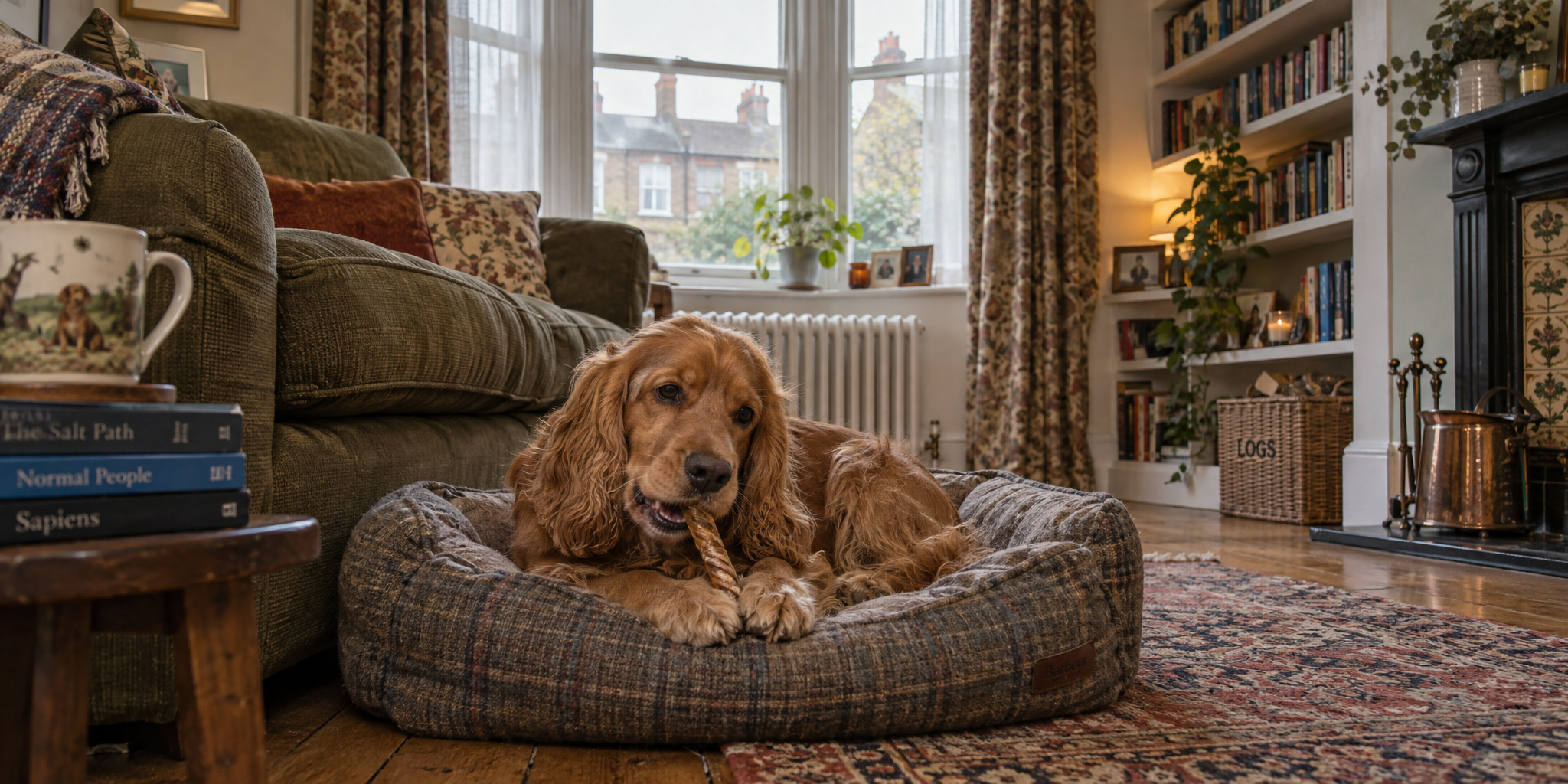

A dog bed is furniture. It occupies floor space, it affects the appearance of a room, and it is used every day by a member of the household. Yet it is rarely chosen with the care that a sofa or an armchair receives. It is bought in a hurry, replaced when it falls apart, and tolerated rather than designed for.
This is a small oversight with a large effect. The dog bed determines where the dog sleeps, how comfortable it is, and how much of the home it occupies. It also determines how the room looks, and how much hair, mud, and wear the rest of the furniture absorbs.
The Function Beyond Sleeping
A dog bed is not only a place to sleep. It is a place of retreat, a boundary, and a piece of behavioural infrastructure. They regard this as a safe place to enjoy their chews or dog treats, where they are left alone.
Dogs need somewhere to withdraw to when the household is busy, when visitors arrive, or when they simply want to be left alone. A bed provides that. It gives the dog a defined space that is theirs, which reduces anxiety and provides a place to settle.
This matters for training and for behaviour. A dog with a reliable bed is easier to settle, easier to leave, and less likely to claim the sofa or the armchair as its own. The bed is the alternative, and it works only if the bed is comfortable and well placed.
The Comfort Question
Dogs are not small humans, and their comfort needs differ.
A dog’s body loses heat quickly when it is lying still, particularly in winter. A thin bed on a cold floor provides little insulation, and an older dog with stiff joints may struggle to settle on a hard surface. A supportive, insulating bed makes a genuine difference to comfort, particularly for elderly animals or those with arthritis.
The right bed depends on the dog. A young, healthy dog may prefer a simple mattress. An older dog may need orthopaedic foam and a low-sided design for easy access. A dog that likes to burrow may prefer a bed with sides. A dog that sprawls may prefer a flat mat.
Choosing a bed that suits the dog is not indulgence. It is basic care.
The Design Question
The dog bed is also a design decision, and it is usually made badly.
Most dog beds are chosen for price and size, with little thought to how they look in the room. The result is a brightly coloured, synthetic object that clashes with the decor and draws the eye for the wrong reasons.
This is changing. Dog beds are now available in fabrics and finishes that suit the home: woven textiles, neutral tones, timber frames, and designs that look like furniture rather than pet accessories. A well-chosen bed can sit in a living room without dominating it, and it can be chosen to match the sofa or the rug rather than fight with them.
The bed is, after all, in the room. It might as well look as though it belongs there.
The Placement Question
Where the bed goes matters as much as what it looks like.
A dog bed placed in a draught, in a thoroughfare, or in the middle of the room will not be used. A bed placed in a quiet corner, away from the door but within sight of the household, will be. Dogs want to be near their people, but they also want somewhere calm.
The bed should be positioned where the dog can settle without being disturbed, and where it can see the room without being in the middle of it. It should be away from radiators and draughts, and on a surface that is not cold.
In a small home, the bed may need to be placed in the room where the household spends most time, which means its appearance matters more, not less.
The Practical Considerations
A few practical points deserve attention.
Washability. Dog beds get dirty. Covers should be removable and machine washable, and the filling should tolerate washing or be replaceable.
Durability. A dog that chews or scratches will destroy a flimsy bed quickly. Look for sturdy fabrics, reinforced seams, and, for determined chewers, beds designed for the purpose.
Size. The bed should be large enough for the dog to stretch out fully, and not so large that it dominates the room.
Waterproofing. For older dogs or those prone to accidents, a waterproof liner protects the filling.
Non-slip base. A bed that slides across a hard floor is uncomfortable and unsafe. A non-slip base keeps it in place.
The Final Thought
The dog bed is the most overlooked piece of furniture in the home because it is chosen for the dog rather than for the room. It is bought quickly, replaced reluctantly, and never considered as part of the decor.
Yet it is used every day, by a member of the household, in the middle of the home. It deserves the same thought as any other piece of furniture: comfort, durability, appearance, and placement.
A good dog bed is not a luxury. It is a piece of furniture that serves the dog, suits the room, and lasts. Choosing it well is a small act of care, for the animal and for the home. With winter coming, your pet will appreciate the warmth.







