
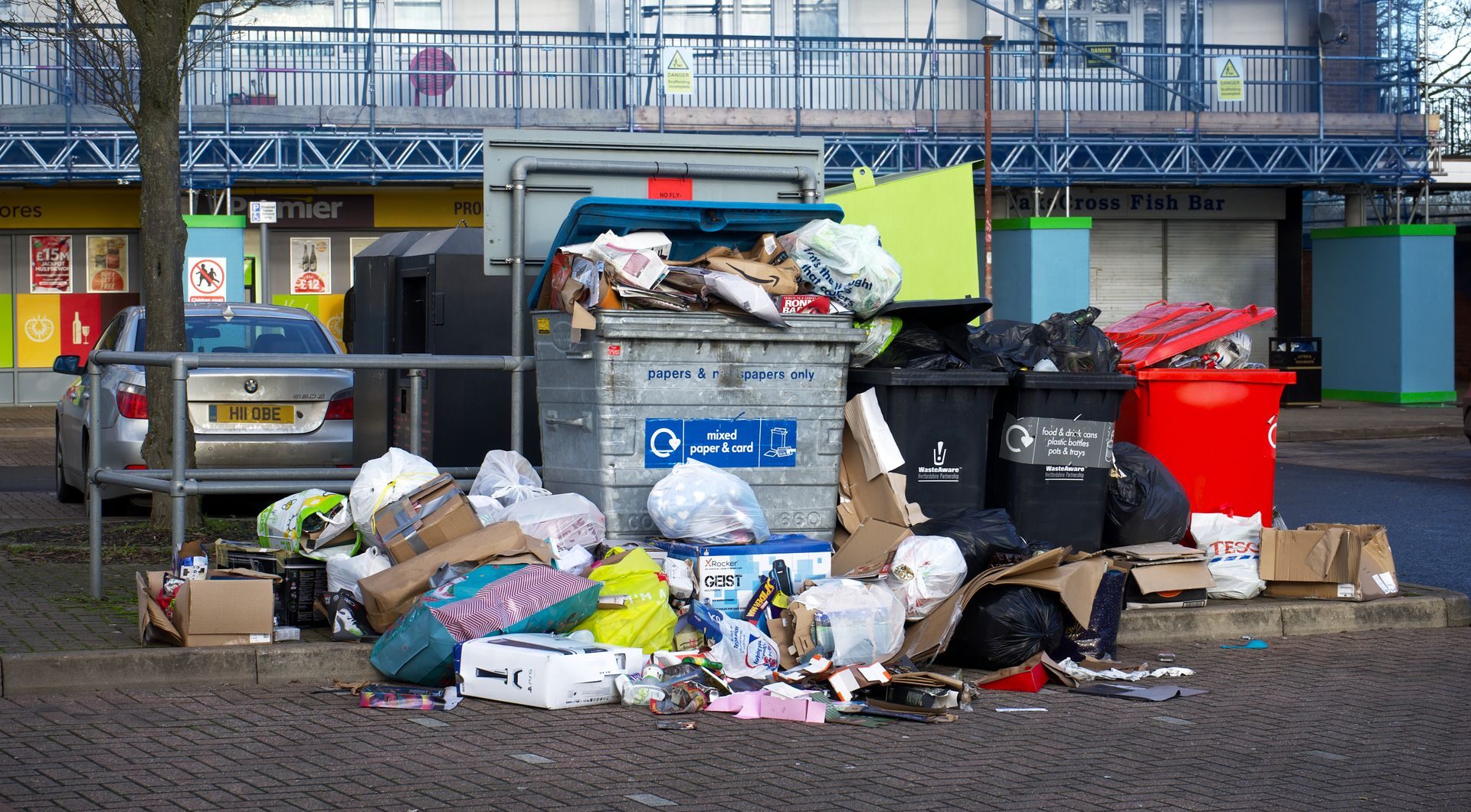

London’s boroughs dealt with 481,088 fly-tipping incidents in 2024-25, according to research published this autumn by the London Assembly. That is 8.2 per cent more than the year before, and it works out at 52.9 incidents for every 1,000 Londoners. A report to the Assembly’s Environment Committee says the capital’s rate is more than double that of any other region.
The committee is now investigating why, and it held its second evidence session on 14 October. Its work is aimed at boroughs and City Hall, but it raises a more immediate question for anyone with a flat to clear: what are you supposed to do with the old mattress?
Mattresses, sofas and the limits of skip hire
Most London fly-tipping is not the work of gangs with tipper lorries. The Assembly’s research found that household waste made up 60 per cent of incidents, and it names mattresses and sofas among the items that count when left in the wrong place. Skips do not solve that on their own. For example, London skip hire company easySkip treats mattresses as an item for separate disposal, so they cannot simply be added to a load of rubble. Most firms publish a list of exclusions of this kind, and it is worth reading before the booking rather than after. That leaves a practical gap, and for many households the gap is where things go wrong.
Where the problem sits
The borough figures vary enormously. Camden recorded 166.9 incidents per 1,000 people and Croydon 130.1, while Kingston upon Thames recorded 13.8. Most reported incidents happen on roads (36 per cent) or footpaths (31 per cent), and boroughs are responsible for cleaning most of those roads.
Enforcement is thin. Boroughs issued 49,915 fixed penalty notices for fly-tipping in 2024-25, but only 10 per cent were paid. That is below the England average of 14 per cent. Prosecutions fell from 285 to 233. Clearing the largest incidents alone cost London’s councils £5.8 million, more than any other English region.
City Hall has limited room to act. The committee’s report states that “The Mayor does not have responsibility for fly-tipping, or any powers to directly address it”, although the Mayor does set London’s overall waste strategy. New national penalties may help: since 1 September 2026, councils in England have been able to set fixed penalties of up to £5,000.
Why clearing a London home is harder
The report points to research suggesting that cost, access and convenience are recurring issues behind fly-tipping, and London makes all three harder. Census 2021 found that 42.1 per cent of London households have no car or van, against 23.3 per cent across England and Wales, so a trip to the tip is not an option for many people. Many recycling centres also require a booking. Many flats have no drive, no side passage and nowhere to leave a wardrobe while waiting for a collection.
Some boroughs are trying to close that gap. Merton says it is expanding its pop-up tips so that every neighbourhood gets one at least four times a year. Hillingdon runs a free Pop-up Waste Drop, and the committee’s report cites Barnet’s community skip service as an example of a designated place where residents can leave bulky waste.
The options, and what to check
For anyone clearing a flat or house, the realistic choices are these:
- A borough bulky waste collection: Usually the simplest route for a few large items, including mattresses. Prices and limits vary by borough, and some have waiting times.
- A pop-up tip or reuse event: Check dates and residency rules on your council’s website. These are often free, but they are not available everywhere.
- A recycling centre: The right place for electricals, paint and small loads, if you have transport and a booking where needed.
- A reuse route: Sound furniture can go to reuse charities, and many boroughs list local options.
- A licensed waste carrier: Useful for a van load, provided the firm appears on the Environment Agency’s public register.
- A skip: Best suited to a larger mixed clear-out or building work. A skip on the road needs the borough’s permission and must be lit at night, so it takes more planning in a street with no off-road space.
The legal position is simple, even if the logistics are not. The committee’s report notes that it is the responsibility of anyone disposing of waste to ensure it is done legally, and that includes checking that anyone removing it is properly licensed. In England, householders who fail to do so can face fixed penalties of up to £600.
What happens next
The committee was asked to delegate authority to its Chair to agree any output from the investigation, so recommendations may yet follow. A report to the committee also points to research suggesting that council practices can themselves encourage fly-tipping, and that bulky waste services or designated drop-off locations make disposal easier.
For now, the figures are a reminder of how much of the capital’s fly-tipping starts inside its homes. Polling cited by the Assembly found that 46 per cent of Londoners had noticed fly-tipping in their area. A little planning before a clear-out, starting with what goes where, is the easiest way to avoid adding to that number.







