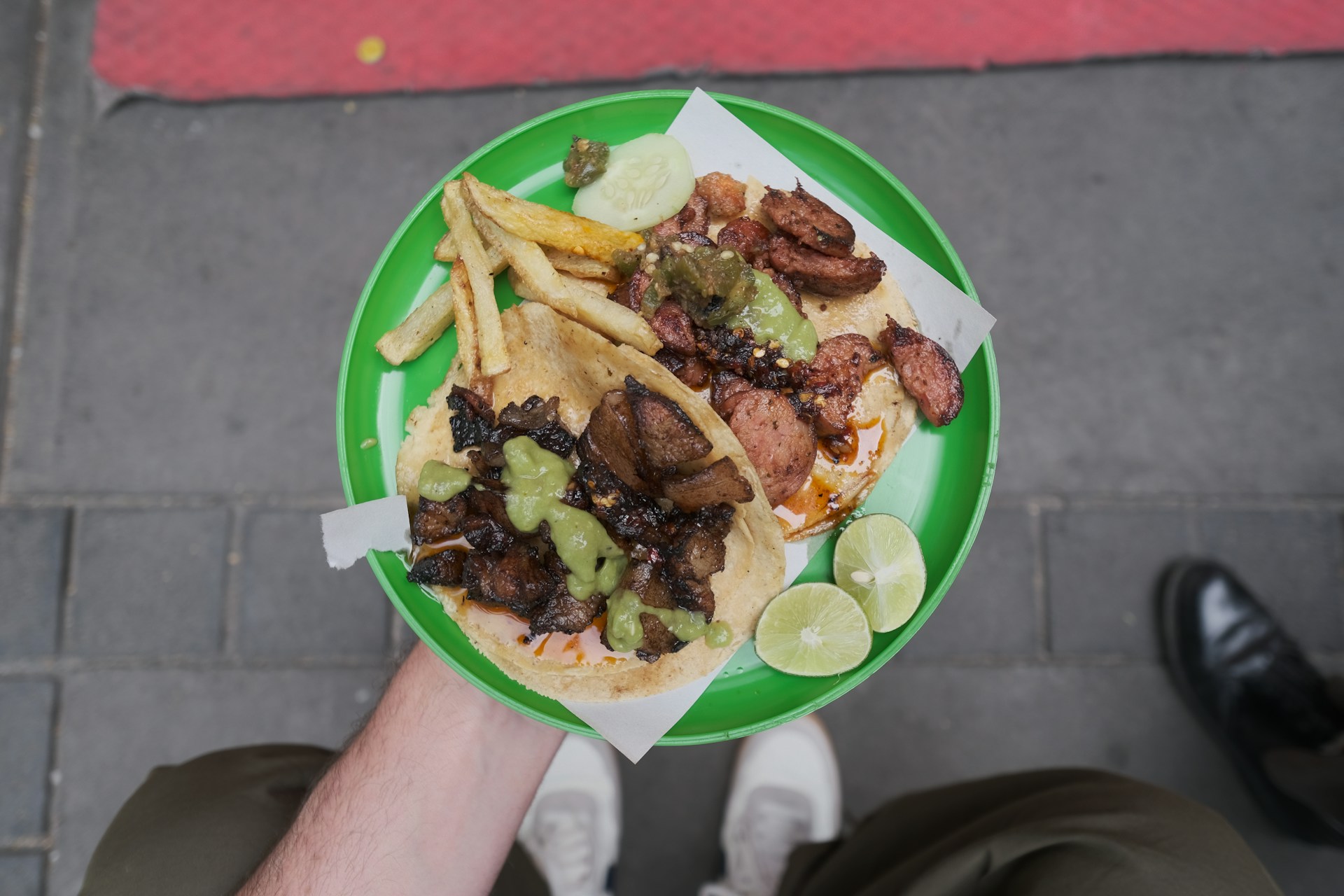

Two in the afternoon on a side street off the Zócalo. A cone of red pork turns on a vertical spit, the cook flicks a sliver of pineapple off the top with his knife, and five office workers stand shoulder to shoulder at a steel counter, eating off plastic plates wrapped in plastic bags. There’s no menu on the wall. Nobody seems to have paid.
That scene can feel impossible to break into the first time. It isn’t. The system is simple once you’ve watched it for a minute, and a few habits keep your stomach and your phone in good shape for the rest of the trip.
How do you order at a taco stand?
A Mexico City street taco is small: two soft corn tortillas stacked together, a spoonful of meat, chopped onion and cilantro. That’s the whole build. Salsa and lime are on the counter, and you add them yourself. Nobody puts lettuce, cheese or sour cream on a proper taco here, and you shouldn’t go looking for them.
Because they’re small, you order two or three at a time and come back for more. Catch the taquero’s eye, hold up fingers if your Spanish is shaky, and name the filling: “dos de pastor.” Saying “con todo” gets you the onion and cilantro.
Payment comes at the end. You tell the person at the register what you ate, and they take your word for it. Carry small bills and coins, because a big note can stall the whole line.
The bag on the plate is there so the stand can swap it instead of washing dishes. Eat standing up, plate held close to your chin. Everyone does.
Which taco fillings should you try first?
Start with al pastor, the spit-roasted pork marinated in chilli and achiote, shaved straight onto the tortilla with that bit of pineapple. It’s the city’s signature for good reason.
Suadero comes next. It’s a soft, slow-cooked cut of beef simmered in fat on a round griddle, and it’s richer and more tender than the name suggests. Bistec, thin grilled steak, is the safe choice if you’re cautious about textures, and it’s often chopped together with chorizo. Carnitas, pork braised in its own fat until the edges crisp, belong more to the lunch hours. Campechano, a mix of two or more meats, is what regulars order when they can’t decide.
Most stands specialise in one or two of these, so working through all five usually means visiting several spots. A guided Mexico City taco tour is a good way to cover that list in one outing, with someone who knows which counter does each filling well and can order for the group in fast, local Spanish. After that, you’ll recognise the good stands on your own.
Are the salsas and ice safe to eat?
Pick busy stands. A crowd means meat and salsa are moving fast and nothing sits around for hours.
Taste salsa off the tip of a spoon before you pour. Colour tells you little: some green salsas are mild and herby, and others will make your eyes water. Bowls left out in direct sun all afternoon are worth passing on.
Don’t drink tap water anywhere in the city. Hotels usually offer purified water for free, so fill a bottle before heading out. Ice at established restaurants and drink stands is commonly made from purified water, and the hollow tube shape is a decent sign it came from a factory.
Some travel sources warn that farm cheese like quesillo, the stringy cheese melted into quesadillas at street carts, can upset stomachs. Hold off on it for the first few days. Go easy on that first night in general.
What time do people eat tacos in Mexico City?
Later than you’d think. Lunch is the main meal and runs around 2 or 3 pm. Dinner can start around 10 pm, and the taco stands that open after dark are often busiest close to midnight.
Mornings are slow. Markets and many attractions may not open until after midday, so there’s no point setting an alarm for an early market breakfast. Sleep in, have coffee, then plan your first tacos for the lunch rush.
Late-night tacos are part of the fun, with a few precautions. The Centro Histórico is considered safe in the daytime, and visitors are told to be more careful there after about 9 or 10 pm. For a midnight run, choose a well-lit, crowded street and take a registered taxi or an app ride back rather than walking dark blocks.
Phone snatching is described as the most common crime against tourists. That matters at a taco stand, where your hands are full and the phone ends up on the counter next to the salsa. Take your photo, then put the phone in a front pocket before you eat.
What should you drink with tacos?
Aguas frescas are the classic pairing. Horchata, sweet and cinnamon-heavy, cools the heat of a strong salsa better than anything else. Jamaica, made from hibiscus, is tart and bright. Bottled sodas and beer are everywhere too.
Pace the beer. Alcohol hits harder at the city’s altitude, so keep your first evening light, then judge from there.
Street stands rarely have toilets, so plan to use a café or restaurant nearby, and buy something small while you’re there. Carry tissues. In many buildings, the plumbing and septic systems can’t handle paper, so used toilet paper goes in the bin beside the toilet, not down the bowl. It feels odd for about a day.
Before you head out:
- Small bills and coins in your pocket
- A refillable bottle of purified water from the hotel
- Phone zipped away while you eat
- Tissues for the bathroom
- A lunch plan for 2 or 3 pm, and a ride booked for late nights
- Hold off on quesillo for the first few days