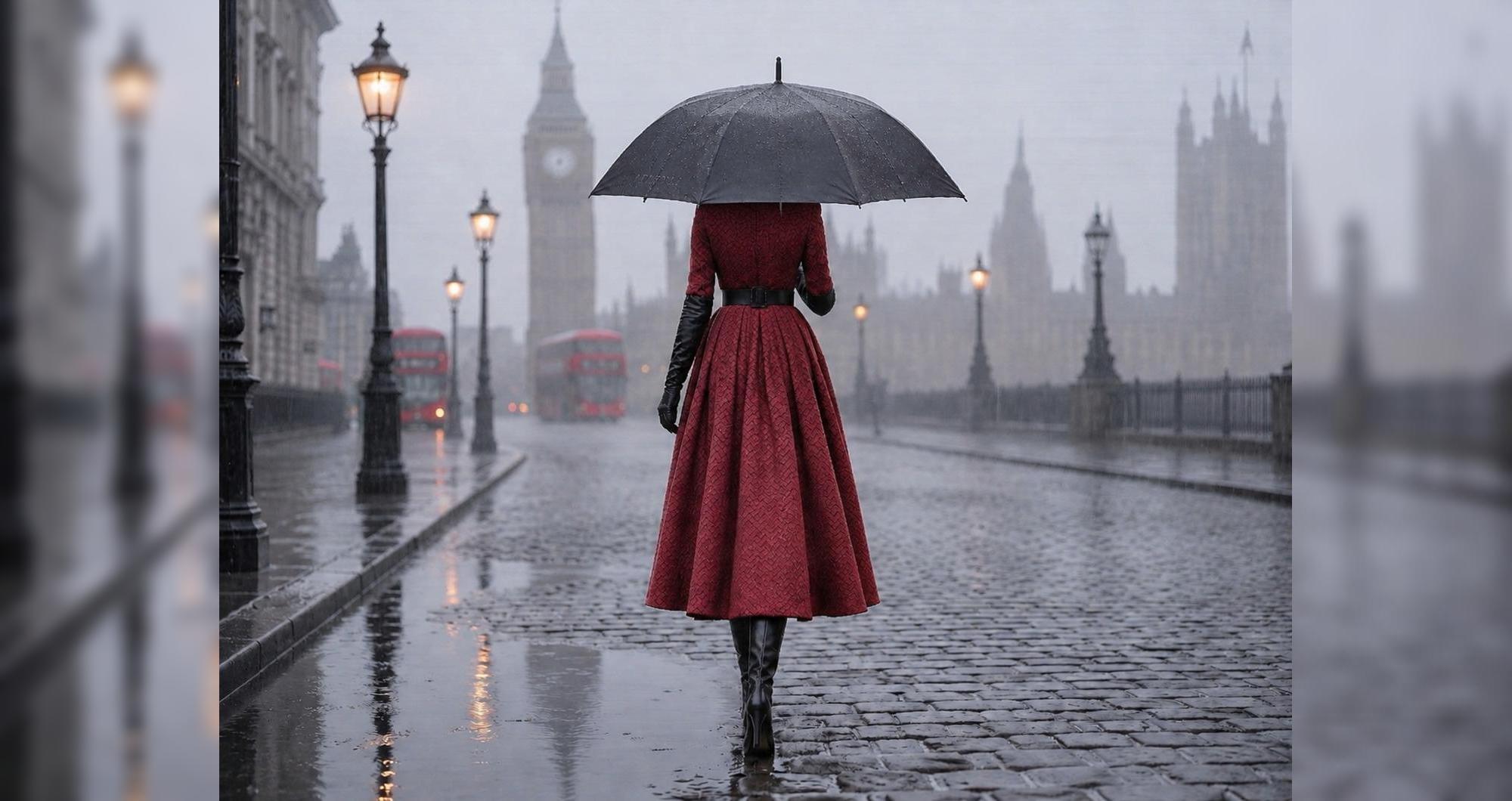

Founded by Bora Simovska and shaped by three generations of craftsmanship, SIMOVSKA is building a fashion house for women who want quality without surrendering their individuality.
British fashion has rarely been at its most interesting when it is obedient. From precise Savile Row tailoring to London’s tradition of subcultures and self-expression, personal style in the UK has often depended on the tension between discipline and eccentricity.
Quiet luxury softened that tension. Logos disappeared, colours became restrained and wardrobes filled with beige coats, neutral knitwear and perfectly sensible trousers. The movement offered a welcome alternative to fast-changing trends, but it also produced a new uniform.
When every “timeless wardrobe” contains the same pieces, women may look polished while becoming increasingly indistinguishable from one another.
SIMOVSKA believes the next chapter of fashion will preserve quality and longevity while restoring what quiet luxury frequently removed: personality.
When Restraint Becomes Repetition
The appeal of quiet luxury is easy to understand in Britain. A well-made coat, versatile tailoring and dependable knitwear suit an unpredictable climate and a lifestyle that can involve public transport, work, appointments and social plans in a single day.
The difficulty arises when practicality is confused with invisibility. Across the high street and social media, the same restrained aesthetic is widely repeated, and neutral dressing can start to feel less like a personal choice and more like an unwritten dress code.
Some designers respond by using construction rather than branding to create presence. Defined waists, asymmetric lines, sculptural sleeves and controlled volume are common tools, allowing a garment to be recognised by its shape instead of a printed logo.
The Return of the Memorable Dress
The desire for individuality is especially visible in dresses. A dress creates an immediate silhouette and can communicate more personality than several coordinated basics.
The most distinctive designs do more than meet an occasion’s dress code. Proportion affects how a wearer enters a room, while colour and movement shape how the garment is remembered. A sculptural sleeve can frame a gesture, an asymmetric line introduces movement, and a defined waist can convey structure without relying on strict corporate tailoring.
This is particularly relevant in London, where people move between very different environments and rarely dress for a single audience. The same garment may be worn on a morning train, in a meeting, at a gallery and over dinner. Distinctive clothing therefore has to work in real life, not only look striking.
Distinctive Does Not Mean Trend-Led
There is an important difference between a distinctive garment and a fashionable novelty. A trend asks wearers to adopt the look of a particular season, while strong design offers tools for expressing their own style. The former tends to date quickly; the latter can become more personal with repeated wear.
Balance matters here. Controlled volume, solid tailoring and well-placed detail help a garment attract interest without appearing designed purely for attention. There are also practical trade-offs. Neutral basics remain easier to mix and match, and bolder pieces may need more thought to style across a full wardrobe.
For anyone reconsidering what they own, the most useful question may no longer be “Is this timeless?”, since almost anything can be described that way when it is neutral enough. A better question might be “Will I still recognise myself in it?”
What Comes After Quiet Luxury
Quiet luxury challenged fashion’s dependence on logos and constant novelty. Its strongest principles, including quality, restraint and repeated wear, are likely to endure.
What may be changing is the assumption that sophistication must be anonymous. The wardrobe emerging next could be practical without being predictable and feminine without being fragile. It can include colour, shape and emotion while remaining carefully constructed.
Brands such as SIMOVSKA are among those exploring this shift, not by asking women to dress more loudly, but by treating individuality and durability as compatible goals. Ultimately, the value of a garment lies less in how precious it looks untouched than in how well it suits the life of the person wearing it.