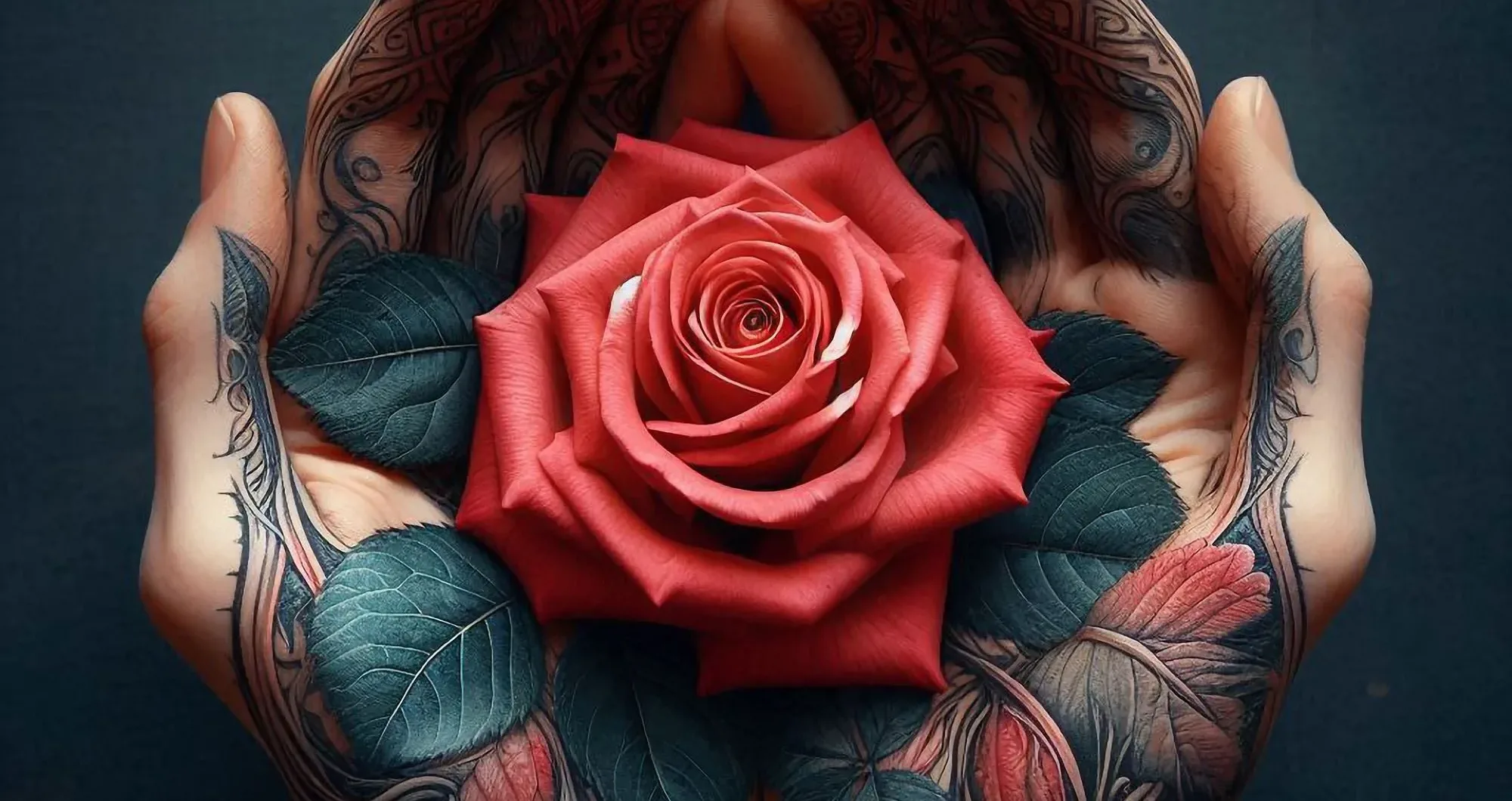

The world of tattoos has always been an intersection of creativity, personal expression, and technical skill. With the rise of AI in creative industries, AI-generated tattoo art has sparked a new wave of interest and debate. One question stands out: can humans, especially seasoned tattoo enthusiasts and artists, detect the difference between AI-generated tattoos and those designed by humans?
To explore this, we’ll look at both sides—how AI-generated tattoo art compares to human-made designs and whether people can distinguish the two. Spoiler: It’s not as easy as you might think!
The Rise of AI Tattoo Art
AI has made significant strides in recent years, infiltrating creative industries from music and fashion to graphic design. Tattoos, as a form of body art, are no exception. Platforms like tattoos.ai and Tattoodo are leading the way, using algorithms to generate intricate and customized tattoo designs based on user preferences.
The appeal of AI tattoo generators lies in their ability to create an infinite number of designs, instantly. They allow users to experiment with various styles and concepts without the need for a human artist. This opens up new possibilities for people looking for unique designs that may not be available through traditional means.
The Human Touch in Tattoos
Tattoo artists have a deep understanding of the craft, honed over years of practice. They can translate a client’s vision into a design that fits perfectly with the contours of the body, while also considering things like skin tone, texture, and the longevity of the tattoo. Human artists often add a level of nuance and emotional connection that AI cannot replicate—at least not yet.
The argument for human-made tattoos rests on this personalization. Tattooing is more than just placing ink on skin; it’s an art form tied to culture, tradition, and personal stories. Can AI truly grasp the essence of these elements? Can it understand why someone wants a particular design and adapt accordingly?
Can Humans Detect AI Tattoo Art?
To answer this question, we need to explore how well AI-generated tattoos mimic human designs. AI works by analyzing thousands of existing tattoo designs and creating new ones based on patterns and data. It can blend styles, adjust for symmetry, and even emulate popular trends.
However, several studies suggest that distinguishing between AI-generated and human-made tattoo designs isn’t as straightforward as one might assume.
- Study 3: Human vs AI
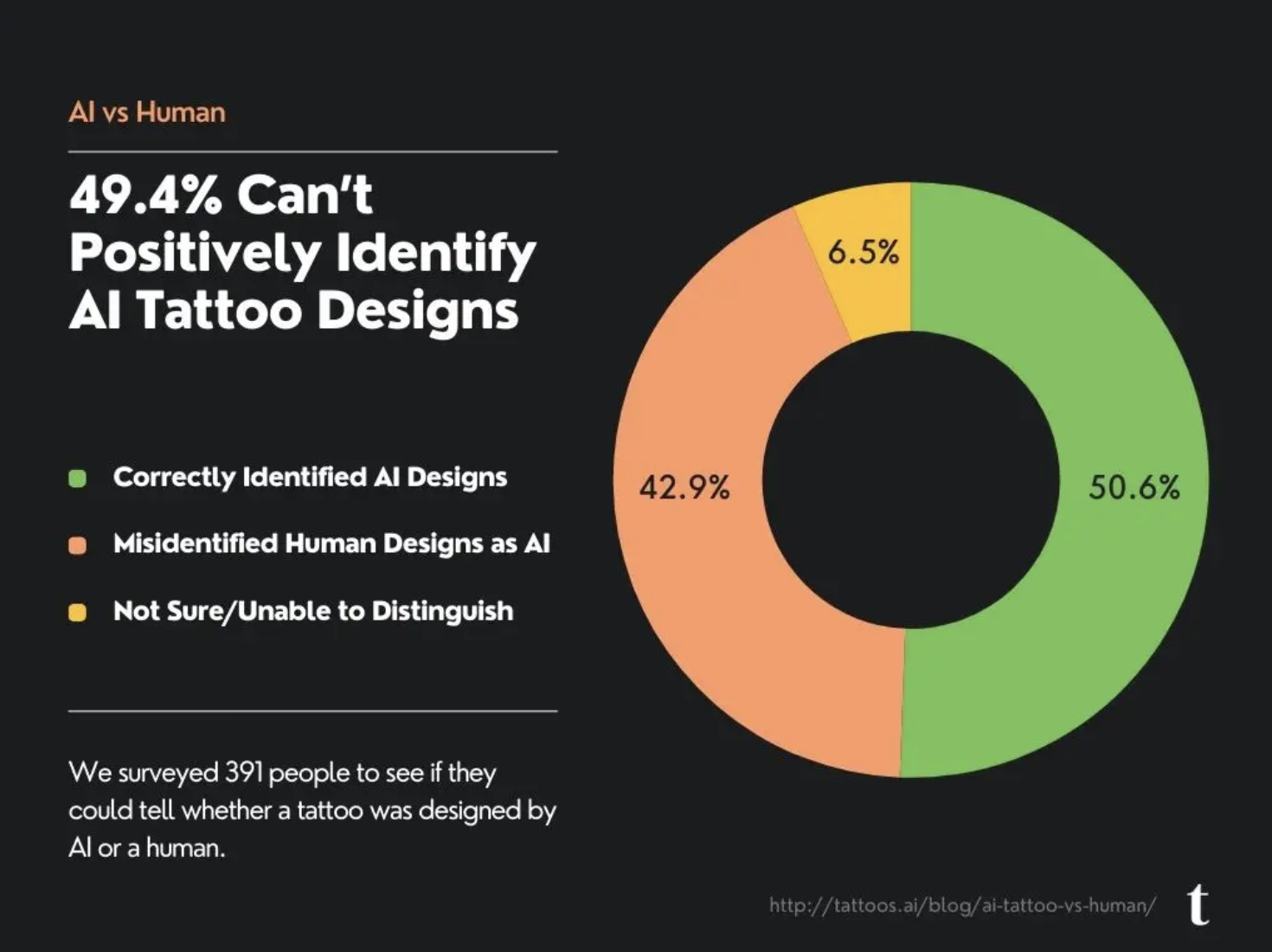
Survey results from Tattoos.AI revealed that 50.6% of respondents correctly identified AI-generated tattoos, with certain styles like realistic tattoos being easier to spot as AI creations. Age, gender, and familiarity with technology influenced the ability to distinguish AI from human art. This study highlights how AI is increasingly blending with human creativity in tattoo design, challenging traditional notions of artistic authenticity. - Study 2: Tattoo Artist vs. AI Challenge
A popular tattoo conference in Berlin organized a challenge where professional tattoo artists and AI algorithms were both tasked with creating designs based on the same set of prompts. The designs were then shown to a mixed audience of tattoo artists and enthusiasts, who were asked to identify which were human-made and which were AI-generated. Surprisingly, even seasoned artists could only correctly identify AI-generated designs 60% of the time.
Why AI Tattoo Art is Hard to Detect
- Blending of Styles
AI tattoo generators excel at blending different tattoo styles. A common challenge for human artists is maintaining consistency when mixing styles like realism and neo-traditional, but AI can seamlessly integrate them, making it harder to detect the source of the design. - Perfectionism
AI can produce designs with near-perfect symmetry and alignment, something that even the most skilled human artists struggle to achieve. This precision can sometimes be a giveaway that a design was AI-generated, but it can also be mistaken for the work of an incredibly talented artist. - Data-Driven Trends
AI’s strength lies in analyzing and predicting trends. If tribal tattoos are making a comeback or watercolor designs are all the rage, AI will adapt quickly, creating designs that feel very “in the moment.” This ability to reflect current trends makes it harder for humans to tell the difference. - Personal Bias
Another factor that clouds our judgment is personal bias. People tend to attribute creative works they find impressive to human artists. If an AI design resonates emotionally, we’re more likely to assume it was made by a person. This cognitive bias complicates efforts to differentiate between AI and human designs.
Where AI Struggles
While AI is good at producing technically sound designs, it often lacks the emotional depth that comes from human experience. Tattoos often carry personal significance—a memorial for a loved one, a representation of a life-changing event, or a symbol of one’s identity. Human artists can connect with these stories on a personal level and translate them into meaningful artwork. AI, on the other hand, relies on data and algorithms, which can make its designs feel somewhat impersonal.
AI also struggles with certain creative nuances. For instance, an experienced artist may intentionally incorporate imperfections into a design to give it character, while AI typically strives for perfection. This lack of “flaws” can sometimes make AI designs feel too sterile or robotic.
The Future of AI and Human Collaboration
As AI technology continues to evolve, it’s likely that the distinction between AI-generated and human-made tattoo designs will blur even further. AI could become a tool for artists to enhance their work, generating ideas or assisting with the technical aspects of design, while still allowing the human artist to provide the personal touch that clients seek.
Some tattoo artists are already embracing AI as a creative partner rather than a competitor. They use AI-generated designs as a starting point, modifying and refining them to suit the client’s needs. This hybrid approach could be the future of tattoo artistry—a collaboration between human creativity and machine efficiency.
Conclusion: The Verdict on AI vs. Humans
So, can humans detect AI tattoo art? The data suggests that it’s not easy, even for experts in the field. AI-generated tattoos are becoming increasingly sophisticated, to the point where they are often indistinguishable from those created by human artists. While AI can produce technically flawless designs, it still lacks the emotional connection and personal touch that many clients value in a tattoo.
In the end, it’s not about AI versus humans—it’s about how the two can work together to push the boundaries of what’s possible in tattoo art. Whether you prefer a human artist or an AI-generated design, the future of tattooing is more exciting than ever, blending tradition with innovation in ways that were unimaginable just a few years ago.