
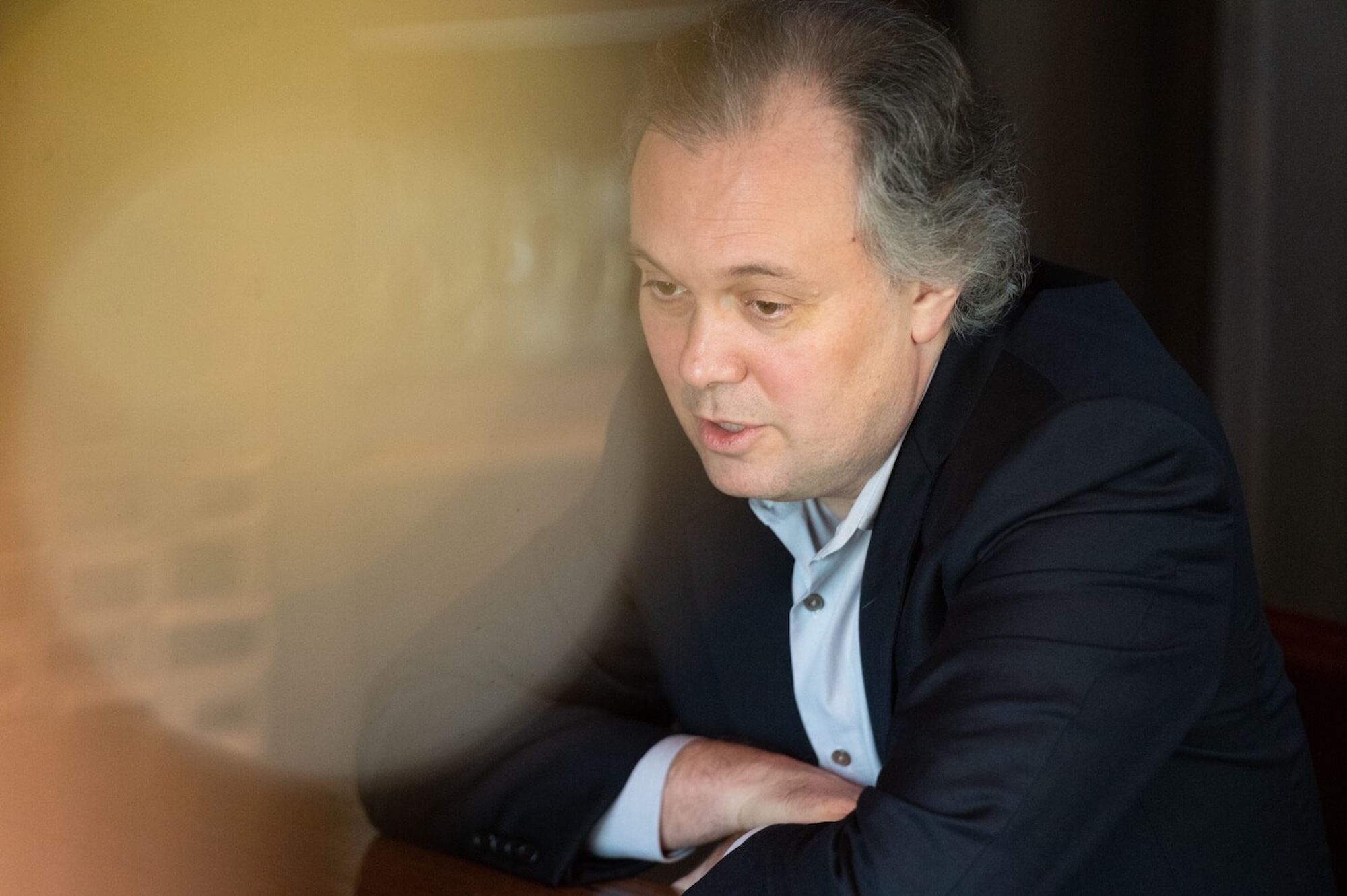

Alexey Shor is a New York-based contemporary composer whose music is defined by melodic lyricism and a dialogue between tradition and modernity. A former scientist and a financier with a PhD in math, Shor turned to professional composition almost by accident and has since promoted the revival of melody and tonality in classical music.
Alexey Shor’s Musical Career in Brief
- Style: Neo-Romantic/neo-Classical, marked by melodic lyricism, bridging tradition and modernity.
- Genres: concertos, sonatas, suites for piano, string and wind instruments; ballet and film scores.
- Performed by: Maxim Vengerov, Mikhail Pletnev, Gautier Capuçon, Nikolaj Szeps-Znaider, Steven Isserlis, Evgeny Kissin, Gil Shaham, Clara-Jumi Kang, and many others.
- Orchestras: Philharmonia Orchestra, London; London Symphony; London Philharmonic; Royal Philharmonic; Oxford Philharmonic; Tokyo Philharmonic; Israel Philharmonic; Deutsches Symphonie-Orchester Berlin; Deutsche Staatsphilharmonie Rheinland-Pfalz; Prague Philharmonic; Orchestra Sinfonica Nazionale della Rai; Orchestra dell’Accademia Nazionale di Santa Cecilia; and others worldwide.
- Geography: Performed in London, Berlin, Vienna, Rome, New York, Amsterdam, Tokyo, and beyond.
- Festivals: Wandering Music Stars (2017-2020), InClassica International Music Festival (2025 edition devoted entirely to Shor), Verbier Festival (2024–2026), and Eurasian Stars International Festival.
- Media presence: Music has been broadcast on medici.tv, Mezzo, The Violin Channel, and Euronews; featured on Fox Business and covered by Bloomberg, The New Yorker, ORF, Rai, and STVR, among others.
Pre-Music Background
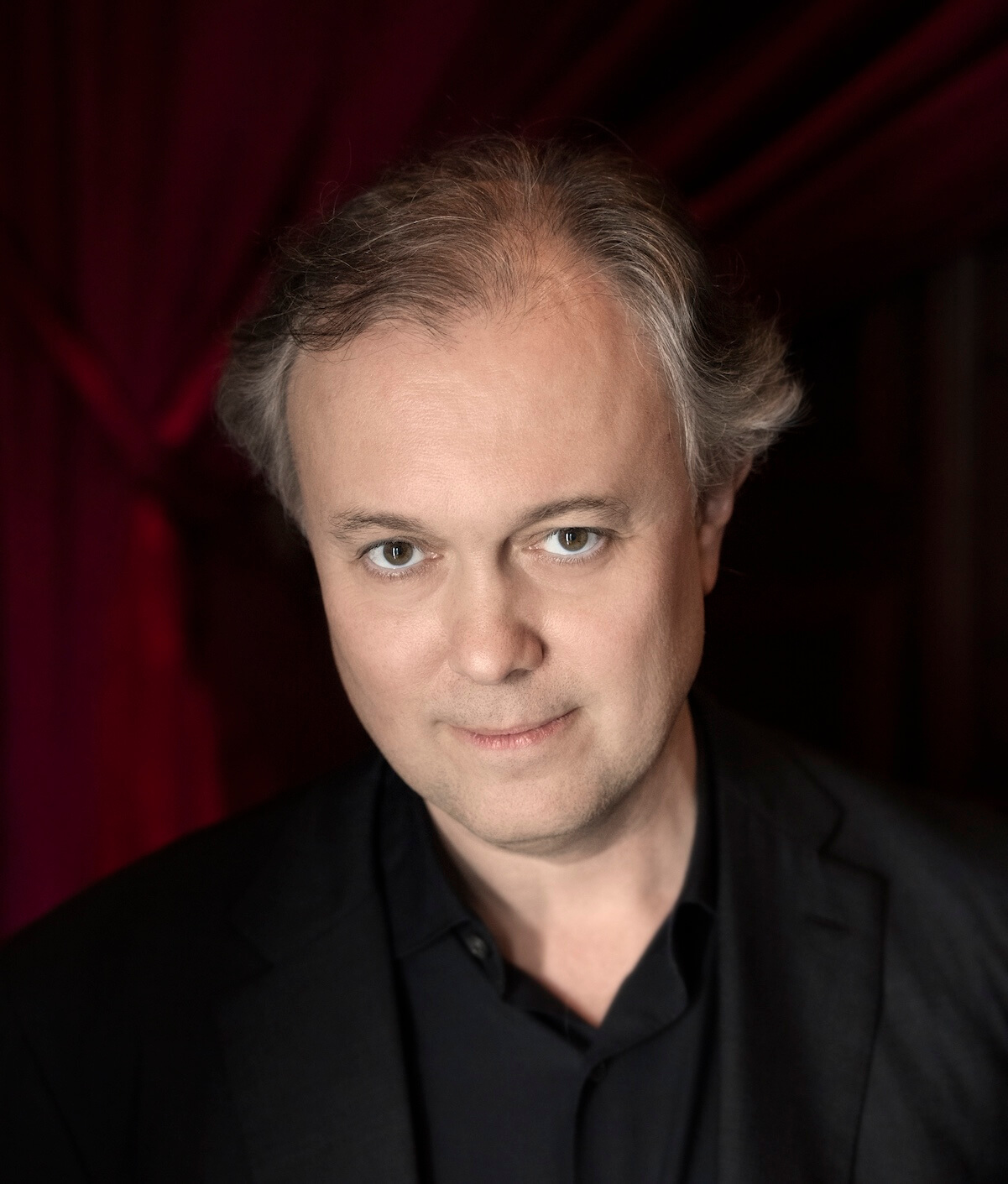
Alexey Shor was born in Soviet Ukraine and grew up in an academically minded family. He attended math and physics school in Kyiv, and after the Chernobyl accident he moved to Moscow, where he finished his education at a boarding school for gifted children and then continued his study of math at Moscow State University.
Amid the collapse of the Soviet Union, Alexey Shor emigrated first to Israel, then to the U.S. His mathematical studies continued. He got a PhD from Pennsylvania State University, and from 1996 to 1998 conducted postdoctoral research at the University of Pennsylvania.
Then, Alexey Shor moved away from academia into finance, joining Renaissance Technologies, a Long Island–based quantitative hedge fund renowned for its culture of scientific rigor. It became the setting for nearly the next two decades of Shor’s professional life. He worked there as a researcher applying mathematics, statistics, and programming to financial markets. He established himself as a capable quantitative analyst.
It was during these years at Renaissance that Shor began experimenting with musical composition and teaching himself orchestration. At first, it was a private hobby, until a chance discovery by violist David Aaron Carpenter set him on the path toward composition as an occupation. By Shor’s own account, it happened almost entirely by chance. Carpenter was a friend, not a professional contact. He was visiting Shor’s home one day and happened to notice some manuscript pages lying around. He was impressed by the music and urged Shor to take it more seriously.
That single encounter set off a chain of events. Carpenter volunteered to perform and later record Shor’s music. Shor started sharing his work with musicians and posting it on the Internet. Audiences responded warmly to its classical melodic charm. Encouraged, Shor began writing more. In a few years, a private hobby became a second vocation.
By the mid-2010s, Shor was writing steadily for orchestra, as well as many solo instruments. A body of work began to take shape.
A journey through Shor’s selected repertoire
Short early pieces
Alexey Shor’s first published works, while modest in scale, already carry the characteristics of his style.
Humoresque is one of his first orchestral compositions. He wrote it for cello and string orchestra. It combines lyrical warmth with light-hearted charm and draws inspiration from the traditional humoresque genre but expresses it through Shor’s own contemporary language.
Another early work, Two Songs for My Kids is one of Alexey Shor’s most intimate and personal works. Written for cello and orchestra, the pair of miniatures reflects the composer’s experiences as a father. The opening piece, “Lullaby for Mark”, was written for the composer’s young son, who struggled to sleep as a child. The companion piece, “Natalie’s Waltz”, was composed on the day Shor’s daughter was born.
Another example of Alexey Shor’s early work is Schubertango. As suggested in the name, Shor reinterprets Schubert’s melodies through the expressive language of the tango. The composition exemplifies the author’s interest in reimagining familiar musical material from fresh perspectives. He returns to this idea in his later works, such as Verdiana and Musical Pilgrimage.
Seascapes
From the early miniatures, Alexey Shor soon moved toward larger, multi-movement forms, such as his first violin concerto that he composed in 2014. Its four movements, inspired by the beauty and unpredictability of the sea, are titled “Abandoned Lighthouse”, “Lonely Sail”, “Storm”, and “Summer Hail”. All are rich in atmosphere and vividly descriptive, tracing an arc from stillness to turbulence.
Seascapes marked a turning point for Shor. It brought him widespread acclaim and international attention.
Travel Notebook
As reported in the profile of Alexey Shor on Novinite, Travel Notebook (2018) is his first piano-and-orchestra suite. The work captures the impressions gathered during his travels in Europe and contains seven movements:
- “Wayfarer’s Prayer” is the only movement not tied to a specific location. It captures the universal emotional experience of travel: the anxiety, the melancholy of departure, the anticipation of new discoveries.
- “La Rambla” is inspired by Barcelona’s main pedestrian street. The music reflects its energy and color.
- “Addio” was written after Alexey Shor visited Rome. It serves as both a farewell and a tribute to the ancient Roman civilisation.
- “Luxembourg Garden” refers to one of Paris’ main landmarks. Thanks to its portrayal in Victor Hugo’s Les Misérables, the garden has become synonymous with beauty and romance. The music reflects this mood.
- “Rubicon” is another historical reference. The music mirrors the drama of the river’s decisive crossing: hesitant opening gestures give way to increasing confidence before culminating in a forceful conclusion.
- “Sorrow” reflects Shor’s response to Venice. The movement expresses sadness at the challenges faced by the city – pollution, rising waters, and mass tourism.
- “Horseman” is inspired by the exhilaration and spectacle of the annual Royal Ascot horse races in England.
Alexey Shor has described Travel Notebook as a personal milestone and remarked that it offers an interesting contrast to his later orchestral works.
Childhood Memories
Childhood Memories is a musical coming-of-age story that follows the journey from early childhood to adolescence.
In the opening movement, “Chasing Fireflies”, Alexey Shor establishes the playful spirit of the work. A gentler atmosphere emerges in “Blooming May”, which explores the theme of the passage of time. “Sandbox” is another playful movement with energetic rhythms and light orchestration. In contrast, “Hourglass” has a more reflective mood: it contemplates the idea that childhood cannot last forever. The reflection continues in “Last Days of Summer”, whose warm melodies express the bittersweet feeling of carefree days drawing to a close.
“Naiveté” then celebrates the simplicity and sincerity of childhood, before the emotional landscape shifts in “Coming of Age”. Here, darker harmonies and growing dramatic intensity reflect the emotional complexity of adolescence.
In the introspective “Melancholy”, the solo piano leads a contemplative melody that conveys moments of emotional awareness as childhood gives way to maturity. The suite concludes with “First Love”, which captures the excitement and vulnerability of youthful romance.
“Marionette Waltz” then serves as an epilogue. The miniature combines waltz’s classical charm with Shor’s characteristic melodic clarity and tonal warmth.
The Four Seasons of Manhattan
In his third violin concerto, Alexey Shor offers a contemporary response to one of the most enduring traditions in classical music: the portrayal of the seasons.
The concerto is structured in four movements. It mirrors the cycle of the seasons, where each one has its own emotional identity. Throughout the work, the solo violin assumes the role of narrator.
The tone is reflective and melancholic. Shor uses the seasons as metaphors for the changing stages of emotional life. This journey culminates in the final movement, “Spring”, where uncertainty is replaced with optimism.
From My Bookshelf
From My Bookshelf is another suite for piano and orchestra. Although composed in the present day, its origins lie decades earlier – Alexey Shor drew inspiration from the bookshelf he used to have opposite his bed in childhood. He created a collection of musical portraits of different literary characters: Cinderella, Don Quixote, Tom Sawyer, Quasimodo (The Hunchback of Notre-Dame), Queen of Hearts (Alice’s Adventures in Wonderland), D’Artagnan (The Three Musketeers), King Matt the First (from the eponymous Polish children’s novel), and Romeo and Juliet.
The suite is rich in melody and color. Shor captures the timeless personalities and emotions that have made these fictional characters endure through generations.
Music from the lockdown
Among the works that Alexey Shor wrote during the height of the pandemic, two three-movement violin concertos stand out: No. 4 in B minor and No. 5 in C minor.
The first one was written at the time of the national lockdown. It reflects the uncertainty and restlessness of that period. Although it retains the melodic richness and tonal language that define Shor’s music, it introduces a greater degree of psychological depth and structural complexity than many of his earlier works.
Violin Concerto No. 5 is one of Alexey Shor’s most dramatic and emotionally charged orchestral works. It adopts a dark and intense musical language but maintains Shor’s characteristic emphasis on melody. Its three movements are unified by an ongoing dialogue between the solo violin and the orchestra.
The mature period: new genres and instruments
In 2022, Alexey Shor expanded his orchestral catalogue with a bandoneon concerto, Carpe Diem. True to its title, the concerto is vibrant and optimistic. It celebrates the joy of living by blending Argentinian dance influences and touches of jazz with a classical orchestral framework.
In 2023, Alexey Shor released his first-ever piano concerto. It is lyrical and direct, reflecting the composer’s enduring belief in melody as the primary vehicle for musical expression.
Today, Shor continues to broaden his output. In 2025, for instance, he released the Cello Sonata No. 1, an expressive and deeply personal work. The music moves seamlessly between moments of quiet introspection and emotional intensity. This combination exemplifies the expressive depth of Alexey Shor’s mature compositional style. The same year also saw Alexey Shor release his first double concerto, for violin and viola, which was quickly followed by a second, this time for violin and cello, in 2026, both of which see the composer experimenting with a different medium as he explores the relationships that arise when two soloists take to the stage together alongside an orchestral ensemble.
Musicians on Shor’s Music
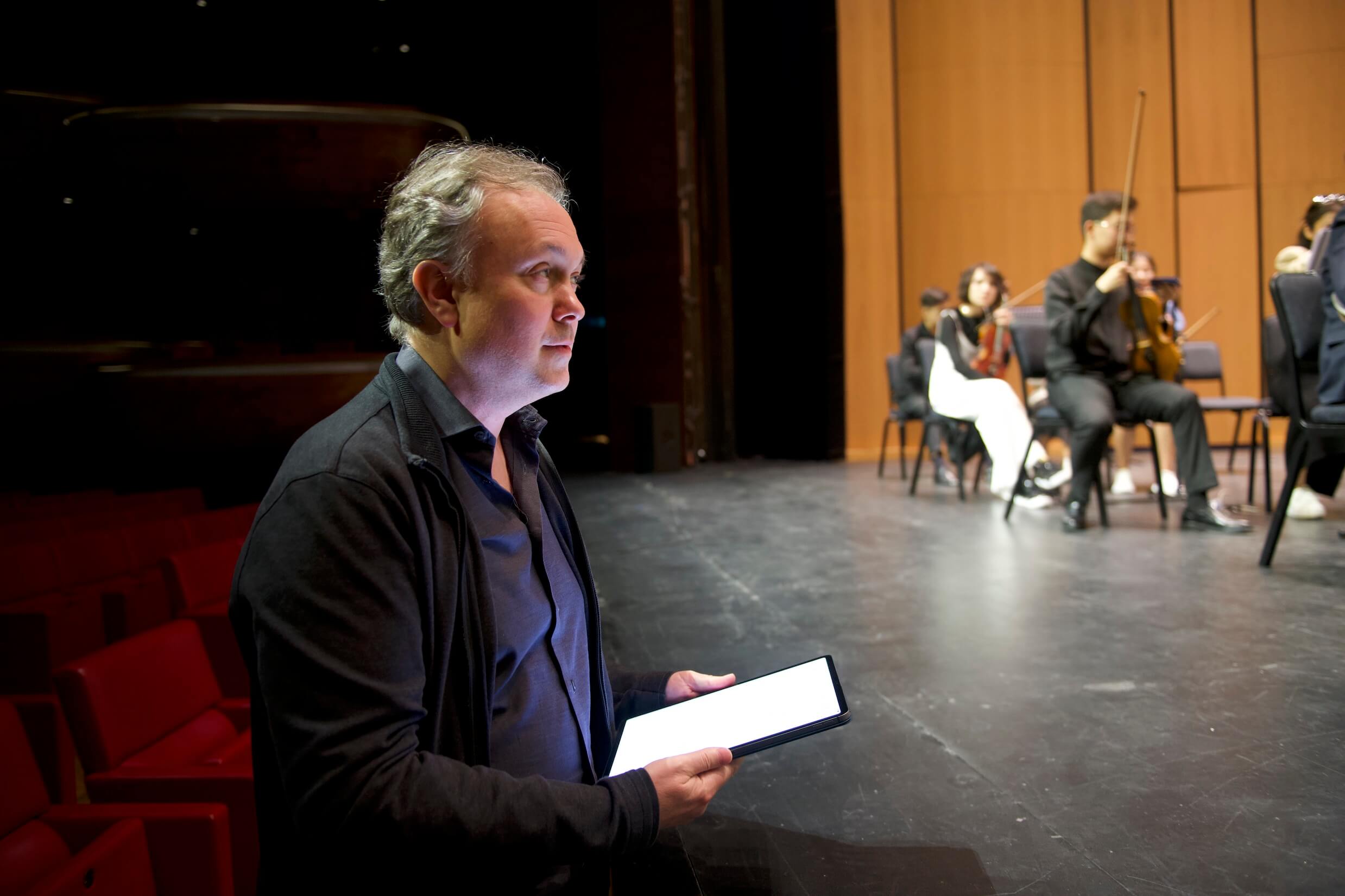
Artists who have performed works by Alexey Shor single out similar qualities – melody, warmth, a sense of restored tradition. While speaking about his work, they have noted that:
- “It is impossibly melodious and amazing” – Maxim Vengerov
- “Very sunny, very bright… and very warm” – Maxim Vengerov
- “I am amazed by the music that Alexey writes” – Salvatore Accardo
- “His music is very interesting and classical in many ways” – Gautier Capuçon
- “Alexey Shor’s music is inspired by life on the Mediterranean and the bounties of the sea” – Ray Chen
- “His music is fascinating because you have so many different kinds of approaches, and I really love lyrical music like this” – James Ehnes
- “He is an accomplished composer who embraces tonality, but also searches for new forms of expression within that tonality” – Daniel Hope
- ”Alexey Shor is a melodist, and being a melodist nowadays is the greatest courage” – Mikhail Pletnev
Shor’s reception by performers suggests a real appetite among musicians and audiences for tonality and emotional directness. It indicates a neoclassical and neo-romantic revival, showing that accessibility can coexist with craftsmanship and contemporary relevance.







