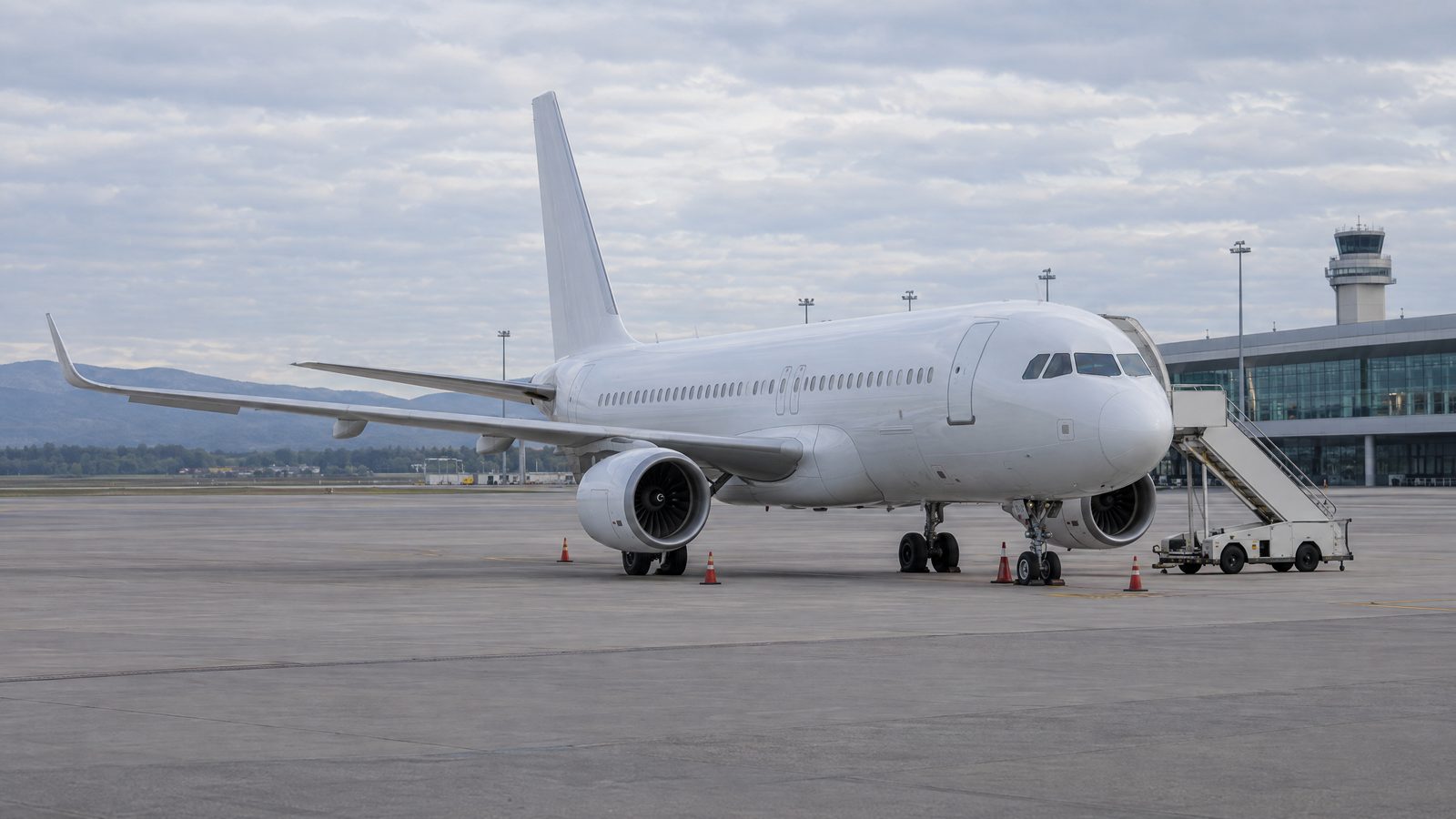

At least seven passenger flights across Europe were searched on Tuesday 3 November after bomb threat alerts. No explosives were found on those seven aircraft.
The flights included a LOT service from London Heathrow that was diverted to Warsaw Modlin Airport in Poland, and a Ryanair service from Manchester to Murcia in Spain. Aircraft arriving in Bulgaria and Italy were also checked. At the time, no link had been established between the alerts across different countries.
Diversion near Warsaw
The LOT flight had been due to land at Warsaw Chopin Airport but was sent to Modlin instead. The airport said there were 181 people on board the Boeing 737 MAX. The aircraft landed at 10.01am local time and was moved to a designated area while the alert was investigated. Modlin temporarily closed.
The airport later resumed normal operations. Nothing suspicious was found during the aircraft search, and passengers were taken by coach to Chopin, their original destination.
The closure also affected other services. An inbound flight from Edinburgh made a stop at Poznań before reaching Modlin, while a flight to Tenerife departed later than scheduled.
A separate Scandinavian Airlines flight from Copenhagen landed as planned at Warsaw Chopin after an alert. Passengers disembarked and the aircraft was checked. No device was found. One runway was closed during the response, although the airport remained operational.
Manchester flight searched in Spain
In Murcia, the Ryanair plane from Manchester landed at about 10.30am local time. Spanish authorities said its 114 passengers and seven crew were taken to an isolated area for security checks while specialist officers inspected the aircraft. No explosives were found and normal airport operations resumed.
The security response involved emergency services and the creation of an airport crisis committee. Specialist Civil Guard officers travelled from Alicante to inspect the aircraft.
Alerts in Bulgaria and Italy
In Sofia, two flights arriving from Bergamo in Italy and Dublin in Ireland landed without being diverted. Both aircraft were searched and nothing suspicious was found. Bulgarian border police said the warnings about the two flights had been received in the same email.
Two Ryanair flights arriving at Rome’s Fiumicino Airport, one from Lisbon and the other from Dublin, were also searched. No explosives were found. The Italian Air Force sent two aircraft to escort the Dublin flight as it approached Rome.
Those seven Tuesday flights followed a separate incident the day before. A Wizz Air flight from London Luton to Sofia was diverted to Budapest after a bomb threat alert. A Hungarian military aircraft escorted it to the airport. Checks found nothing, and the passenger aircraft later continued to Sofia.
The UK government described the incidents it had seen on Tuesday as “malicious hoax threats”. Bulgarian officials said on 3 November that they were still trying to identify the sender of Monday’s warning. The shared email concerning the two Sofia arrivals did not establish a connection to the other alerts.
Help for delayed passengers
For a departure delay on a flight covered by UK passenger rules, the airline must provide care once the relevant delay threshold is reached. The threshold is two hours for flights under 1,500 kilometres, three hours for flights between 1,500 and 3,500 kilometres, and four hours for flights over 3,500 kilometres.
Care includes food and drink, two phone calls or emails and, if an overnight stay is necessary, accommodation and transport between the airport and accommodation. A passenger facing a delay of at least five hours can choose not to travel and seek a refund for flights not yet taken on the booking.
Compensation is separate from that assistance. A passenger who reaches their destination more than three hours late may be able to claim, but compensation is not automatic and may not be payable where extraordinary circumstances caused the delay. These general rules do not establish what any individual passenger on the affected flights can claim.