
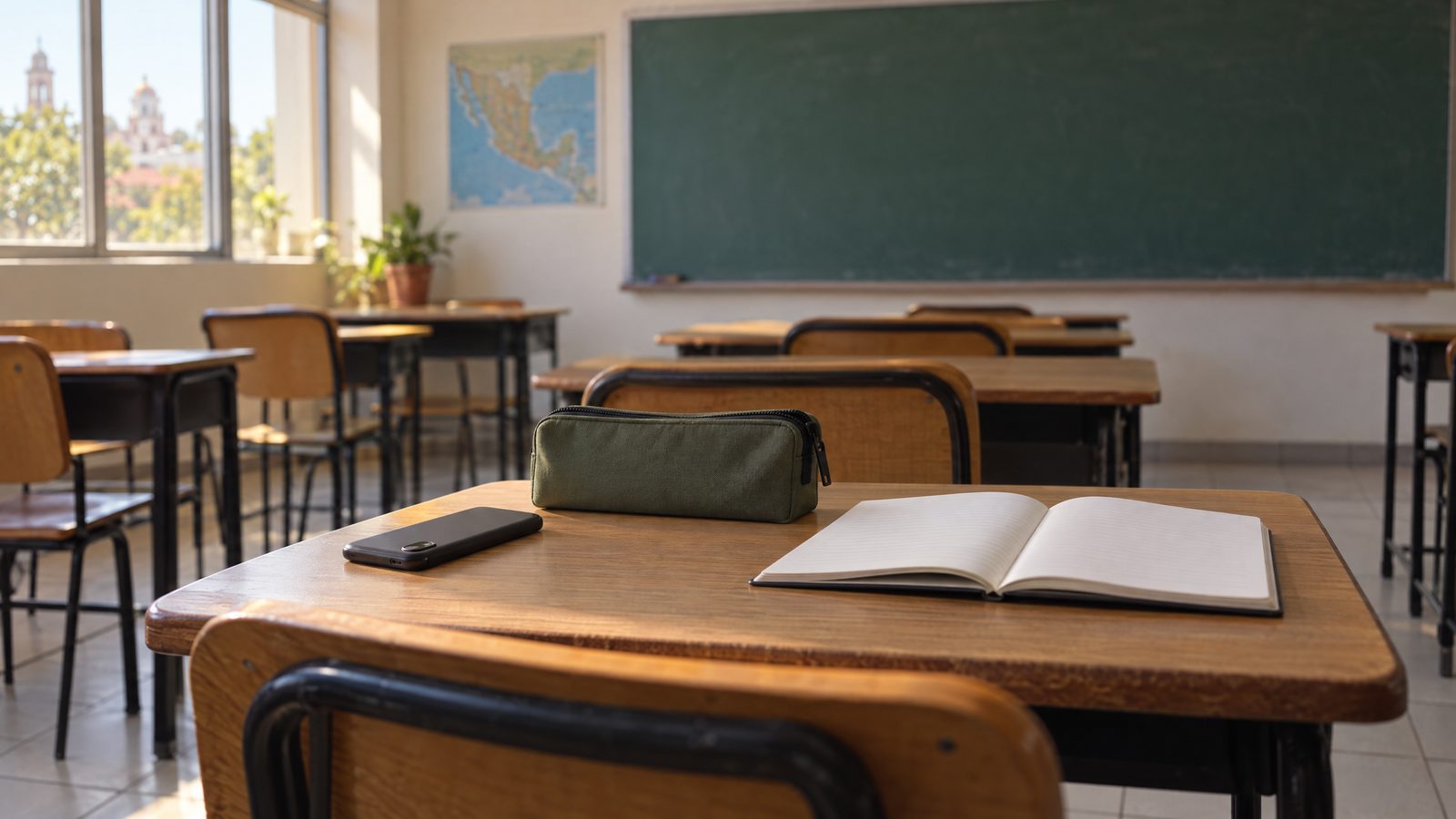

Mexico’s national restrictions on the use of mobile phones in schools took effect on 3 November 2026, setting different rules for younger pupils, older students and universities. The strongest restrictions cover the whole school day in basic education, but the agreement includes exceptions for emergencies, health and learning.
The agreement applies to public and private institutions in the national education system. In initial education, preschool, primary and secondary schools, pupils’ use of personal phones, smart devices and other personal electronic equipment is generally restricted throughout the school day, including breaks.
Restricting use is not the same as requiring every child to leave a phone at home. Accompanying guidance suggests leaving a device at home or keeping it put away during the day. The national agreement does not require every pupil to surrender a phone on arrival.
When devices can still be used
The agreement allows a device to be used for an educational activity that has been planned in advance and is guided by a teacher. It also provides for personal emergencies, health needs, disability, accessibility and inclusion, as well as particular or extraordinary needs of a school community.
Guidance for basic education envisages a pupil seeking help from a teacher, who can contact the family. It also says families and schools should use established channels to deal with an emergency. These arrangements sit alongside the agreement’s exception for personal emergencies.
Families and schools will need to understand how the provisions work in their particular circumstances, including where a device is needed for health or accessibility. The agreement allows the relevant education authorities to make adjustments for the context of each state.
Different rules for older students
Upper-secondary schools have a different framework. They must limit non-educational use during the school day, but the specific arrangements are to be developed through consultation and agreement with their communities. The agreement also provides for personal emergency, health, disability, accessibility and inclusion exceptions at this level.
Possible arrangements include keeping devices in a designated place, permitting them only at specified times or in certain areas, or restricting their use for the entire day. A school can also arrange planned use for learning. These options sit alongside the exceptions, and the agreement does not prescribe one identical timetable for every upper-secondary institution.
In higher education, the emphasis is on responsible and safe use rather than a general prohibition on phones. Institutions and their communities can develop arrangements that reflect their circumstances, with respect for university, administrative and academic autonomy.
Why the rules were introduced
The government’s stated aims include improving concentration, encouraging face-to-face interaction and supporting responsible use of technology. The policy distinguishes between the ordinary use of personal devices and technology used for an educational purpose. Those aims are not evidence that the new restrictions have already produced the desired results.
The government’s figures for an August consultation put participation at 565,396 education professionals. Among those consulted, 81.2% supported national measures addressing devices in schools, while 88.8% supported limiting access during the school day. Those figures describe the people consulted, not a survey of all parents or a test of the policy’s effects.
The measure was announced in September and the agreement was published on 22 September, before its November commencement. Education representatives from Mexico’s 32 jurisdictions approved the national agreement. The period between publication and commencement was intended to allow schools and families to be informed about the different provisions.
State education authorities and those in Mexico City have 180 calendar days after the agreement takes effect to issue or align the relevant legal instruments. The agreement also provides for discussions every six months to review implementation and consider any adjustments. Entry into force alone does not show how consistently the rules will be applied or what effect they will have on learning.







