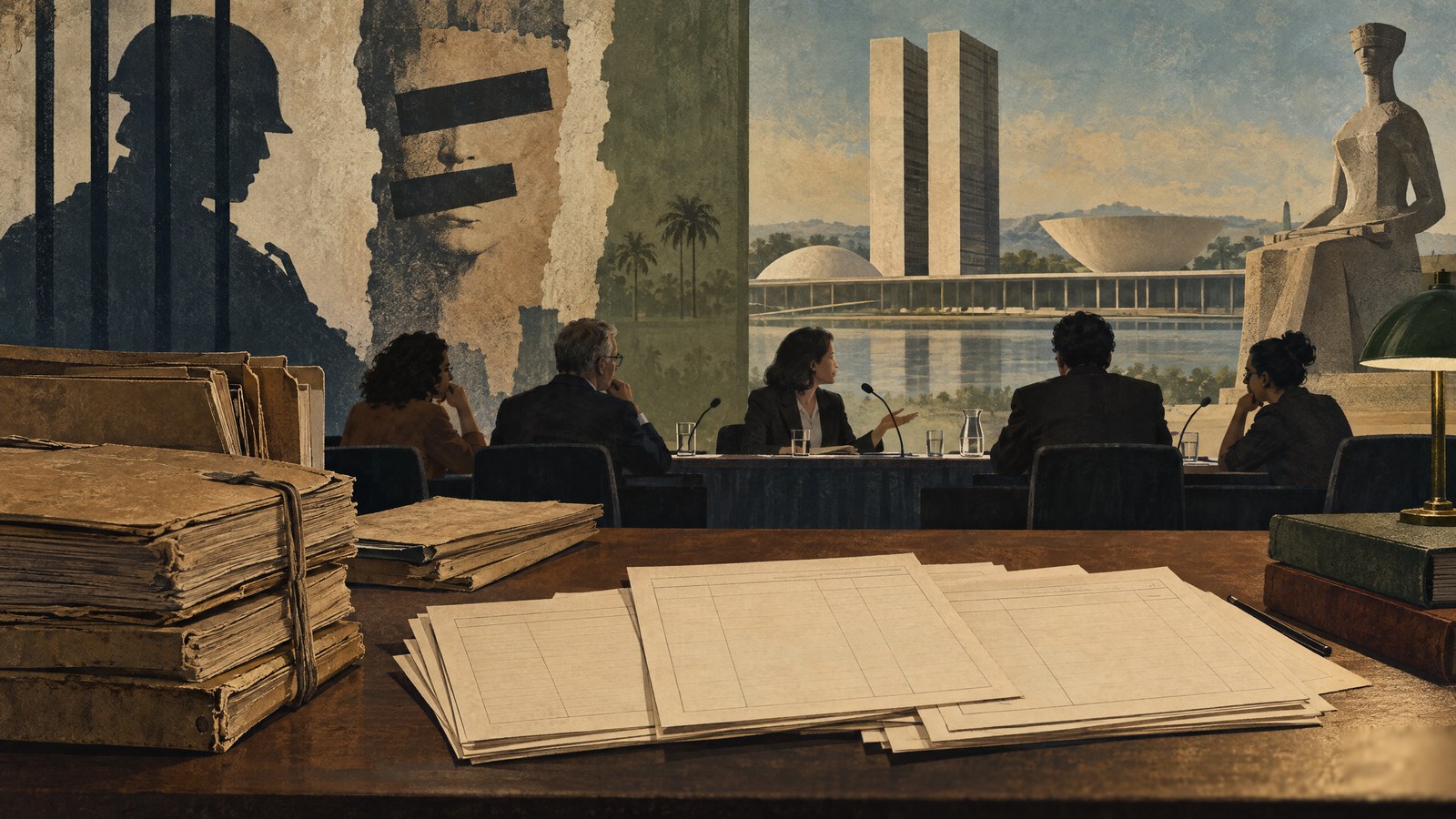

A completed seminar organised by Brazil’s national statistics institute has examined how the country’s 1974–75 household expenditure survey documented poverty, hunger and inequality during the military dictatorship. The discussion also considered whether political pressure affected the work and circulation of the findings, while making clear that the recollections available do not prove that officials intervened or imposed censorship.
A household survey that went beyond spending
The National Study of Household Expenditure, known by its Portuguese acronym ENDEF, was conducted across Brazil between 1974 and 1975. It gathered information about food consumption, household expenditure, health, hygiene, income and living conditions. The survey was also connected to work on a price index, for which researchers needed to understand household budgets and patterns of consumption.
Researchers described an unusually intensive field method. Survey staff followed household routines over seven consecutive days, completing questionnaires and recording observations. The seminar’s account said the operation involved about 1,200 field agents visiting more than 70,000 housing units nationwide. The scale and method allowed the survey to record aspects of daily life alongside conventional statistical information.
That evidence mattered in a period when the dictatorship promoted the idea of an “Economic Miracle”, a description associated with rapid economic growth. The seminar discussed how field reports and survey material presented a less triumphant picture of living standards, including extreme poverty, hunger and inequality. The contrast concerned the realities recorded among households and the prosperity narrative promoted by the government; it does not, by itself, establish what decisions were made by political authorities.
What the discussion says about dissemination
The seminar was the third in a series organised through the Institute’s Memory and History project. Historian Marcelo Muniz, from the institute’s Institutional Memory Department, and researcher Aldair Rocha discussed ENDEF and the relationship between technical autonomy and political power. The event was streamed online on 21 October.
The discussion also addressed the limited reach of some early results. Participants said preliminary findings did not receive wide publicity and that broader dissemination came after Brazil’s return to democracy. Some information released earlier was incomplete or limited. These observations describe the reach and timing of the material; they should not be read as a settled account of why particular results were not published more fully at the time.
Muniz said oral-history records include memories of pressure from senior figures in the office of then-president João Batista Figueiredo to minimise negative results. He stressed that such accounts are recollections and perceptions of officials who worked during the period, not documentary proof that political interference took place. The seminar account said there are no documents so far that establish interference in the institute’s technical work during the dictatorship.
Why the evidence remains qualified
Rocha discussed the tension between the survey’s picture of hunger and the government’s claims of development. He also cautioned against drawing a definite conclusion that the dictatorship explicitly censored ENDEF. The seminar described multiple possible influences on the treatment and dissemination of data, including the institute’s efforts to preserve its autonomy and the possibility of censorship, without establishing that censorship occurred.
This distinction is central to the historical question. The survey’s records can show what fieldworkers encountered and what information the research gathered. Later oral histories can preserve how staff remember pressures and institutional choices. Neither type of evidence, as presented in the discussion, resolves whether a specific political order altered the technical work or blocked particular findings.
The seminar therefore put two matters in view at once: ENDEF produced a detailed record of household conditions that complicated the public image of prosperity, and the available evidence about political intervention remains inconclusive. Treating the reported recollections as proof would go beyond what participants said was established. Equally, the absence of documentary proof does not erase the memories of pressure described in the oral-history archive.
A continuing historical record
The Memory and History project aims to organise the institute’s historical documentation and encourage discussion of its role in Brazil’s history, particularly during the 1964–85 military regime. Its work includes collecting memories and documents that may inform future research. The seminar formed part of that continuing effort, rather than announcing a definitive finding about censorship or a new determination of what happened to every ENDEF result.
For historians, the distinction between statistical records, institutional documents and personal recollections is consequential. ENDEF’s fieldwork offers evidence about household life in the mid-1970s. Oral histories offer evidence about how former officials remember the institutional climate. Further documentation and research may help clarify the relationship between those records, political pressures and public dissemination. For now, the seminar’s conclusion is deliberately limited: pressure was recalled, but explicit political interference or censorship has not been proved by the material described.