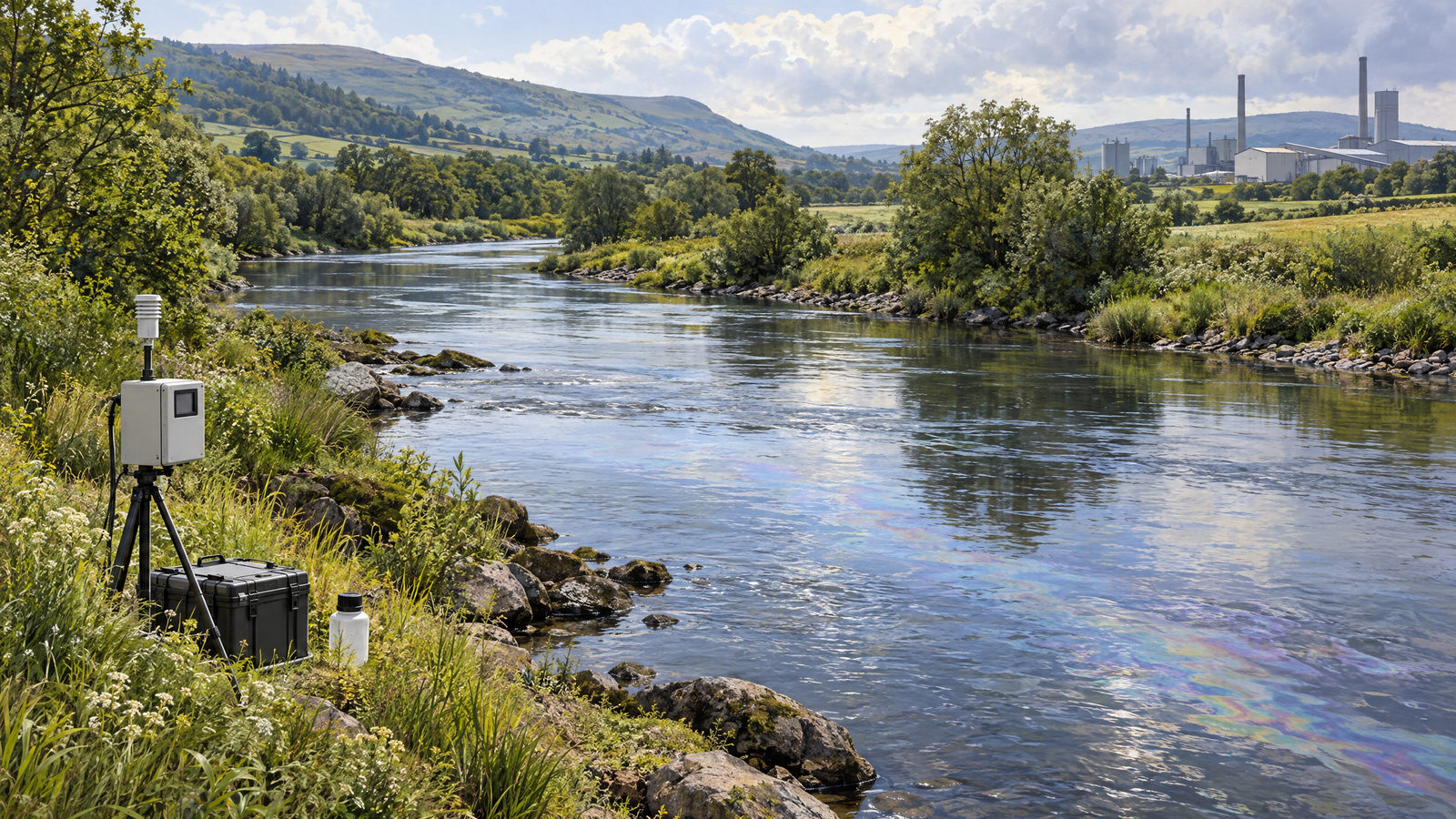

Pollution footprint reaches four kilometres
A kerosene spill linked to repair work at GE Aerospace’s Nantgarw site has affected around four kilometres of the River Taff, prompting a continuing clean-up and an investigation into how fuel entered an underground drainage network. The incident began on Friday 17 October, and Natural Resources Wales (NRW) said on Sunday evening that efforts had substantially reduced, but not yet fully stopped, the discharge.
Reports of pollution and a strong fuel smell came from communities including Nantgarw, Treforest and Taffs Well, with further reports in Glan-y-Llyn, Gwaelod-y-garth and Tongwynlais. The initial reported affected distance was about 1.6 kilometres; by Sunday the kerosene had spread almost 4 kilometres along the river. The figures describe the extent of the affected waterway, not the amount of fuel recovered.
GE Aerospace confirmed that fuel entered the river while repair work was underway at its site. It said it was working with NRW and South Wales Fire and Rescue Service on the clean-up. NRW identified a source at 19:30 BST on Friday, but the route through the underground drainage system has proved difficult to trace. Authorities have not publicly established exactly how the fuel entered the system.
Drainage recovery and river protection
Specialist drainage and containment contractors have been sent to the site to remove fuel from the drainage system. The material is being recovered for off-site disposal, while fire crews have used specialist equipment to reduce the quantity reaching the river. NRW said action on Friday and over the weekend had significantly reduced the flow into the water, although the investigation and response were continuing.
Conventional floating containment booms could not be deployed across the River Taff because of the channel’s width and high water flows. Instead, responders placed a large quantity of fuel-absorbent material where the affected tributary meets the Taff. The difference matters: the approach is intended to capture pollution at a particular junction rather than form a barrier across the full river.
NRW is taking water samples to assess environmental effects and has recovered dead fish for analysis and evidence. Those recoveries establish that fish deaths have occurred, but the full ecological impact has not yet been determined. Sampling and examination will help investigators understand the extent of harm; no final assessment of wildlife or habitat damage has been issued.
Advice for nearby residents
Public Health Wales advised people living nearby to keep doors and windows closed while the kerosene smell is present, avoid contact with the water and seek medical advice through NHS 111 Wales if they feel unwell or are concerned about symptoms. The health advice is precautionary and focused on odour and direct water contact. It does not establish that everyone in the wider area has been exposed or become ill.
Residents reported a strong fuel-like smell, and NRW said the odour had eased as the amount entering the river fell. The advice to close windows is tied to the smell being present; Public Health Wales said windows and doors can be opened again once the odour has passed. People should continue to follow any updated local instructions while the response remains active.
Investigation still under way
The incident combines a pollution source associated with industrial repair work, a drainage route that has not yet been fully mapped, and a river channel where standard boom barriers are impractical. Crews are therefore working both upstream, removing fuel from the drainage system, and at the tributary’s meeting point with the Taff, where absorbents can intercept some of what reaches the river.
NRW’s next tasks include tracing the underground pathway, stopping any remaining discharge, collecting evidence and assessing the environmental impact. The recovered fish and water samples form part of that work. Until the investigation is complete, the exact quantity that entered the water, the precise route it took and the lasting ecological consequences remain uncertain.
The weekend response has reduced the amount of kerosene flowing into the river, but a reduced discharge is not the same as a completed clean-up. Contractors continue to recover fuel from the site’s drainage network, while environmental monitoring and public-health advice address separate concerns: limiting further pollution and helping residents respond to odour or symptoms.