

A national survey of municipal administrations in Brazil has found that 3,289 municipalities reported being affected by drought during the four years from 2021 to 2024. That was 59% of the municipalities covered by the survey, compared with 53.4% in the previous edition.
The results, released on 11 November, also show a particularly large rise in the proportion of municipalities in southern Brazil reporting waterlogging. The share increased from 38% in the 2020 survey to 59.9% in the 2025 survey, rising from 452 to 714 municipalities.
The figures describe what local authorities reported for a historical reference period, not a set of disasters that took place on the day the results were released. The 2025 survey asked about natural disaster events in 2021, 2022, 2023 and 2024. Its results are compared with those from the earlier survey edition.
The national survey gathered information from municipal administrations and also included the Federal District and the district of Fernando de Noronha as units in its coverage. It reported results for 5,571 such units overall.
Different forms of flooding
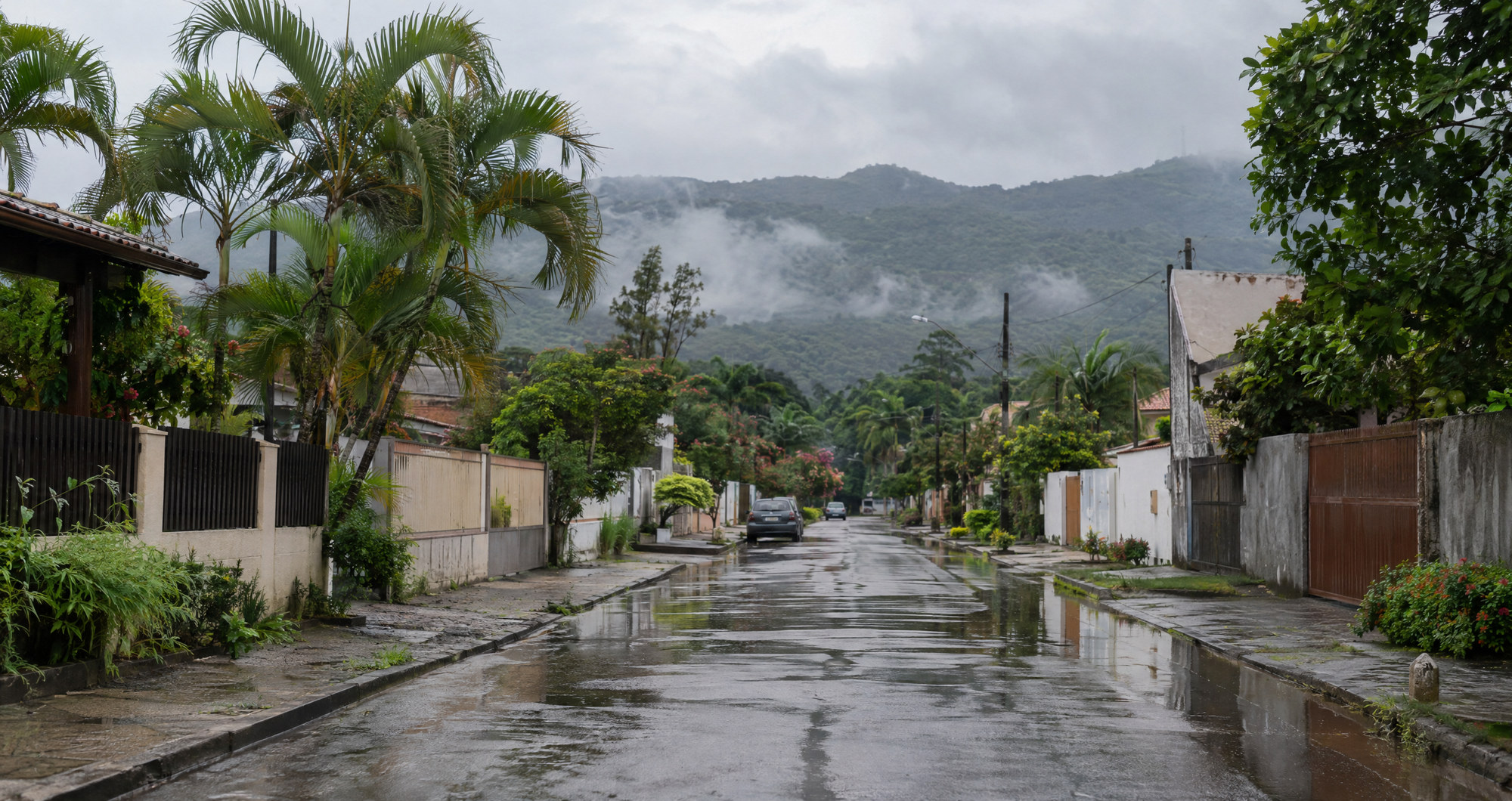
Across Brazil, 2,760 municipalities reported waterlogging in the four-year period, equivalent to 49.5% of the total. The earlier survey recorded 1,958, or 35.8%. Waterlogging is recorded separately from gradual river flooding and from sudden floods or torrents.
Waterlogging can occur where rainwater accumulates because it cannot drain or soak into the ground quickly enough. Gradual flooding involves water rising over a longer period, while sudden floods can develop rapidly. Treating them as separate categories helps explain why a municipality may appear in more than one set of results.
For gradual floods, 2,363 municipalities, or 42.4%, reported being affected in the latest survey. The corresponding figure in the 2020 edition was 1,792, or 32.8%. Reports of landslides and slope slips also rose, from 17.1% of municipalities in the earlier survey to 25.2%, or 1,404 municipalities, in the latest one.
The southern increase in waterlogging does not mean that 59.9% of residents were flooded, or that every affected municipality experienced the same severity. The figures count municipalities, not people or individual incidents. They do not establish the cause of each event or the reason for every change between survey editions.
Drought and emergency response
Drought was the most widely reported disaster type in the findings. In the previous edition, 2,916 municipalities had reported being affected, compared with 3,289 in the latest survey. Of those in the latest group, 2,157 had also reported drought in the earlier edition.
For 1,234 municipalities reporting drought, 2024 was identified as the year of greatest impact. Another 702 identified 2023. Among municipalities reporting drought, 1,935 said they had issued an emergency or public calamity declaration in the year they considered most severely affected.
The survey also asked about arrangements for managing disaster risks. Municipal civil defence organisations were reported in 4,384 municipalities, or 78.7%. A further 639 municipalities said they had none of the emergency-response structures listed in the survey, while 178 could not provide the information. The two groups should not be treated as identical: a lack of information is not the same as a confirmed absence of a structure.
Among municipalities that reported gradual flooding, 1,066 said they had dredged watercourses as a measure to prevent or reduce damage. Relocating people living in risk areas was reported by 457. Another 271 said they had carried out none of the interventions listed.
Emissions monitoring
The survey also asked, for the first time, whether municipalities monitored greenhouse-gas emissions within their territories. Just 151 municipalities, or 2.7%, said they did. A further 89.1% said they did not monitor emissions and 8.2% could not say.
Monitoring is not the same as taking action to reduce emissions. The survey separately found that 640 municipalities, or 11.5%, reported some initiative to reduce them. The responses provide a picture of what local administrations said they had in place; they do not, on their own, measure the effectiveness of those initiatives.
The survey draws on information supplied by municipal administrations. Changes in their reporting or capacity to record events may affect comparisons, so the rise in reported exposure cannot be attributed to climate change alone. The results nevertheless show how widely different hazards were reported across Brazil in the years examined, alongside variations in local planning and response arrangements.







