

Chile has signed a new agreement to advance the donation of 22,333 hectares for a proposed national park at the southern tip of South America. The 3 November protocol concerns land in the Cabo Froward area of Magallanes, where the planned park could eventually cover about 183,000 hectares.
What the agreement adds
The agreement was signed at La Moneda in Santiago by representatives of Chile’s national assets and environment ministries, its biodiversity and protected areas service, and the conservation organisation Fundación Rewilding Chile. It is a step towards completing a further donation offer, rather than confirmation that the new land has already changed hands or that the park has been legally created.
The projected size is not itself a new announcement. In October, the environment ministry described an expanded proposal of approximately 183,045 hectares that already envisaged another property from the foundation as well as additional public land. The new development is the complementary agreement to take forward the extra donation.
The latest offer would join 127,302 hectares previously donated by the foundation and registered in the state’s name in November 2025. Together, the earlier land and the new offer add up to 149,635 hectares. The wider proposal also includes public land, although the final boundaries remain to be settled.
Two existing state-protected areas, Río Batchelor and Cabo Froward, form part of the plan. The proposed national park would bring donated and public land together under permanent state protection and management, if the remaining steps are completed.
Consultation and next steps
The project has developed over several years. The foundation acquired an initial 93,492-hectare property in 2021 and a second property of 33,810 hectares in 2024. The earlier land transfer was made on the condition that a national park would be created within two years; the current agreement concerns a further parcel.
An earlier Indigenous consultation in 2025 was suspended and later revoked. The government began a new process on 20 October 2026. The first planning meeting with Indigenous communities was provisionally scheduled for 18 November. Officials had expected the consultation to conclude by the end of March 2027, but that was an estimate, not a confirmed completion date. Further administrative procedures would follow.
The resolution that initiated the new consultation described an area of approximately 161,315 hectares, including the earlier donated properties and the two existing protected state holdings. It did not list the further parcel covered by the November agreement. The ministry’s wider proposal is larger, and the resolution described its own boundaries as preliminary.
Cabo Froward is part of the ancestral territory of the Kawésqar people. Juan Francisco González Caro, a representative of the Kawésqar community Ancón sin Salida, previously opposed the park proposal. He raised concerns about access and Indigenous participation in decisions about the land, and proposed an Indigenous reserve as an alternative. His concerns do not establish what access rules a future park would actually impose.
The consultation resolution also noted historical use of the area by Kawésqar people and identified a state land concession granted in 2023 to the Yagán community Lom Sapakuta. The consultation concerns representative Indigenous institutions that may be directly affected; its outcome has not been established by the signing.
A landscape of forests and peat
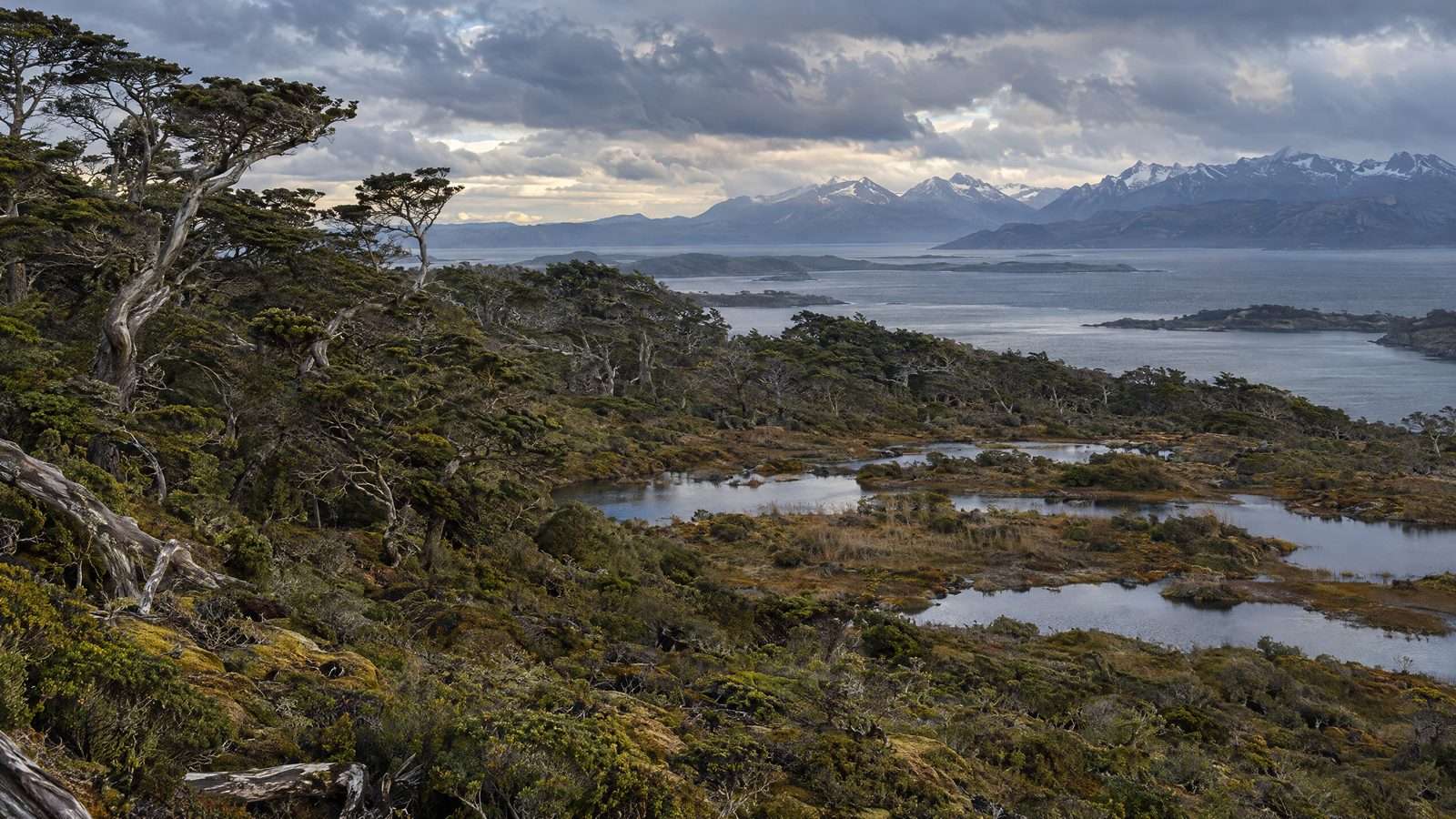
The proposed park lies on the Brunswick Peninsula beside the Strait of Magellan, in the municipality of Punta Arenas. The area contains subantarctic forests and extensive peatlands. The Guaitecas cypress, a conifer found in the area, is among the distinctive trees of the far south.
Peatlands are wetlands in which waterlogged conditions slow the decay of dead plants, allowing peat to build up and retain carbon in the soil. Damage or drainage can release greenhouse gases. Conserving peatlands can therefore be important both for wildlife and for the climate.
Wildlife and future use
The area is also habitat for the huemul, or South Andean deer, an endangered species. In 2025, a conservation team found a group of ten huemul in the Cape Froward area. Protecting habitat is relevant to a species whose remaining populations are small and fragmented.
The proposed area borders a nesting site for the ruddy-headed goose. Chile classifies the species as endangered, although its global assessment is least concern. That difference matters: the conservation situation of the mainland population is not the same as the picture for the species across its entire range.
The foundation had also been working on plans for trails, visitor facilities and camping areas. Officials see potential for nature tourism and local services, but such benefits remain prospective. The signing does not establish that facilities have been built, that tourism income will follow, or that the consultation and park-creation process have been completed.







