
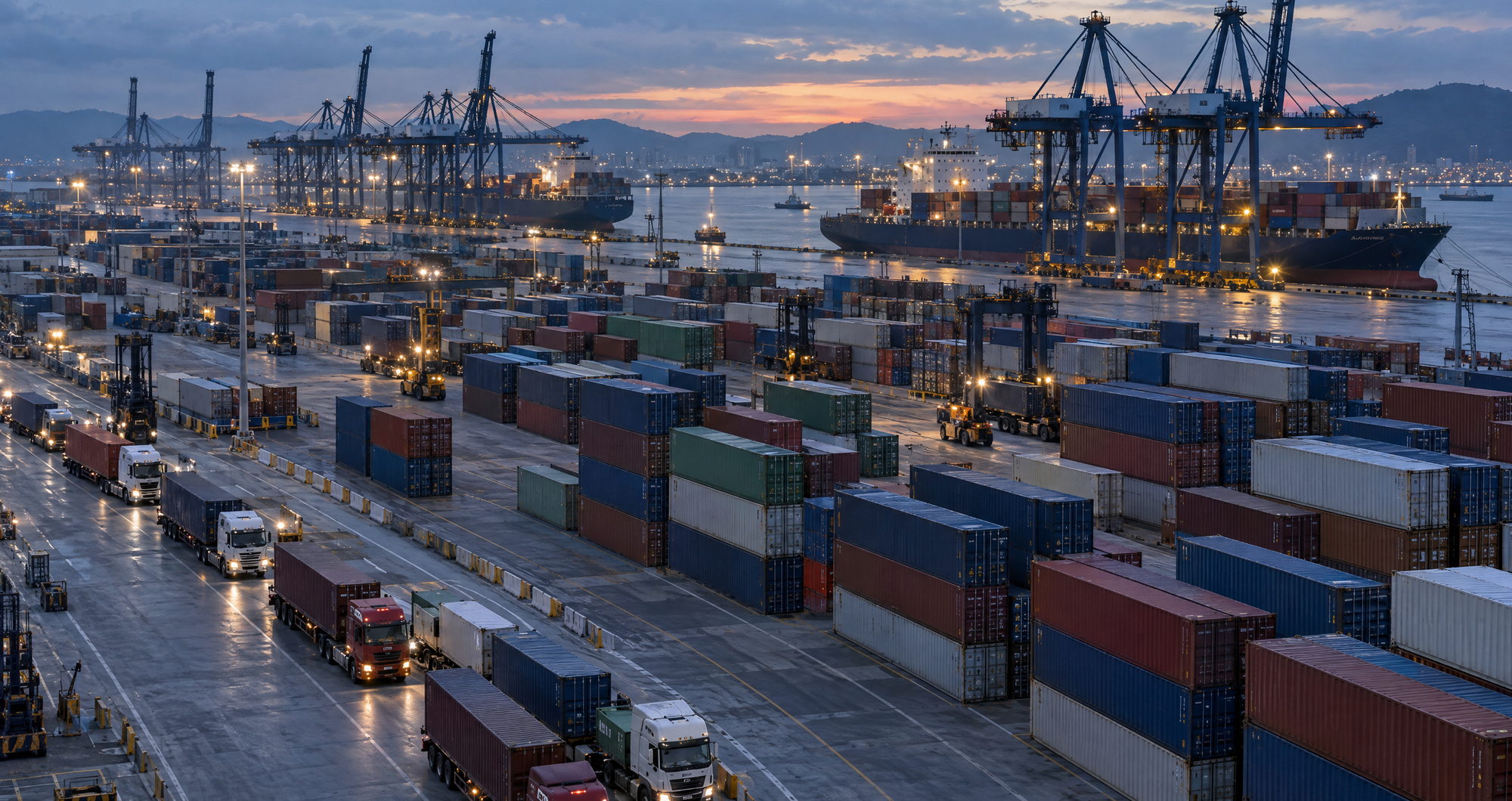

China’s trade surplus has passed $1 trillion for a second consecutive year, with a sharp rise in October exports keeping the country on course to exceed its previous annual record. Chinese customs data released on Tuesday 10 November put the January to October 2026 surplus at $1.04 trillion, up more than 8 per cent on the same period a year earlier.
The customs figures showed exports reaching $412.33 billion in October, an increase of 35.2 per cent year on year. Imports grew faster, rising 41.6 per cent as China’s purchases of foreign goods picked up. That narrowed the monthly surplus, but did not change the broader picture of a substantial imbalance between what China sells abroad and what it buys.
The figures arrive as Western governments press Beijing over the scale of that imbalance and as the yuan has strengthened. For trading partners, the persistent surplus adds weight to arguments for tariffs and currency pressure. For China, it underlines the importance of overseas demand to an economy whose growth still leans heavily on exports rather than household spending.
A narrower monthly gap
Chinese customs data put October’s monthly surplus at $105.3 billion, down from $133.5 billion in September. A trade surplus is the gap between the value of exports and imports when overseas sales exceed purchases from abroad. It can narrow even during strong export growth if imports also increase sufficiently.
October illustrates that distinction. The faster percentage increase in imports helped reduce the monthly gap, while exports continued to expand strongly. The two developments are not contradictory: a smaller surplus does not necessarily mean weaker overseas sales, just as rising imports do not by themselves establish a lasting change in the balance of trade.
The customs figures also showed export growth easing slightly from September’s year-on-year rise of 36.3 per cent. October’s increase remained substantial, however. A single month’s comparison offers only a limited guide to the direction of trade, particularly when both exports and imports are changing rapidly.
The annual record
The cumulative position is more striking than the monthly decline. Chinese customs data show that the January to October surplus has already exceeded $1 trillion. The same data put the full-year 2025 surplus at a record of about $1.2 trillion, leaving China on course to surpass that total this year.
That remains a trajectory, not a confirmed annual outcome. The final result will depend on the balance between exports and imports over the remaining months. October’s narrower gap is therefore relevant, but it does not erase the increase already recorded across the year to date.
A large surplus indicates that foreign demand is absorbing substantially more Chinese goods than Chinese buyers are purchasing from overseas. It is not, by itself, a complete measure of economic health. The figures nevertheless help explain the pressure on Beijing to rely more on domestic demand, including household consumption, rather than continued expansion in sales abroad.
Pressure from trading partners
For a British audience, the significance lies in China’s place in international trade. The balance between Chinese exports and imports forms part of the debate over access to markets, competition and tariffs. Those policy choices matter to businesses trading across borders and to consumers buying imported goods, although these figures do not establish a specific effect on British prices or firms.
The strengthening yuan adds another element to that debate. Exchange rates influence the relative cost of goods traded internationally, but the customs figures alone cannot show how much currency movements contributed to October’s results. Nor do they establish whether the faster growth in imports will persist.
The next trade figures will help show whether October’s narrower monthly surplus marks a continuing change or a temporary movement. Until the remaining months are counted, a new annual record is not settled. What is already clear from the customs data is that China’s surplus has again crossed the trillion-dollar threshold, keeping its trade imbalance central to discussions with its partners.







