
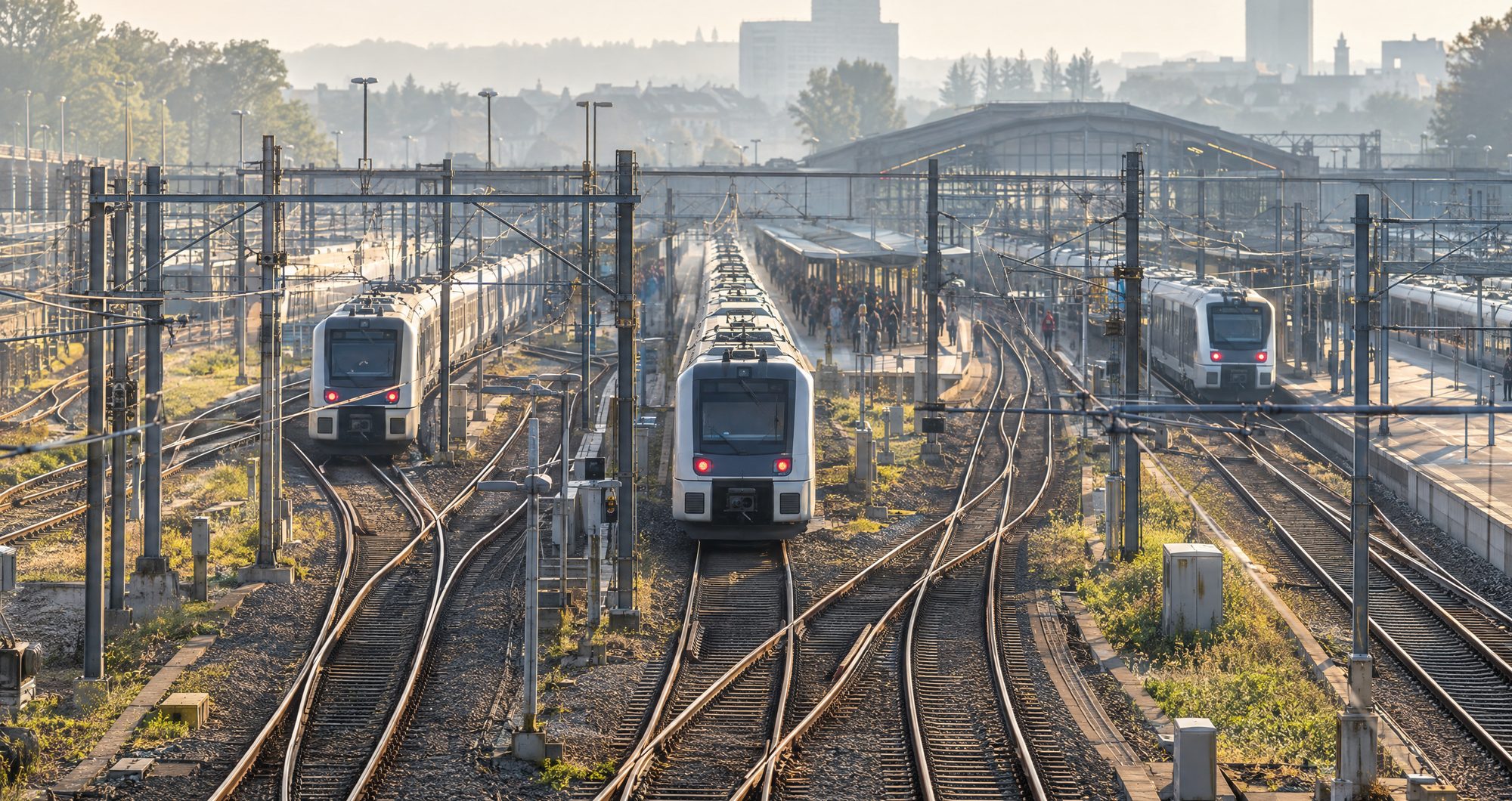

Croydon’s executive mayor and the chief executive of Gatwick Airport have asked the Chancellor to invest in tackling the rail bottleneck around East Croydon, arguing that a more reliable railway is needed to support growth along the route.
Jason Perry and Pierre-Hugues Schmit made the case in a joint letter. Their appeal was announced on 12 November, when both also spoke at the Invest in Croydon conference. Their intervention brings the airport and the council together over a problem that has affected the railway for years.
The letter is a request for action, not an announcement that work has been funded or approved. The previous major programme to remodel the area is not currently funded, and no further development work has taken place since it was paused.
Why Croydon matters to the wider railway
East Croydon sits on a heavily used corridor between London, Gatwick and the south coast. The main rail route between central London and Gatwick passes through the station. The route also forms part of the wider Thameslink network, which connects destinations north and south of central London.
The difficulty is not confined to the platforms. North of East Croydon, trains must negotiate a complex set of junctions in the Selhurst area. Where services need to cross one another’s paths, a delayed train can hold up others. Disruption can then spread along the Brighton Main Line and through Thameslink.
That gives passengers travelling well beyond Croydon an interest in the debate. The corridor links the capital with Gatwick and Brighton, while Thameslink services extend to places including Bedford, Peterborough and Cambridge. A proposed solution at one junction therefore has implications for connections across a much wider network.
Perry and Schmit say capacity improvements could help support housing, tourism and business investment. Those are arguments for the work rather than outcomes that have already been secured. Earlier modelling suggested that resolving the bottleneck could generate around £5.1 billion in economic value over 20 years. That is an estimate of potential benefits, not money allocated to construction.
An older scheme remains unfunded
Network Rail previously developed the Croydon Area Remodelling Scheme as part of a wider Brighton Main Line upgrade. Its proposals included an expanded East Croydon station, changes to the tracks in the Selhurst Triangle, reconstruction of Windmill Bridge to accommodate additional tracks and improvements at Norwood Junction.
An earlier design would have increased East Croydon from six platforms to eight and reduced conflicting train movements. It was expected to create capacity for four to six additional trains an hour. Those figures describe the earlier proposal; they are not a promise of a future service.
The previous scheme was not allocated funding in the 2025 spending review. The wider programme was paused in 2022 at the outline business case stage, and no further development work has taken place since. There are currently no plans to apply for the associated planning consents or make compulsory land purchases.
An earlier estimate put the cost of the scheme at about £2.9 billion and the delivery time at more than ten years, with substantial disruption for passengers during construction. That historical estimate should not be treated as the price or timetable for any revised project.
The airport’s expansion case
The joint appeal follows development consent for Gatwick’s Northern Runway project, which would bring the existing runway into routine use alongside the main runway. The airport estimates that the privately financed project could support around 14,000 jobs and add £1 billion a year to the regional economy. These are the airport’s projections, not results already achieved.
Perry and Schmit argue that rail investment should be considered alongside that expansion. Gatwick agreed to a public transport target as part of the approval process, underlining the importance of how passengers reach the airport as well as what happens on the runway.
The airport project has also attracted opposition over issues including noise, pollution and climate emissions. Stronger noise measures were among the conditions discussed during the consent process. The debate over the runway is separate from the question of whether, and in what form, the Croydon railway should be upgraded.
For rail passengers, the joint appeal does not set a construction start date or announce a new service timetable. The council is ready to work with the Government, Network Rail, the airport and other partners on a practical solution.







