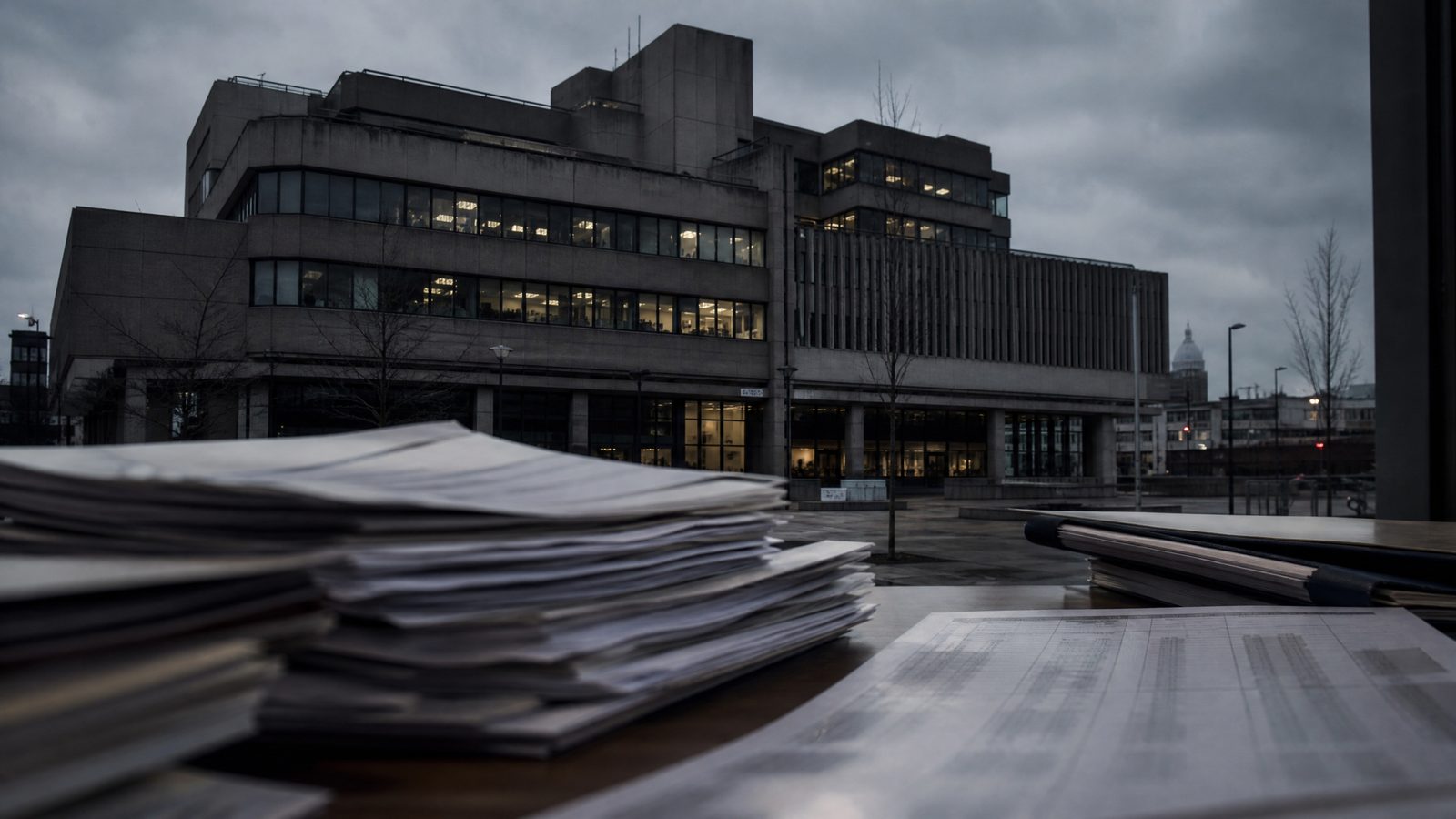

Croydon Council is currently navigating a severe financial crisis that has been described as a “compounding financial trap,” leaving the local authority to consider asking the government for a staggering £500m debt write-off as a last resort. The council is burdened with a historic debt of £1.4bn, a figure that continues to cast a long shadow over its ability to deliver essential services to residents. Of this total, £1.1bn is classified as “overhanging” debt, meaning it is not backed by any physical assets that could be sold to recoup the costs. This overhanging debt is a significant point of concern, as it includes £526m in Exceptional Financial Support (EFS) borrowing that has been used simply to fund day-to-day spending, alongside £545m linked to failed commercial investments made by previous administrations. Without urgent intervention, the council expects its EFS borrowing to escalate to £900m by the year 2030, a trajectory that many consider to be entirely unsustainable, as highlighted in the council’s newsroom.
Financial strategy and the search for savings
To address this escalating crisis, the council is preparing to approve its 2027–30 financial strategy, a critical document that outlines the necessary steps to regain fiscal control. The Croydon Council reveal that this strategy requires finding nearly £80m in savings over the coming years. The focus will primarily be on reducing spending in high-cost services that are currently experiencing rising demand. These areas include adult social care, children’s services, temporary accommodation, and special educational needs and disabilities (SEND). Detailed proposals outlining exactly where these savings will be found are expected to be published this autumn, and they are likely to be heavily scrutinised by both residents and financial experts.
Mayor Jason Perry has been vocal about the challenges ahead, stating, “Returning the council to financial stability remains my key priority, and this strategy sets out the next phase of that work.” He has consistently emphasised the need to address demand pressures head-on and to focus on preventative measures that can improve outcomes for residents while making the best possible use of public money. In a move that will likely bring some relief to local households, Perry has also ruled out another exceptional council tax increase above the standard 5% limit. This follows a controversial 15% rise in 2023, which left Croydon residents paying the second-highest council tax in London. The financial strain on residents is a growing concern across the capital, as highlighted by recent reports on the widening life expectancy gap in England, which underscores the importance of well-funded local services.
Expert warnings and the path forward
Financial experts have been quick to warn that the council’s reliance on EFS is not a viable long-term solution. Prof Aileen Murphie, a Director of the National Audit Office, has likened the use of EFS to capitalising a deficit and paying it off over time. She stated, “If you do it year-on-year, you are not really dealing with the underlying issues.” This sentiment was echoed by an unnamed chief executive of another London borough council, who bluntly compared the use of EFS to taking out a “payday loan.” These warnings highlight the precarious nature of Croydon’s financial position and the urgent need for structural reform, as detailed in the council’s financial recovery information.
The council itself acknowledges the difficult road ahead, noting that government ministers are highly unlikely to even consider the £500m debt write-off request until Croydon can definitively demonstrate that it has exhausted all other options to address its financial position. This means that the council must show tangible progress in implementing its savings strategy and reforming its operations. In the meantime, the council’s progress will continue to be closely overseen by government-appointed commissioners until at least July 2027, ensuring that every financial decision is subject to rigorous external scrutiny. As the situation develops, the broader implications for local governance and funding remain a pressing issue, much like the coordinated emergency responses seen during the recent Mitcham flats blaze, which rely heavily on robust public sector resources.
Ultimately, the resolution of Croydon’s financial crisis will require a delicate balance between making necessary cuts and protecting the most vulnerable members of the community. The coming months will be crucial as the detailed savings proposals are unveiled and the true impact of the 2027–30 financial strategy becomes clear. For now, the council remains caught in a compounding financial trap, with the hope of a government bailout serving as a distant, uncertain lifeline.