
Introduction
The global drone market is poised for significant expansion over the next decade, supported by rapid advancements in aerial technologies and increasing applications across both commercial and governmental sectors. In 2024, the market reached a valuation of approximately USD 36.4 billion, and it is projected to grow to nearly USD 95.4 billion by 2034, reflecting a robust CAGR of 10.1% during the forecast period from 2025 to 2034. The surge is being driven by growing demand for drones in logistics, surveillance, agriculture, construction, and emergency response, as industries seek faster, cost-effective, and data-driven operational models.
Asia-Pacific (APAC) led the global drone market in 2024, securing over 40.2% of the total share and generating about USD 14.63 billion in revenue. This dominance is heavily influenced by the region’s strong manufacturing base, government-led innovation programs, and growing adoption in urban infrastructure, delivery services, and smart agriculture. China, in particular, plays a pivotal role in this leadership, largely due to the global prominence of DJI, which currently holds an estimated 60% of the global market and an overwhelming 80% share of the U.S. drone market, according to SeedScientific. DJI’s continued innovation and economies of scale have solidified its position as the foremost drone manufacturer worldwide.
The report provides a full list of key companies, their strategies, and the latest developments. Download a free sample before buying
The economic footprint of the drone industry is expanding rapidly. By 2025, it is expected to create approximately 103,776 jobs, ranging from engineering and AI programming to drone operation and maintenance. In the U.S., the Federal Aviation Administration (FAA) has already registered 855,860 drones as of 2024, with 270,183 certified remote pilots operating within commercial and industrial segments. Notably, 96% of drone owners are male, highlighting a gender disparity in drone usage and ownership. Meanwhile, total spending by businesses and government agencies on drone technologies has surpassed USD 13 billion, underscoring the growing confidence in UAV capabilities for critical missions and routine commercial applications.
Key insight summary
- The Rotary Wing Drone segment dominated with 61.1% share in 2024, thanks to its versatility and suitability for short-range, vertical takeoff and landing operations.
- Fixed-Wing Drones saw notable growth, rising from 31.7% share in 2019 to 38.9% in 2024, reflecting increasing demand for long-range, endurance-driven missions like mapping and border patrol.
- The Military segment accounted for 48.8% of the market in 2024, underscoring drones’ strategic importance in defence, intelligence, and border security operations globally. The US military alone operates over 10,000 drones, highlighting its scale of use.
- In the US, drone adoption is rapidly expanding, with 853,857 drones registered as of 2024 – 73% for recreational use, though the commercial segment is growing steadily. The presence of 270,183 certified remote pilots reflects the increasing professionalism of the sector.
- DJI maintains a dominant 77% market share in the US, far ahead of competitors like Intel at 3.7%, while more than 40 companies actively compete for market share.
- By 2025, global drone revenues are forecast to reach USD 63.6 billion, while the drone delivery market alone is projected at USD 27.4 billion by 2030, driven by rising e-commerce and last-mile logistics.
- The agriculture sector is expected to account for 80% of drone use, emphasising its role in precision farming and yield optimisation. Similarly, infrastructure inspection is forecast to grow by 50% in five years, as drones cut inspection time dramatically.
- The US drone industry is also an important job creator, projected to generate over 100,000 new jobs by 2025, with average annual salaries for drone pilots around USD 77,101, making it a vital component of the modern workforce.
Emerging trend: AI‑enabled autonomy and swarming
Advancements in artificial intelligence are enabling drones to operate with higher autonomy and cooperative behaviour. Drones are now capable of real‑time obstacle avoidance, adaptive flight paths, and autonomous mission execution without constant human supervision. This trend is especially evident in military and wildfire applications where AI‑driven systems plan coordinated swarm activities to improve coverage and responsiveness.
Such autonomy is accelerating adoption in sectors like public safety, agriculture, and infrastructure maintenance. Use cases include drone swarms for forest fire containment and autonomous inspections of remote assets. These developments suggest a shift from manual pilots to intelligent decision‑making systems embedded in drone platforms.
Driver: Expansion of civil and commercial use cases
The demand for drones is being driven by their growing deployment in civil applications due to improved payload capacity, sensor integration, and commercial utility. Drones are being used more frequently in agriculture for crop spraying and multispectral imaging, in construction and energy for site surveys, and in logistics for last‑mile delivery services.
Government endorsement and commercial investment in drone delivery trials by companies like Flytrex and Zipline have further legitimised the sector. Urban air mobility infrastructure and supportive policies are also expanding opportunities. This broadening of use cases is reinforcing commercial growth across diverse markets.
Restraint: Regulatory and airspace management limitations
Regulatory hurdles continue to pose significant obstacles to drone scalability. Many countries have strict licensing regimes, flight restrictions over populated areas, and limitations on beyond‑visual‑line‑of‑sight (BVLOS) operations.
Moreover, evolving frameworks such as Uncrewed Traffic Management (UTM) systems and Remote ID rules require mandatory compliance. The absence of unified global standards further complicates cross-border deployment. These regulatory impediments slow commercial expansion and raise operational costs.
Opportunity: Public safety and emergency services
One of the most promising opportunities lies in the expansion of drone use in public safety, emergency response, and disaster management. Drones are increasingly deployed for wildfire detection, aerial firefighting, search and rescue missions, and infrastructure inspection – roles traditionally limited by costs or risk.
With environmental emergencies growing in frequency, governments and agencies are allocating budgets to purchase drones and train operators. The integration of autonomous platforms for rapid deployment in hazardous conditions presents a substantial long‑term prospect for drone providers.
Challenge: Supply chain vulnerabilities and geopolitical risks
The global drone supply chain faces mounting disruption due to geopolitical tensions and resource dependencies. Production costs have risen as key components like sensors, batteries, and chips increasingly depend on Chinese suppliers.
In addition, the military drone market is becoming saturated with similar small platform offerings, intensifying competitive pressure and driving consolidation. Firms that lack supply diversity or unique differentiation risk long lead times, rising costs, and reduced profit margins.
Source of information @ https://market.us/report/drone-market/
Recent developments
- In January 2025, SZ DJI Technology introduced the DJI Flip, a foldable and lightweight drone weighing only 249 grams, targeting the consumer and content creator segment. The device is fitted with a 48MP 1/1.3-inch CMOS sensor and supports 4K HDR video recording at 60 fps. It also features SmartPhoto technology for optimised imaging. The launch underscores DJI’s effort to maintain its dominance by offering highly portable, user-friendly models that meet growing demand from lifestyle, vlogging, and casual drone operators.
- In May 2024, Droneshield released its upgraded anti-drone platform, DroneSentry C2 Next-Gen v1.00, to enhance centralised surveillance and threat response. This advanced control system allows seamless management of multiple detection sensors and counter-drone devices across critical infrastructure sites. By streamlining data and control across a unified interface, this development reflects the increasing need for automated airspace security solutions, especially amid rising concerns around unauthorised drone activity in public and strategic locations.
- In April 2024, Israel Aerospace Industries (IAI) entered a strategic partnership with Aerotor Unmanned Systems to advance next-generation unmanned aerial system (UAS) capabilities. This agreement focuses on merging IAI’s established strength in unmanned aviation with Aerotor’s Apus multicopter platform, which is powered by a central heavy-fuel propulsion system and features a variable-pitch mechanism. The technical configuration of this drone is expected to deliver enhanced payload capacity, longer flight endurance, and higher manoeuvrability, supporting both military and industrial missions.
- In February 2024, Teledyne FLIR Defence was awarded a major contract exceeding CAD$95 million by the Canadian Department of National Defence. The procurement involves over 800 SkyRanger R70 drones equipped with autonomous navigation and dual optical-thermal imaging systems. With a payload capacity of 3.5 kg, these units are intended for deployment in Ukraine, demonstrating a growing emphasis on tactical drone use in modern warfare. This also highlights the expanding role of thermal sensor technologies in defence-grade UAV applications.
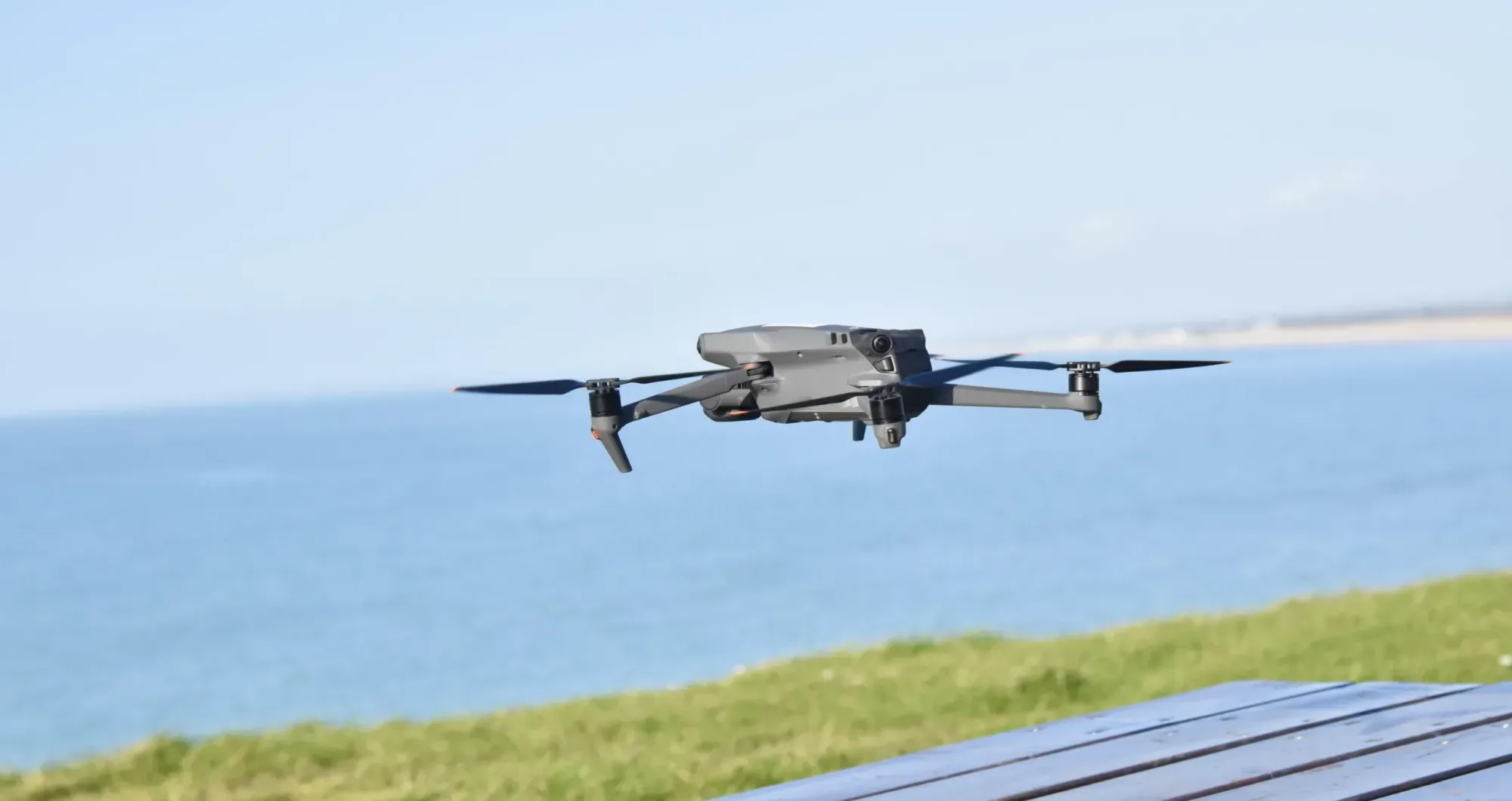
Feature Image by JackieLou DL from Pixabay