

Early trial reports tumour responses with targeted T-cell drug
An experimental drug designed to activate a narrow subset of immune cells has produced tumour responses in an early trial involving people whose solid tumours had mostly resisted immune-checkpoint treatment. The findings come from START-001, a multicentre phase 1/2 study of invikafusp alfa in antigen-rich solid tumours.
The result is a research signal rather than evidence of a new standard treatment. The study is small, early-stage and still under way. It does not establish that the drug improves survival, works for all tumour types or is ready for routine clinical use.
Results from the optimal-dose group
In the first stage of the trial, participants received differing doses of invikafusp alfa every two weeks. The purpose was to examine safety and identify a dose for further testing. The report’s results reflect information collected up to 12 March 2025, even though the paper was published on 23 October 2026.
At the doses described as optimal, 27 participants were evaluated across the phase 1 and initial phase 2 groups. Disease had not progressed in 16 of them, or 59.3 per cent. Four participants, or 14.8 per cent, had confirmed partial responses, meaning the measured target tumours had reduced by more than 30 per cent.
Those figures should be read separately. A finding that disease had not progressed can include stable disease and is not the same as a measured tumour response. The four partial responses were recorded in a limited group that included people with cancers that had not responded to earlier immune-checkpoint treatment. No objective responses were reported at doses below 0.08 mg per kg.
A selective immune approach
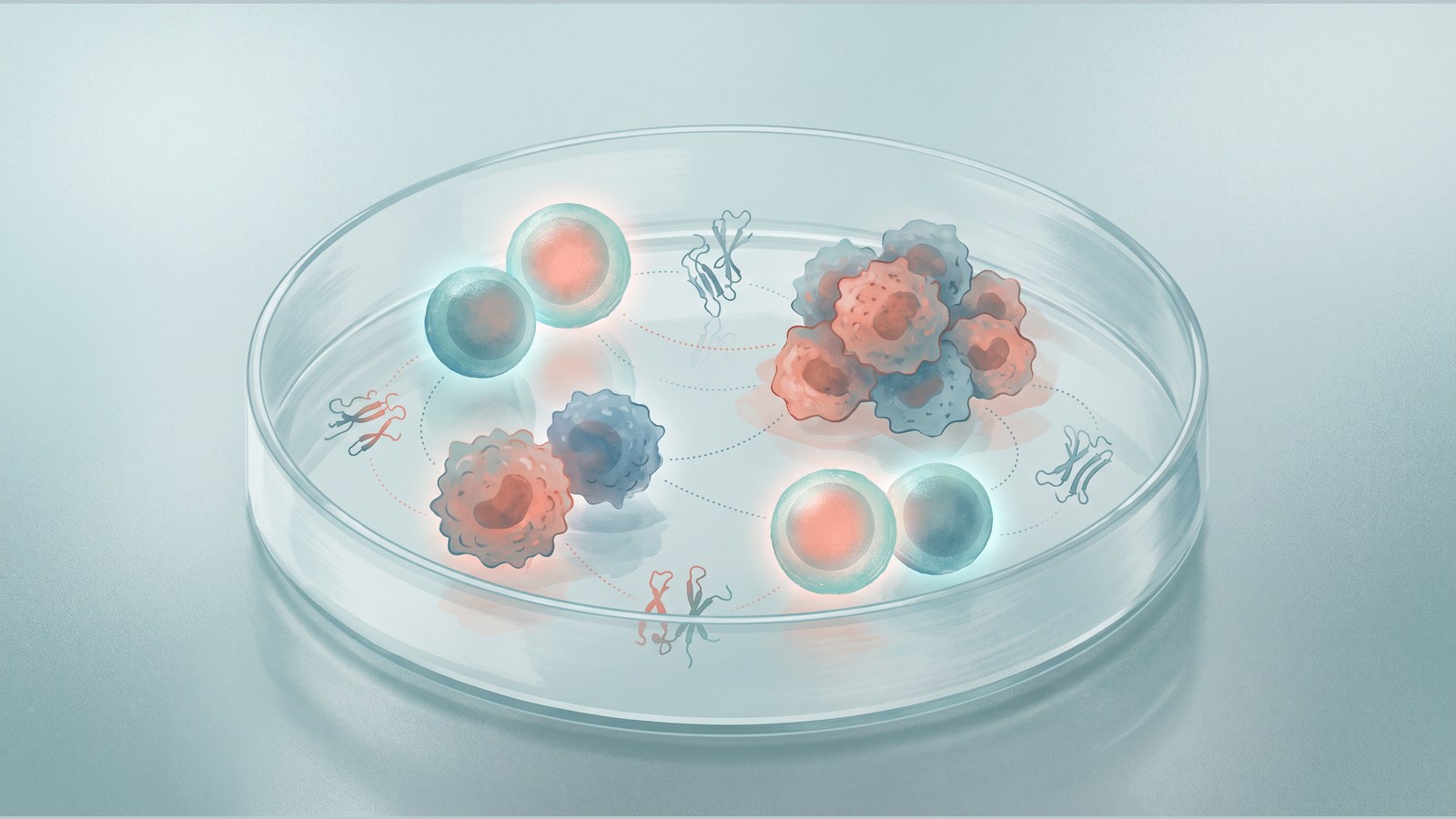
Invikafusp alfa is intended to stimulate Vβ6 and Vβ10 T-cell subsets rather than activating T cells broadly. T cells are immune cells that can recognise and attack abnormal cells. The selective approach is intended to encourage anti-tumour activity while limiting the broad immune activation that can cause severe side effects with some other approaches.
In the trial, the targeted T-cell populations increased in blood and tumour samples, with the largest changes seen at the doses selected for further study. The investigators linked the four partial responses to the largest shifts in those target populations. They also reported that immune activity did not always result in a measurable clinical response, an important limitation when interpreting the early biological findings.
Safety and the next stage
The most common treatment-related adverse event was cytokine release syndrome, which was mainly graded 1 or 2 in the report. Several participants also had flu-like side effects. Two participants experienced reversible dose-limiting toxicities during dose escalation. At the data cut-off, no treatment-related deaths or non-laboratory grade 4 adverse events were reported.
Phase 1 selected 0.08 mg per kg as the recommended dose for phase 2. The ongoing phase 2 work is continuing to assess the drug, and the trial remains open to recruitment. Further study will be needed to establish how durable any benefit may be, which tumour groups may be most likely to respond and how the safety profile develops in a larger body of evidence.
For now, the appropriate conclusion is narrow: the study has provided preliminary evidence of activity for a targeted immune treatment in a group with limited options after earlier therapy. It is not an approval, a cure claim or a basis for changing treatment without specialist clinical advice.







