

On 23 October, the United States Environmental Protection Agency announced a legal agreement with Gelman Sciences LLC over soil and groundwater contamination in Ann Arbor and Scio Townships in Michigan. The order sets out further investigation, planning and specified response work under federal oversight. It does not mean the long-running remediation has been completed.
What the agreement requires
The administrative settlement agreement and order on consent requires Gelman Sciences to carry out a remedial investigation and feasibility study. According to the agency, that study is intended to establish the nature and extent of the contamination and to assess possible cleanup approaches. It is therefore a key planning stage as well as a formal obligation, rather than a final selection of a remedy.
The order also requires soil contaminated with 1,4-dioxane to be excavated from the former burn pit on the company’s property. In the eastern groundwater plume, the company must increase extraction and treatment rates in an effort to reduce the spread of contamination. Additional monitoring wells are to be installed to define the easternmost extent of the affected groundwater more clearly.
Community groups are due to receive grant funding to employ an independent technical adviser. The agency says that adviser will be able to help groups interpret technical reports, site conditions and proposed actions. The provision is intended to help local groups understand technical material connected to the ongoing work.
Federal action alongside the state process
A state-level consent judgment continues to apply. Michigan’s environmental department says it has overseen cleanup activities through that long-standing process, including groundwater extraction, monitoring and remedial actions. The federal order adds enforceable work under federal oversight; it does not replace the existing state framework.
The same department described the 23 October agreement as a step towards long-term cleanup and said that federal authorities bring enforcement tools beyond those available to the state alone. It said it would continue to monitor progress while the work remains unfinished. The agreement is consequently a new operational and regulatory development within a much older contamination case.
How the plume developed
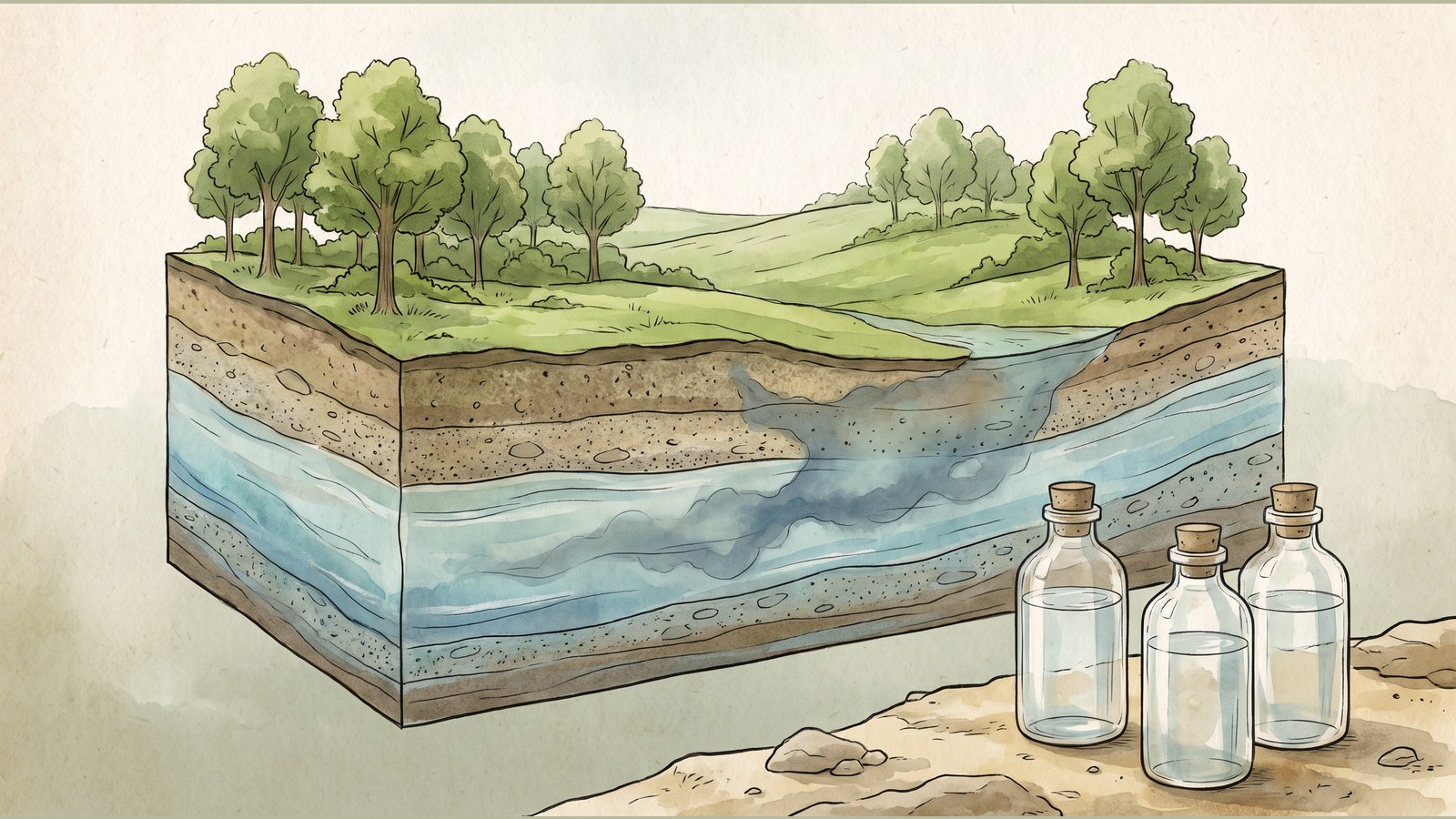
The agency says Gelman Sciences manufactured medical filters from 1963 to 1986. Wastewater containing 1,4-dioxane was discharged into surrounding ponds during that period, creating a groundwater plume. The agency describes the plume as about three miles long and one mile wide, and says it has migrated into aquifers that supply drinking water.
According to the agency’s background account, 1,4-dioxane exceedances in private wells previously led to some residential wells being abandoned and residents connecting to municipal water lines. Ann Arbor closed its Montgomery Wellfield municipal drinking-water well in 2001 because of the presence of 1,4-dioxane. Those are historical measures described by the agency, not evidence that all site work is now complete.
The site was placed on the National Priorities List in March 2026 after the state nominated it in 2021 and following site assessments and public comments. The new order follows that listing and combines longer-term study with nearer-term actions aimed at the former burn pit and the eastern plume.
What happens next
No timetable for completion of the investigation or the wider restoration has been set out in the announcement. The agency has said it will host a public meeting later this autumn. For now, the agreement establishes the work Gelman Sciences must undertake and the role of federal oversight as the investigation, treatment and monitoring continue.







