
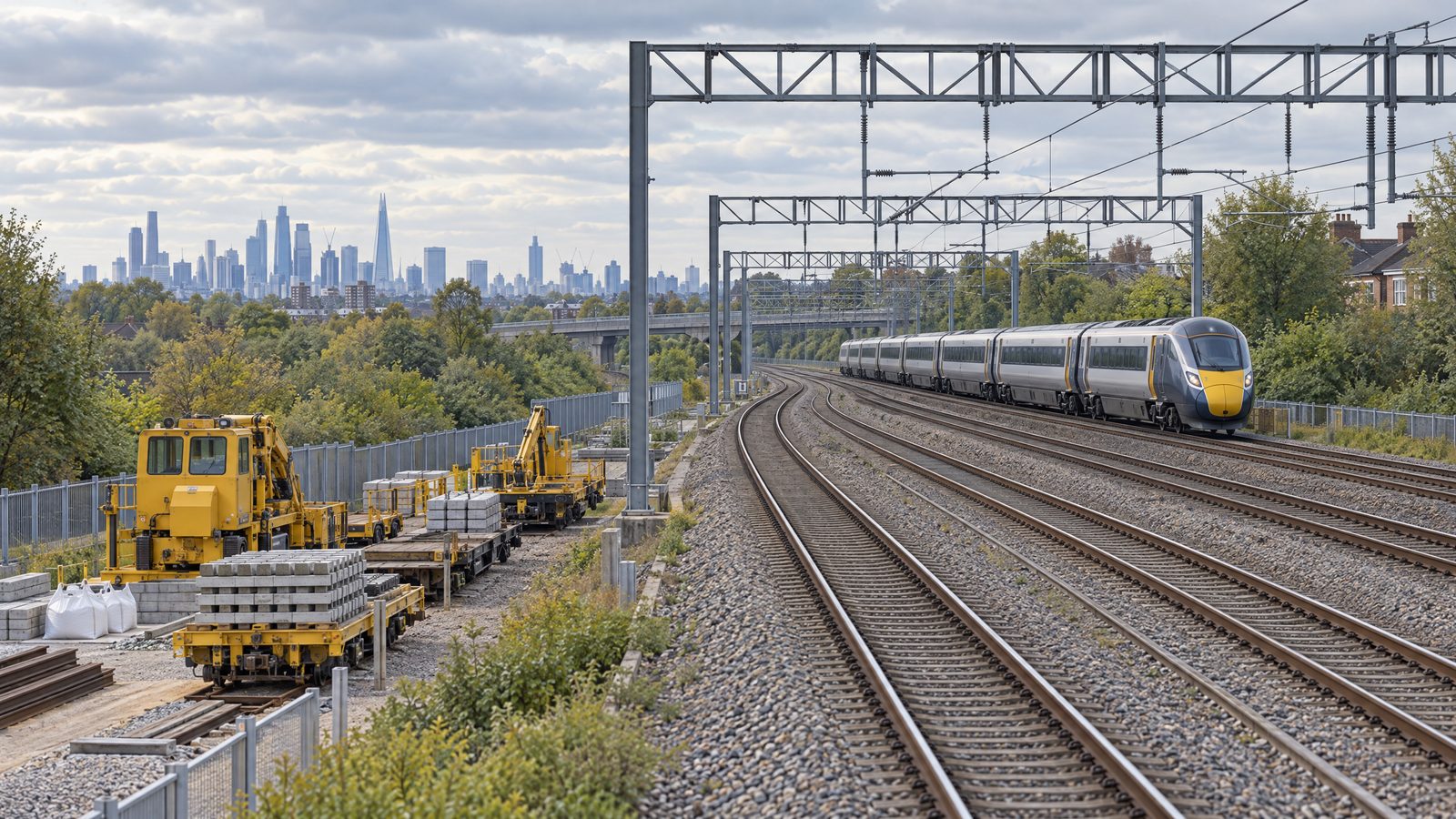

Rail passengers travelling to or from London on Saturday 28 and Sunday 29 November should expect major changes on the southern East Coast Main Line. No trains are planned between London and Peterborough or Letchworth Garden City during the works. Replacement buses and coaches, amended services and alternative routes will be used, but journeys are likely to take longer and require extra transfers.
The work combines updates to digital in-cab signalling with track, station and lineside improvements. The engineering closure affects routes serving London King’s Cross, London St Pancras and Moorgate, and extends across a corridor used by several operators. The precise arrangements differ by operator and destination, so passengers should check their complete journey before setting out rather than assume that a normal train will run for part of the trip.
What passengers can expect
Great Northern and Thameslink will not run trains between Moorgate, St Pancras or King’s Cross and Letchworth Garden City or Peterborough over the weekend. A shuttle train is planned between Letchworth and Cambridge, Ely and King’s Lynn. Replacement buses are listed for a number of connections, including Bedford–Peterborough, Hitchin–Peterborough, Hitchin–Letchworth and routes linking Alexandra Palace with Stevenage or Welwyn Garden City. These services are intended to keep journeys moving, but a bus leg can add time and may make connections less straightforward.
Long-distance services will also change. Most London North Eastern Railway trains are due to start or finish at Peterborough, with coaches linking passengers to Bedford for Thameslink trains into St Pancras. Some trains from Newcastle are planned to run to Bedford, allowing onward travel by rail. Grand Central says it will run no services during the weekend. Hull Trains plans a reduced timetable between Hull and St Pancras, with some stops omitted. Lumo services that normally begin or end at King’s Cross are expected to operate only between Newcastle and destinations in Scotland.
Ticket acceptance on other services is part of the plan. The arrangements include Thameslink between St Pancras and Bedford and Greater Anglia between Liverpool Street and Hertford East or Cambridge North. Paper tickets will be accepted on specified London Overground, Underground and bus routes. These are route-specific provisions, not a general guarantee that every ticket will be valid on every alternative service. Travellers should verify the details for their own ticket and itinerary.
Why the railway is closing
The signalling work is part of the £1.4 billion East Coast Digital Programme. Digital in-cab signalling provides movement information to train drivers inside the cab, using continuous data rather than depending solely on conventional signals beside the track. The programme is being introduced in stages. Digital signalling for some services between Welwyn Garden City and Hitchin began in August, and the November work is intended to update diagnostic systems, data and software as the railway prepares for more trains and services to use the technology during 2027.
The weekend is also being used for conventional infrastructure work. Plans include continuing step-free access improvements at Alexandra Palace, renewing track at New Southgate and near Potters Bar, work on the canopy at Bowes Park, and improvements to overhead-line electrical equipment at various locations. Combining several jobs within one closure allows crews to work on different parts of the corridor at the same time, although it concentrates the immediate disruption into a weekend when ordinary services cannot pass through the affected sections.
For passengers with flexibility, travelling on a different day may avoid the altered service pattern. Those who must travel on 28 or 29 November should allow additional time, check the operator’s latest advice and consider luggage they can comfortably manage during transfers. The published plan is an agreed industry arrangement but may change. The closure dates are in the future; the service alternatives describe planned provision, not a promise that every connection will be seamless or take the usual time.







