

Entering into coaching is a two-way agreement. Relationships build over time, but the coach must listen to their initial intuition just as much as the person being coached uses their gut to make a decision about fit. This ensures that every party extracts value from the coaching assignment – that’s the person being coached (the thinker), their line manager, the organisation as a whole, and the coach.
It is important for in-house coaches to be mindful of the coaching readiness of the person being coached. It is also crucial to remember that not every issue is coachable and not every person is ready.
Six signs coaching is not a good fit
1. The subject matter requires more of a therapeutic intervention or is a physical health issue. There are others more suitably qualified to work with the individual in these arenas.
2. The individual has just taken on a new role (such as a first-time team lead) and really needs relevant training before coaching.
3. The individual’s line manager has neglected their own developmental responsibilities, therefore failing to nip falling standards in the bud, and wishes to outsource to a coach to “fix” the person. HR needs to intervene here to challenge the line manager to manage performance. This is often a systemic issue where line managers are not held to account for managing people.
4. The timing is not right for the individual or their organisation. This is a tricky one to gauge because coaching can really help people in times of big change to get to grips with their own transition through that change; but sometimes the change can be such a distraction as to fragment the individual’s focus and their ability to engage in the coaching.
5. The individual is being coerced (well-meant or not) into coaching when they don’t really want it or see a need for it.
6. The individual has no desire to change.
For anyone coaching within an organisation, these aspects need to be screened for by the coaching custodian (HR, L&D, Talent professional) such that when you agree to a compatibility call (the preliminary conversation between a coach and a potential client to assess whether they’re a good match for working together), coaching is deemed to be the right intervention at the right time for the right person. Also expect the coaching custodian to have explained to the individual how coaching works and how to make the most of it.
Coachability
Coachability isn’t about having things done to you in a passive manner. Many dictionary definitions talk about coachability as being receptive to feedback and instruction, being malleable, responsive, obliging, conformable – which is all very reactive.
These descriptions are almost the polar opposite of what I mean by coachability, which is much more proactive and comes from within the thinker: a willingness to think for themselves, having or being willing to build a sense of agency, of self-efficacy, taking the initiative, leaning in.
The role of a coach is to pull coachability out of the thinker, rather than attempting to pour something in through teaching and telling. Coachability and agency can wax and wane, so you need to bring it into your own and the thinker’s awareness and discuss how to nurture it at any given time in the coaching process.
How willing are they to go deep in their thinking versus superficial thinking or asking for your thinking? What about their willingness to make change happen in their life and work? What about their psychological readiness for that change? Homeostasis is so much more comfortable (even if it’s painful) than change, because it’s about what we know as opposed to what we don’t know. How willing are they to push past the discomfort of change?
- Coaches should look at the whole coaching process through a coachability lens and ask the following questions:• How are your introductory and ongoing emails written with coachability front and centre?
- How do you incorporate discussions of coachability in your coaching agreement and three-way agreement conversations and written documentation?
- How is any preparatory work that you send out written with coachability in mind? And the reflective practice after each session?
- What do you consider within a coaching session to draw out coachability?
- How do you co-create the experiments that might happen in between sessions, to build self-efficacy and agency?
- And at the end of a coaching programme, how do you reflect together on ways to keep that agency?
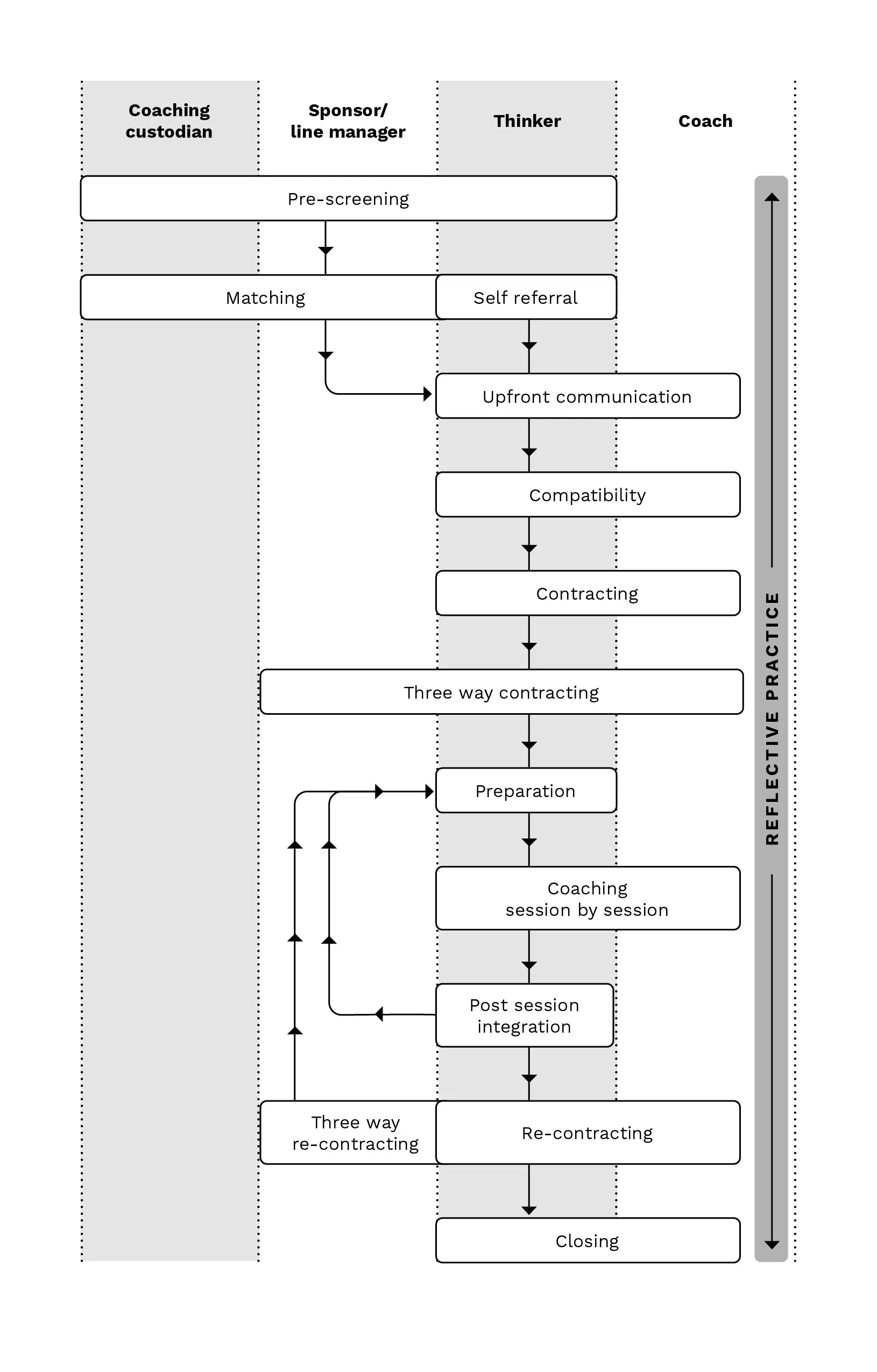
Effective coaching empowers employees, strengthens teams, and aligns individual aspirations with business objectives. We need to make coaching more accessible, with coachability at the core in order to support people to think deeply for themselves and make their best possible contributions.
About the author

Clare Norman is author of ‘Cultivating Coachability’ and founder of Clare Norman Coaching Associates. Clare is a Master Certified Coach (MCC) with the International Coaching Federation (ICF), a Master Mentor Coach and a Certified Coach Supervisor. She has a Masters in Training and has received multiple awards for ground-breaking leadership development. For over 25 years, Clare has focused on maximizing individual, team, and organisation effectiveness, enabling people to express their needs, in service of a more caring world. Clare’s two previous books are ‘The Transformational Coach (2022)’ and ‘Mentor Coaching: A Practical Guide (2020)’. For more information see: https://clarenormancoachingassociates.com/