
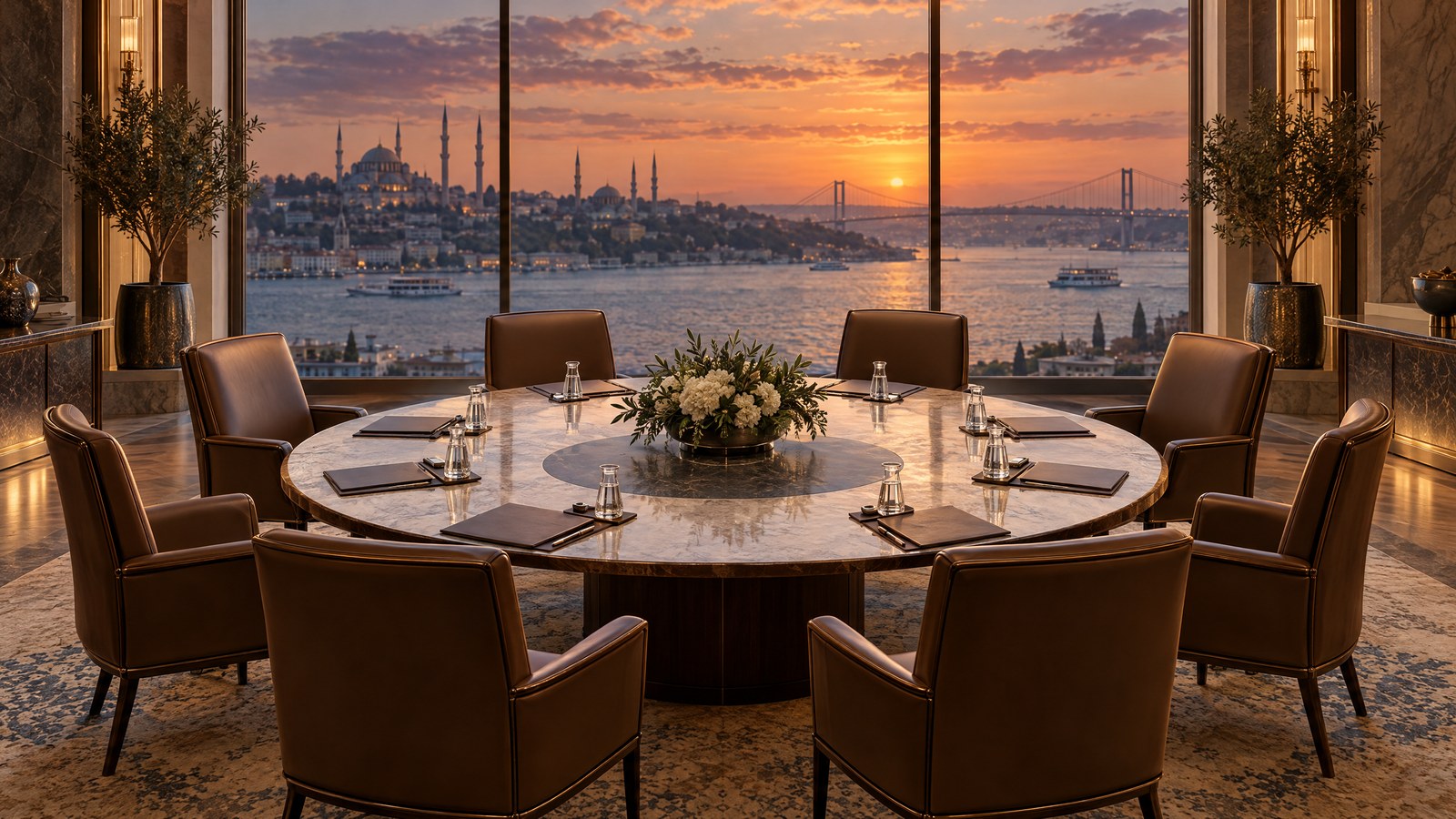

Foreign ministers from Türkiye, Egypt, Pakistan, Saudi Arabia, Germany, France, the United Kingdom and Italy met in Istanbul on 23 October in a new combined diplomatic format focused on regional conflicts and maritime security.
The gathering brought together the R4 group of Türkiye, Egypt, Pakistan and Saudi Arabia with four European partners: Germany, France, the United Kingdom and Italy. It was described as the first meeting in that format. The countries met as pressures around key sea routes and several conflicts continued to affect security, trade and supplies beyond the immediate region.
A new channel for consultation
The talks were held in Istanbul at the initiative of Germany and Türkiye. The German foreign minister said before travelling that the group would look for ways to add momentum to efforts concerning the Strait of Hormuz, Bab al-Mandab and the Black Sea.
The format joins governments from Europe and the Middle East but does not create a new treaty organisation. It is a forum for foreign ministers to exchange positions and consider diplomatic options across connected crises. The meeting did not announce a binding eight-country accord, a ceasefire or an agreement reopening any waterway.
That distinction matters because the agenda covered conflicts involving countries and armed groups that were not represented in the room. The meeting was a consultation among eight governments, not a negotiation between the parties to every conflict discussed. Its immediate outcome was a commitment by the four R4 ministers to continue close consultation and coordination on the issues raised.
Maritime routes on the agenda
Maritime security was a central concern. The ministers considered the situation around the Strait of Hormuz, the Red Sea and Bab al-Mandab, where insecurity has affected freedom of navigation. They also discussed the effect of the war in Ukraine on the Black Sea, including risks to commercial shipping and grain movements.
In their joint statement, the R4 ministers called for the Strait of Hormuz to return to safe, secure and unimpeded passage. They said the conflict around Iran and the waterway should be addressed through dialogue and diplomacy, and called for civilians and civilian infrastructure, including vessels, to be protected.
The same statement addressed Houthi attacks in Yemen and Saudi Arabia, together with their effect on navigation in the Red Sea, Arabian Sea, Gulf of Aden and Bab al-Mandab. The four ministers stressed the importance of preserving freedom of navigation and ending attacks that endanger it. These were positions set out by the ministers, not confirmation that maritime traffic had returned to normal.
Wider conflict pressures
The agenda also extended to Gaza and the war in Ukraine. The R4 ministers voiced concern about conditions in Gaza and called for humanitarian assistance to reach the territory without obstruction. On Ukraine, they backed efforts towards a comprehensive peace and called for a ceasefire and a durable settlement.
The ministers linked the conflicts to energy security, food prices and economic stability. Disruption to maritime routes can affect energy movements, while threats to grain shipments in the Black Sea can have wider consequences for food supply. The meeting did not publish a timetable for further talks or practical measures on either route.
For now, the main development is the creation of a shared channel between the eight foreign ministries. Whether that first meeting produces coordinated action will depend on later consultations and decisions by the governments involved. The public statements establish a broad diplomatic agenda, while leaving the underlying conflicts and questions over maritime access unresolved.







