
1. What drew you to the role of Eddie Jaku in The Happiest Man on Earth?
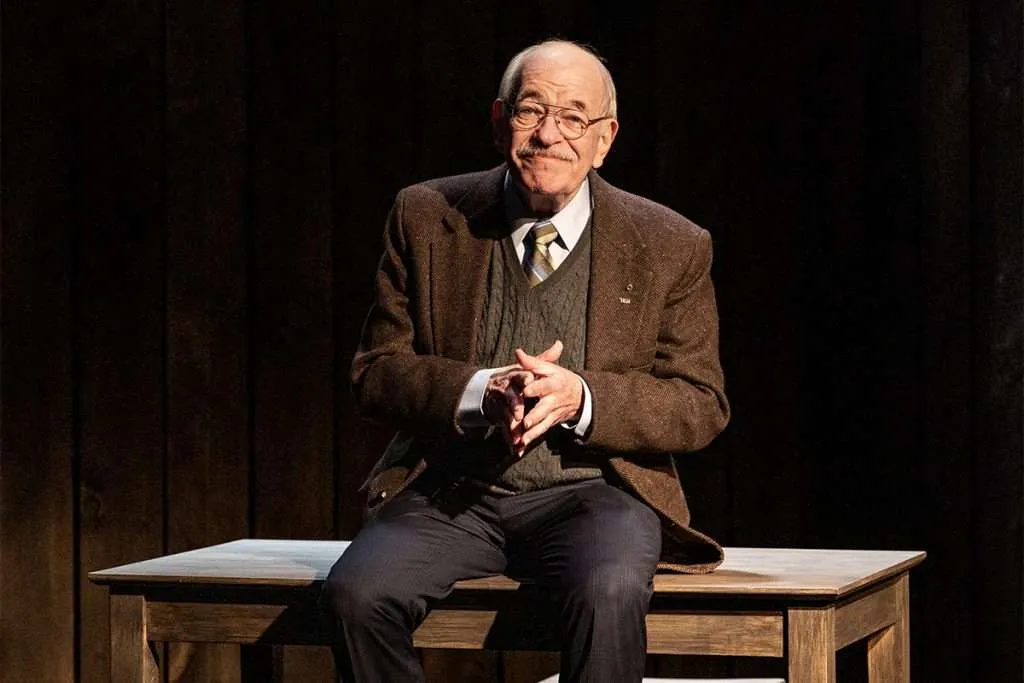
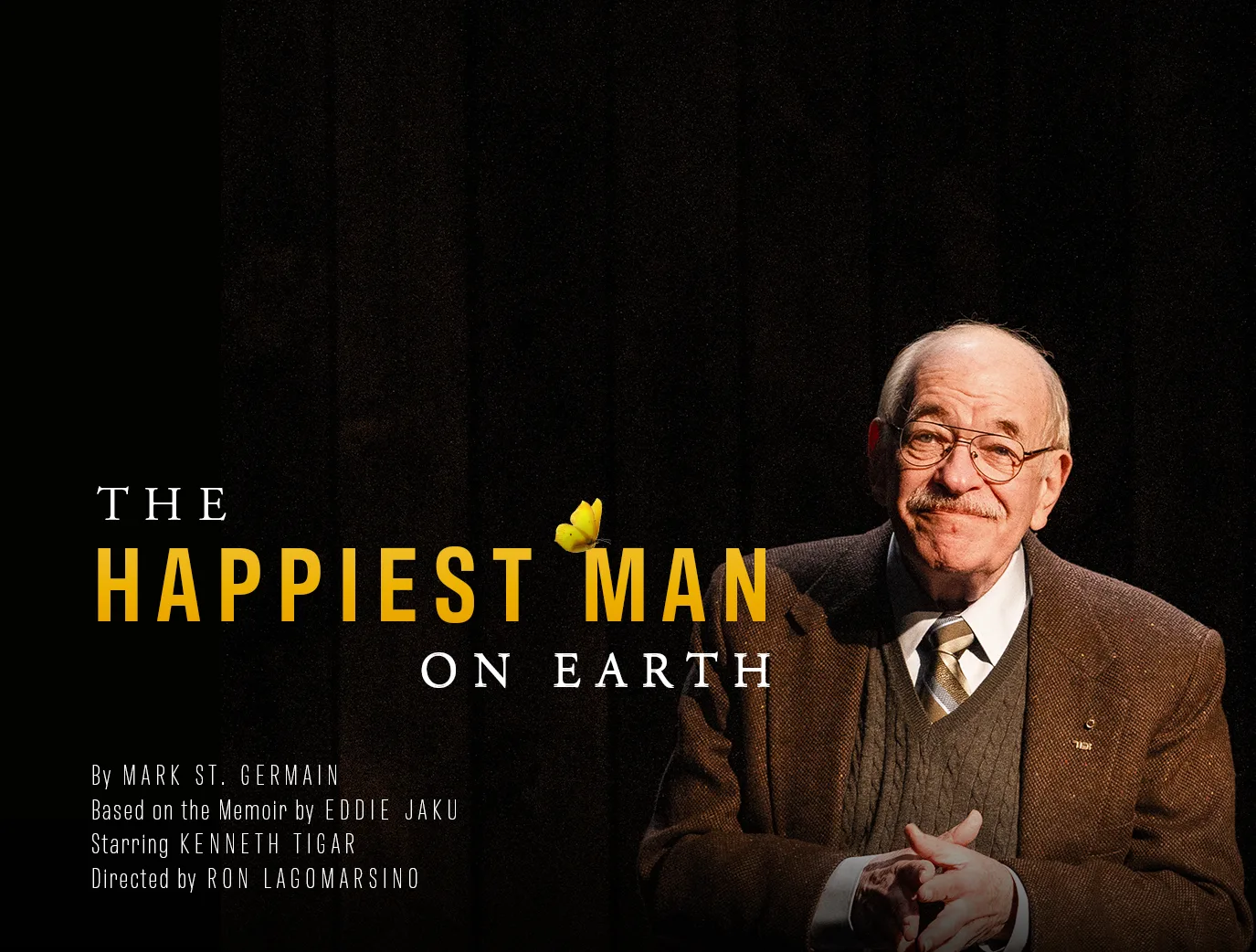
I know Mark St. Germain’s work and have played the role of Sigmund Freud in four productions of Mark’s play Freud’s Last Session. When I heard he was doing a one-man show based on the life of a Holocaust survivor, I just knew I had to play the role. Call it intuition, if you will. Or an actor’s sense that juicy roles like this don’t come around too often. At any rate, I had my agents contact Barrington Stage (where the world premiere was to be done) and tell them I was interested in the part. Mercifully, Mark – who had seen me do Freud a couple of times – and Ron Lagomarsino, the director, agreed to let me take on Eddie.
2. Can you describe your preparation process for portraying such a complex character with a deeply impactful story?
Preparation for the role was both simple and fiendishly difficult. I just had to trust Eddie. Mark’s script is based completely on Eddie’s memoir of the same name. What he wrote really happened. So, all I had to do was tell the audience Eddie’s story. But trying to grapple with the reality of the story, with the fact this man actually lived through these horrors – that required some intense soul searching. In some ways it was like doing Shakespeare: There is no subtext in Shakespeare. He tells you everything you need to know. But trying to understand who these characters truly are and how they feel what they feel – that is the challenge.
3. What do you think is the most important message Eddie Jaku conveys through his life and experiences?
I’m not certain exactly why Eddie wrote his book; but undoubtedly uppermost in his mind must have been his desire to tell the story of the Holocaust from the perspective of an actual survivor and to pass this story on to the next generation. But his title immediately presents his audience with a paradox: How can someone who has suffered so much end up happy and fulfilled. So, I believe Eddie’s message is that regardless of how much we might despair, as long as we live, there is light at the end of the tunnel. The human spirit is remarkably resilient, and he has offered us a roadmap.
4. How do you approach embodying the resilience and positivity that Eddie maintained despite his horrific experiences during the Holocaust?
Actors in general tend to be pretty sympathetic people because we are constantly called upon to live in someone else’s shoes. The only way to embody Eddie’s positivity is to feel what it is like to have that positivity. And to do that it is imperative to try – as much as such a thing is possible – to make the same emotional journey he had to. He talks about it in his memoir and in the play. I just had to listen very carefully.
5. In your opinion, why is it crucial for stories like Eddie’s to be told and shared with audiences today?
As much as we wish it weren’t true, people are still being killed because of who they are or what they believe. We may not use the word Holocaust about current affairs, but many of the events in the world today bear a remarkable similarity to the brutalities of the Nazi period. We must never forget that we are capable of repeating that savagery.
6. How has playing this role affected your perspective on life, gratitude, and resilience?
We all know about the Holocaust. We have heard about it in school, read books about it, and seen movies about it. But it is still very difficult for anyone who has not actually lived through such events to fully appreciate what these survivors have gone through. Living with Eddie in this play has given me a chance to get closer to that reality and to understand what happened in a fuller, richer way.
7. What challenges have you faced in bringing Eddie’s story to the stage, and how have you overcome them?
Some stories are easy to tell because they are happy stories and make people happy. Others are harder because they take us to dark places that we might prefer to avoid. This play falls into the latter category. There is a lot of humor in the play – yes! It’s true – but there is a lot of darkness, too. But I feel it is imperative to tell this story – and to tell people how Eddie overcame such darkness; and so, I just go to the theatre every night and try to pass the words along.
8. What has been the audience’s reaction to the play, especially in terms of its emotional impact?
Audience reaction has been extraordinary. People love the play. It’s a beautiful piece of writing about a profound subject; and Mark has given us Eddie’s story unflinchingly but with grace and a remarkable sense of perspective. Audiences seem to be deeply moved – and at the same time thrilled at how his story came out. Their response at the end of the play is nothing short of overwhelming.
9. How do you connect with the themes of tolerance and kindness portrayed in the play, and why do you think they are especially relevant today?
Every day we read and hear that people all over the world are unhappy. Whole populations are being tortured or bombed or attacked or intimidated or simply starved to death; and other populations of people feel they are being overrun by those fleeing these horrors. And almost always, our instinct is to blame someone. Someone else. Eddie’s position is rather more enlightened. Toward the end of the play he says: “I hate no one!” After everything he went through, he was more interested in personal growth and tolerance than in blame. It’s a lesson we can all benefit from.
10. Can you share any memorable moments from your previous rehearsals or performances that have deeply resonated with you?
Every once in a while, in rehearsals or on stage, a moment goes by and I feel a shiver. I’ve just felt something I’ve never felt before – about Eddie’s life or about my own. Trying to tell this story truthfully means confronting a lot situations, political, historical, psychological. The list goes on. And suddenly, out of the darkness, there will be a flash, a deeper understanding of something – a person, an event, a feeling. And it shakes me to my core. I think that also happens to a lot of people in our audience. Seeing this play transforms people. And isn’t that what theatre is all about?
To book tickets click here.
Feature image by Daniel Rader