London May Day march 2026 drew more than 10,000 people into central London on Monday, 4 May, as workers, students and campaign groups gathered to highlight mounting economic pressures.
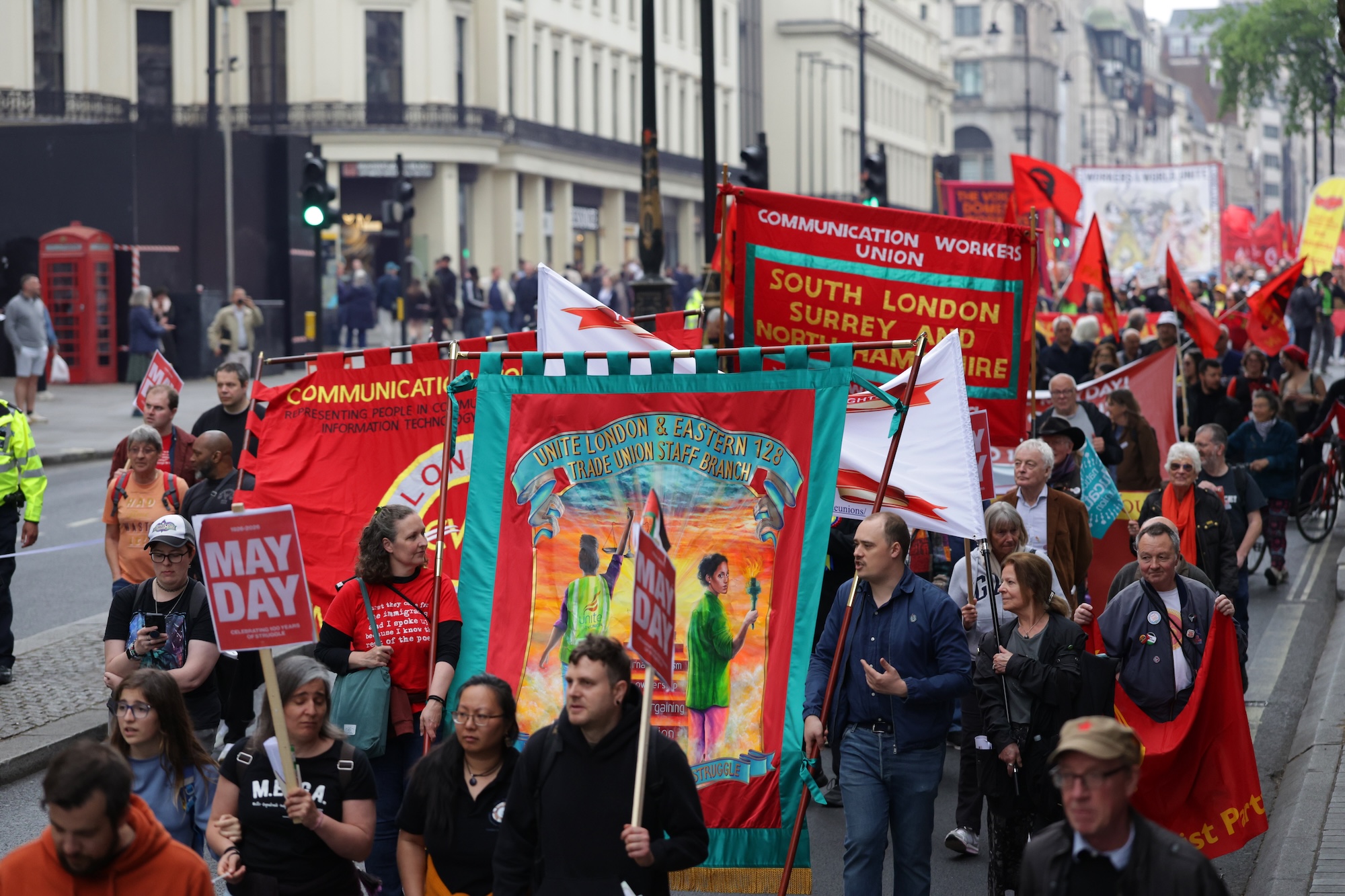
Trade union representatives at the London May Day march marking 100 years, from Clerkenwell Green to Trafalgar Square.
The demonstration moved from Clerkenwell Green to Trafalgar Square, bringing together a broad coalition of trade unions and activist organisations. Organisers described the turnout as one of the largest May Day events in recent years, reflecting growing concern over living costs and working conditions across the UK.
Trade unions and groups join demonstration
Major unions including the RMT, PCS, Aslef, Unite, GMB, Unison and the National Education Union took part in the march. Alongside them, campaign groups and political organisations contributed to a wide mix of voices and messaging.
Banners and chants covered a range of themes, from pay disputes and job security to wider social and international issues. The scale and diversity of participation underscored the breadth of concerns currently shaping the UK labour landscape.
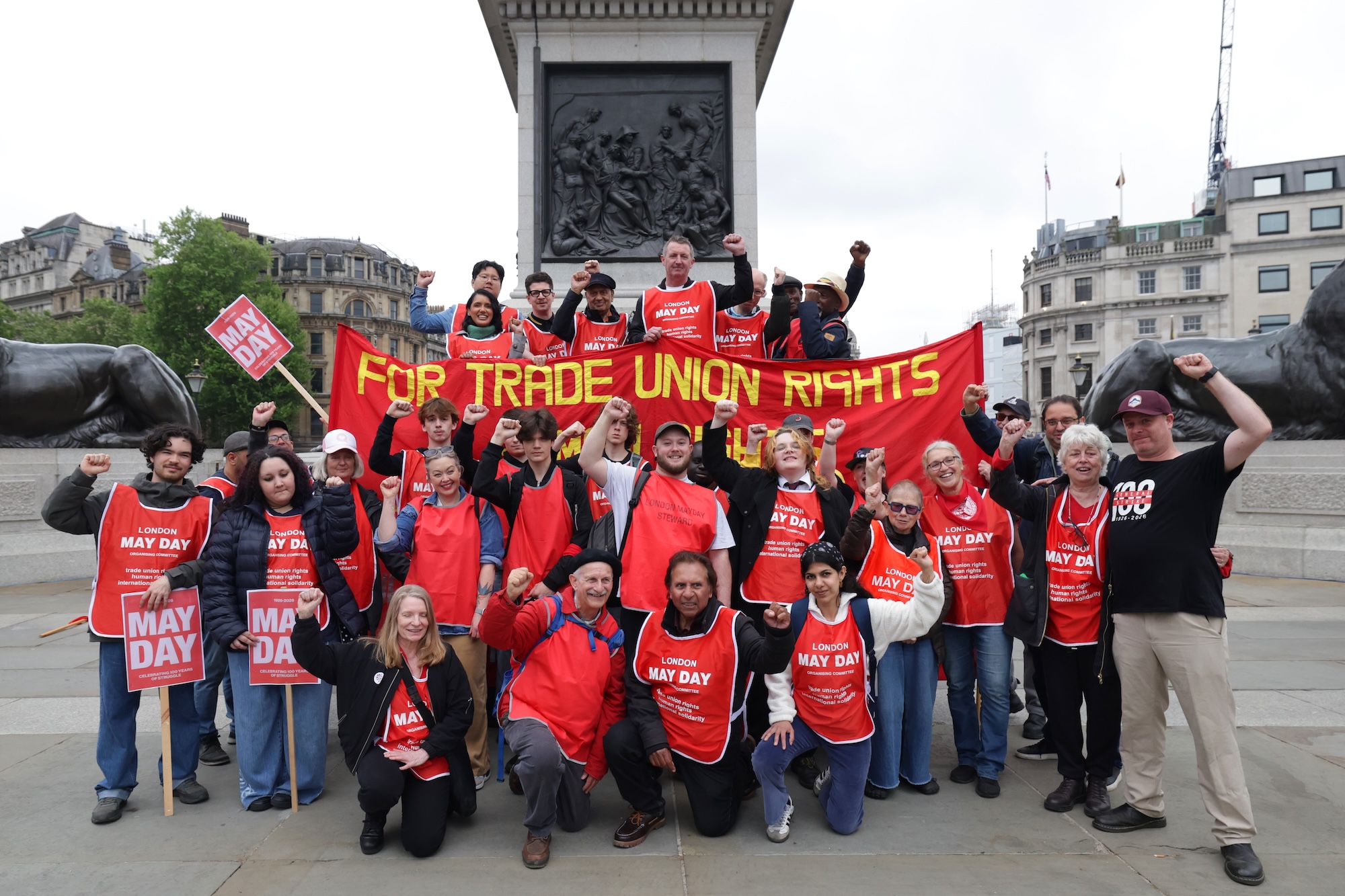
Trade union representatives at the London May Day march marking 100 years, from Clerkenwell Green to Trafalgar Square.
Cost of living pressures drive turnout
Cost of living pressures remained central to the London May Day march 2026. UK inflation peaked above 11% in 2022 and, although it has eased, many households continue to face elevated energy, housing and food costs.
Union representatives argued that wage growth has not consistently kept pace with these pressures. According to recent data from the Office for National Statistics, real wages in several sectors remain below pre-pandemic levels when adjusted for inflation.
Participants highlighted the impact on everyday living standards, with many pointing to rising rents, transport costs and utility bills as ongoing challenges.
Calls for wider industrial action
Some speakers and attendees used the event to call for more coordinated industrial action across sectors. References were made to the 1926 General Strike, which marks its centenary this year and remains one of the most significant labour actions in UK history.
Union figures noted that the anniversary has renewed discussion around collective action. However, no formal plan for a general strike has been agreed across unions at this stage.
Migrant workers highlight rights concerns
A dedicated section of the march focused on migrant domestic workers. Representatives raised concerns about visa conditions, employment protections and access to legal support.
Speakers called for clearer rights frameworks and stronger enforcement, arguing that domestic workers play a critical role in the wider economy while often remaining vulnerable to exploitation.
Demonstration concludes in Trafalgar Square
The London May Day march 2026 concluded in Trafalgar Square, where union leaders and campaign representatives addressed the crowd.
Organisers described the event as a show of cross-sector solidarity at a time of continued economic uncertainty. The scale of turnout and the range of issues raised highlight ongoing tensions between workers, employers and policymakers as the UK navigates a complex cost-of-living environment.
Photos: Rehan Jamil for London May Day Organising committee