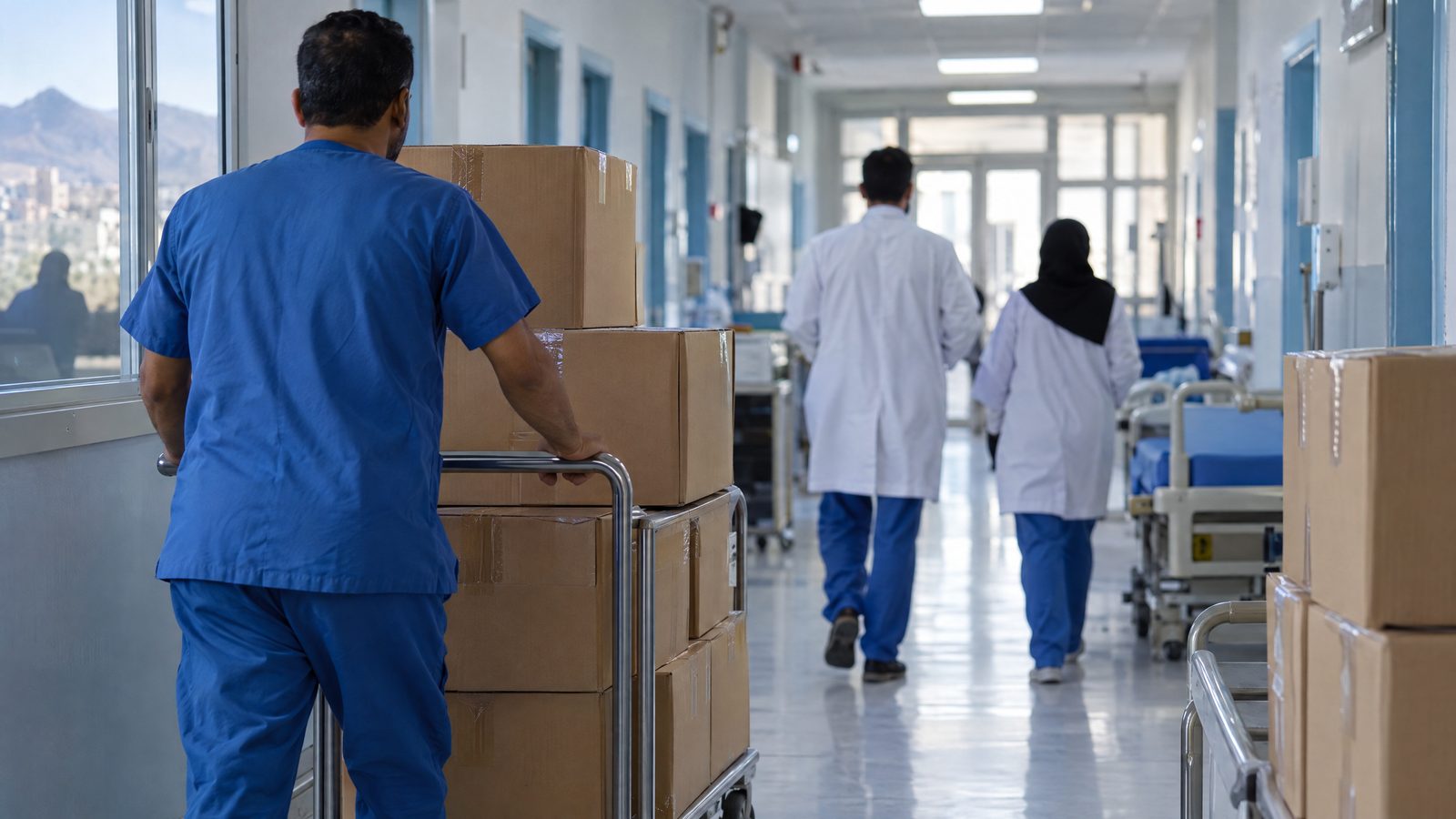

Emergency medical kits reach Taiz hospitals facing acute shortages
Trauma and emergency-surgery kits have reached hospitals in Taiz City as health facilities struggle to maintain lifesaving services amid acute shortages of medicines and other essential supplies. Restrictions on movement have also interrupted care outside hospitals.
The World Health Organization (WHO) said in an update issued on 28 October that the kits had arrived at the weekend and been shared among several hospitals facing acute shortages. The delivery followed an earlier warning about pressures on facilities across Taiz governorate.
On 22 October, WHO said hospitals in the governorate were struggling to maintain lifesaving services amid critical shortages of fuel, oxygen, medicines and medical supplies. It said 42 health facilities in Taiz city were reporting acute shortages.
That warning covered a wider range of needs than the trauma and emergency-surgery kits subsequently delivered. Fuel and oxygen were among the shortages identified in the earlier statement, while the later update also highlighted an acute lack of water.
WHO had also reported that a national Health Cluster partner had delivered essential emergency medicines to Al-Thawra Hospital using an alternative route. That delivery and the later distribution of kits brought supplies to hospitals against a backdrop of continuing restrictions on access.
Restricted access and interrupted care
The 28 October update said access from Government-controlled Aden and the west coast remained restricted. In its earlier warning, WHO had called for safe, sustained humanitarian access to Taiz, alongside its account of the emergency medicines delivered to Al-Thawra Hospital.
Movement restrictions were affecting health workers as well as access for supplies. WHO said community midwives in Taiz City had been forced to stop working, making the interruption of community-based care another part of the pressure on health services.
The suspension of the midwives’ work was distinct from the shortages reported inside hospitals. It showed that the difficulties described by WHO involved both the availability of essential supplies and the ability of health workers to continue providing services.
The alternative route used to reach Al-Thawra Hospital therefore sat alongside, rather than replaced, the wider concern about access. The later WHO update continued to describe restricted routes from Aden and the west coast, together with shortages of medicines, fuel and water.
Pressure on hospital services
Reported accounts from hospital staff and patients in Taiz also described shortages of fuel, oxygen, medicines and dialysis supplies. Those accounts corroborated the severe pressure on medical services and the range of supply difficulties set out in WHO’s statements.
Dialysis supplies were among the items identified as being in short supply by staff and patients. Their accounts added to the picture of shortages affecting hospital care beyond the trauma and emergency surgery addressed by the newly delivered kits.
According to a reported Red Cross assessment, frontline hospitals were treating up to 700 war-wounded patients in a single week. That assessment concerned the volume of patients receiving care, adding a measure of treatment demand to the accounts of shortages.
The two figures describe different aspects of the pressure on health services. WHO’s figure of 42 referred to facilities reporting acute shortages in Taiz city, while the Red Cross assessment concerned war-wounded patients being treated in frontline hospitals during a single week.
The arrival of the emergency kits marked a delivery to several hospitals, while the same WHO update described continuing barriers to access and interrupted midwifery services. The immediate provision of medicines and kits remained set against the organisation’s wider call for safe, sustained humanitarian access.