
England drought update records low reservoirs despite October rain
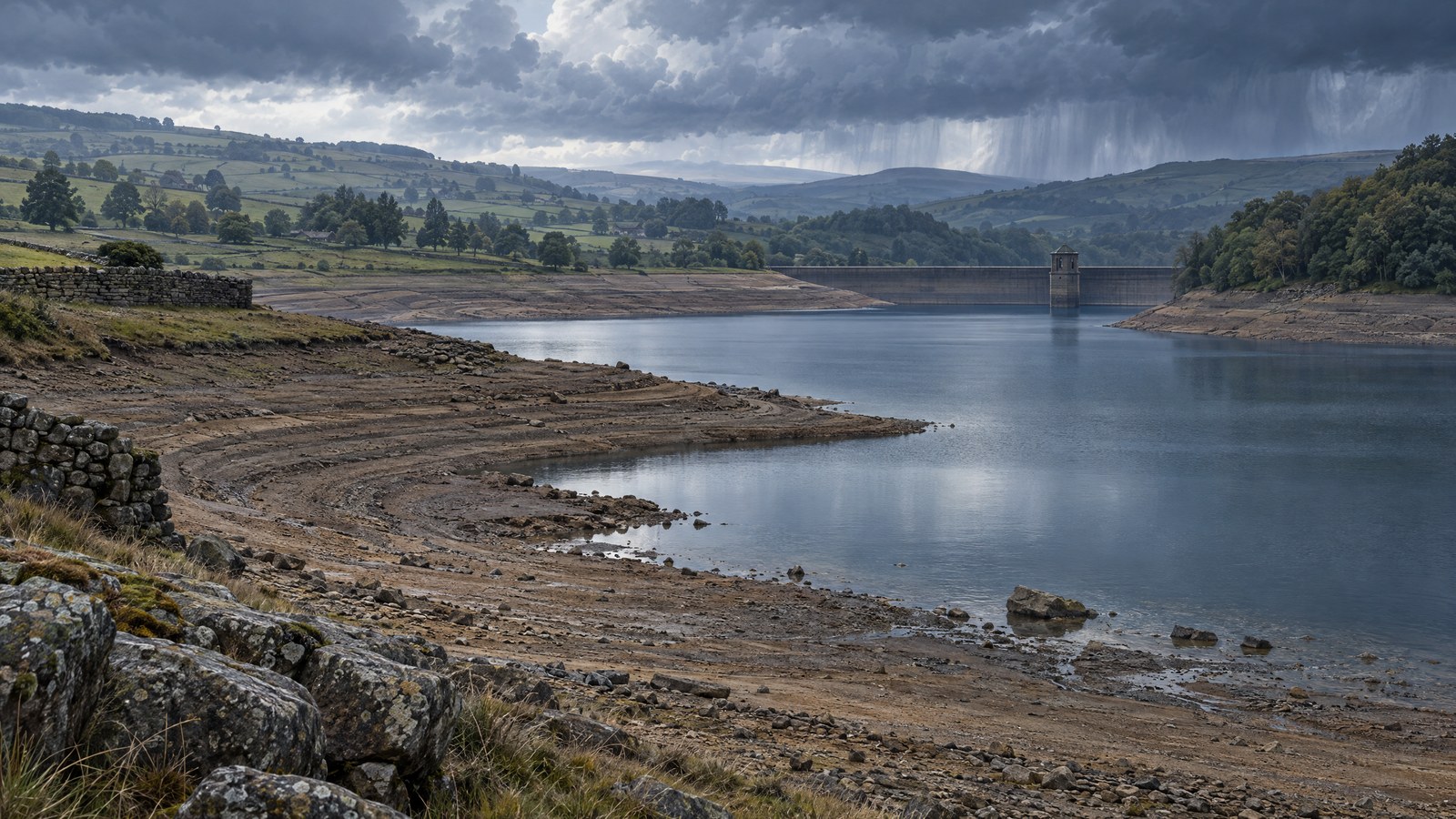
Reservoir storage across England remained at 54% of capacity in the week ending 20 October, despite a second week of rainy weather, according to the latest national drought update. The figure is about 22% below the long-term average for this point in the year. Eighteen reservoirs or reservoir groups were less than half full, while 13 were classed as exceptionally low.
The update, published on 23 October, says conditions have continued to deteriorate nationally even as rainfall and river flows improved in some places. It records no change to area drought status during the week. That makes the report a fresh picture of current pressures rather than a new declaration of drought status.
Rainfall has not yet restored water resources
England had received 52% of its long-term average October rainfall by the time of the update. All parts of the country had some rain during the reporting period, but totals varied from 18mm in the north-east to 30mm in the south-west. Soils remained drier than expected for the time of year, limiting the extent to which rain could replenish groundwater.
River flows rose at three-quarters of the monitored sites compared with the previous week. Even so, 16 sites were below normal, 10 notably low and four exceptionally low for the season. Many of the below-normal sites were in the south-east and south-west. Groundwater levels were continuing to fall at many locations because soils need to become saturated before rainfall can effectively recharge water resources.
Two-thirds of reservoirs or reservoir groups recorded a storage decrease in the week ending 20 October. The national storage figure was unchanged at 54%, but the update says that stability should not be read as recovery. Only two reservoirs or groups were classed as normal for the time of year; all the others were below normal or lower.
South East restrictions remain in force
Ardingly Reservoir, operated by South East Water, remains among the reservoir groups classed as exceptionally low. The company remains at drought level 3 in its Eastbourne and Haywards Heath water-resource zones, with its other zones at drought level 1. Its temporary use ban remains in force across the company area, and exemptions have been removed in the level 3 areas.
The national report also says that a non-essential use ban application was submitted on 2 October. An application is not the same as an approved restriction, and the report does not say that a new non-essential use ban has taken effect. It notes that the Environment Agency granted a River Ouse drought permit for Ardingly on 29 September.
Elsewhere relevant to the wider London and South East supply picture, the update lists temporary use bans across Thames Water’s company area and in the parts of London supplied by Affinity Water. The report does not announce a new London-wide restriction. Households and businesses should therefore rely on the terms issued by their own supplier rather than assume that a national drought category applies in the same way to every address.
Environmental impacts are still being recorded
The Environment Agency recorded 411 confirmed environmental incidents attributed to drought and dry weather since the start of 2026. That total is higher than the whole-year figures cited for 2022 and 2025, although the weekly rate of increase has slowed. The update includes 43 confirmed algae incidents, 106 confirmed dead-fish incidents and 190 confirmed abstraction or low-flow incidents. It cautions that drought-related incident numbers are likely to be under-recorded across all years.
For agriculture, 696 abstraction-licence restrictions were in place, alongside 1,383 voluntary restrictions that reduce abstraction by 50%. The regulator says poor winter refill of farm storage reservoirs is a growing concern, particularly where river flows remain low. It plans to publish a reservoir refill prospect report next week.
The latest figures show that recent rain has brought partial improvement in some indicators, but not the sustained recharge needed to restore reservoirs, groundwater and river flows. The next scheduled meeting of the National Drought Group is on 28 October. Any further change in restrictions, operational drought levels or area status will depend on conditions and the decisions taken by the relevant authorities and water companies.