

When businesses, facilities managers, and electricians don’t merely “do” preventative electrical maintenance but also plan and execute it to the highest standards, they can leave themselves advantageously placed to minimise downtime and boost safety.
A proactive approach to electrical maintenance is particularly important because of the scope for emerging problems to escalate into costly failures if they aren’t spotted and dealt with at the earliest possible stage.
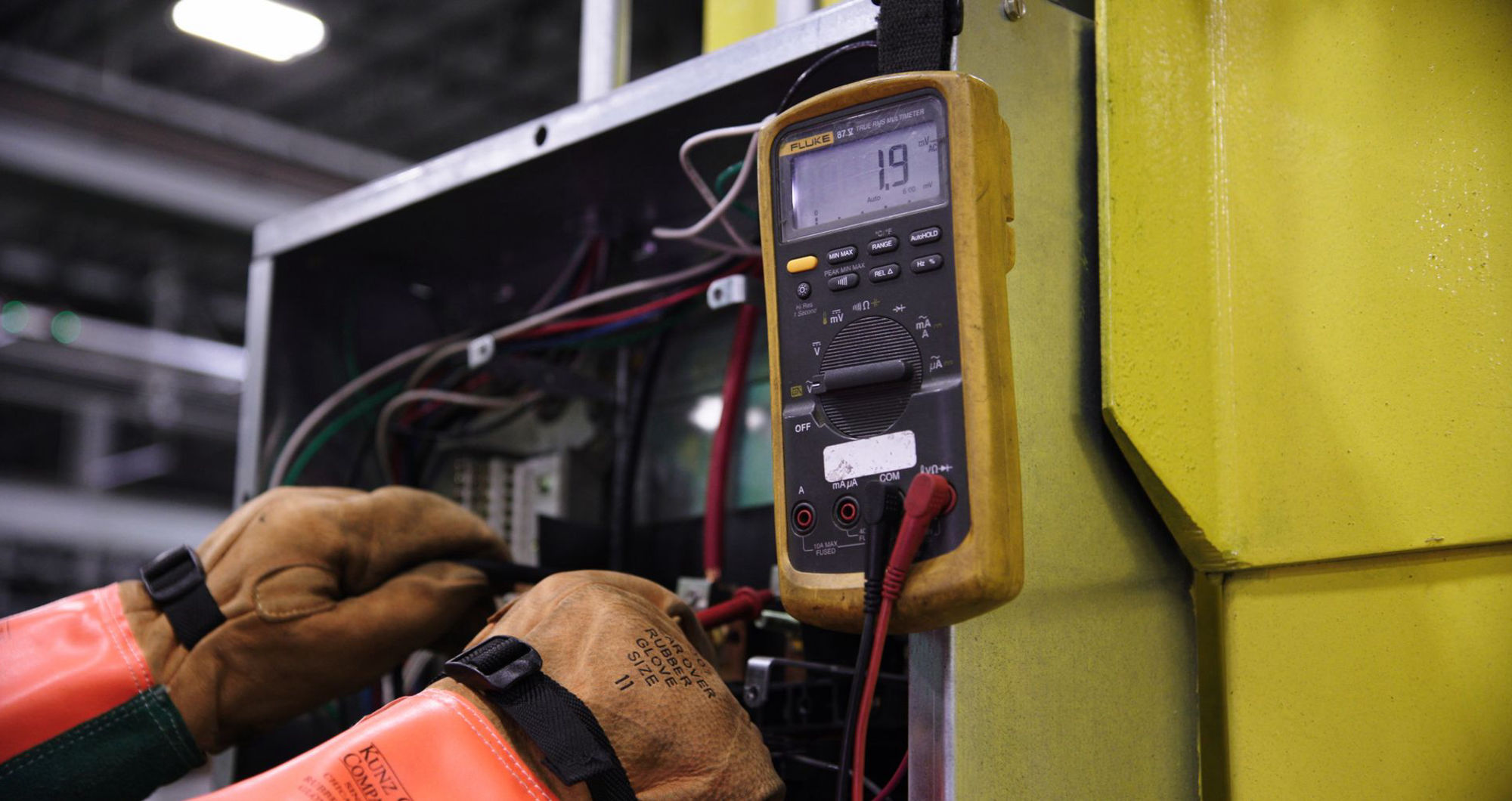
Well-chosen multimeters from RS can form a reliable foundation for this work. These instruments and other electrical diagnostic tools can give maintenance teams the measurements and information they will require to effectively monitor electrical systems, investigate abnormalities, and support routine maintenance activities.
Here are some examples of those tools and devices from which a given organisation could benefit.
-
Digital Multimeters (DMMs)
A digital multimeter is often regarded as the cornerstone of a preventative electrical maintenance programme (even though it might not be needed in every single case).
No less than one of the most versatile tools that electrical maintenance teams can call upon, DMMs are (depending on the specific model) capable of measuring AC and DC voltage, current, resistance, and continuity.
Instruments of more advanced specification may also provide capacitance, frequency, temperature, and True Root Mean Square (RMS) measurements.
Such capabilities can be greatly useful as part of the preventative maintenance process. Technicians typically use DMMs to check electrical circuits and components for readings that differ from expected values.
-
Clamp Meters
Clamp meters are very much a complementary tool to multimeters. Their “headline” functionality is that they allow for the measurement of electrical current without the need for a conductor to be disconnected (and the circuit therefore being broken).
All this can make clamp meters especially useful when undertaking routine checks on machinery, distribution systems, and other electrical equipment.
Many modern clamp meters also measure voltage and resistance. So, engineers may be thankful for having such a versatile instrument to hand for their usual walkarounds of industrial and commercial sites.
-
Insulation Resistance Testers
Insulation resistance testing can help assess the condition of electrical insulation across a broad range of cables, motors, and other equipment. Insulation, after all, can be susceptible to gradual deterioration due to such factors as age, heat, moisture, and mechanical damage.
In comes the insulation resistance tester. This tool works by applying a controlled DC test voltage and measuring resistance to earth or between conductors.
Where appropriate for the given equipment and maintenance regime, regular insulation resistance testing can allow for insulation degradation to be detected and dealt with before it contributes to electrical faults or equipment failure.
-
Voltage Detectors and Proving Units
Another important part of an electrical maintenance toolkit is reliable voltage detection equipment. However, these devices aren’t all the same, so it will be crucial to select the right ones for the intended application, as well as to use them correctly.
The UK Health and Safety Executive (HSE) advises that circuits should be isolated and proved dead prior to work commencing.
The regulator recommends the use of suitable instruments designed to protect against electric shock. It also warns that multimeters are not recommended for proving dead on low-voltage systems.
-
Thermal Imaging Cameras
Thermal imaging cameras can add a powerful non-contact layer. Such instruments provide a way of identifying abnormal temperature patterns while potentially avoiding the need for physical contact with components.
If it emerges from the use of these tools that certain electrical connections, switchgear, cables, and/or other components are showing unusual heat signatures, maintenance personnel may decide this warrants further investigation.
In this respect, thermal imaging cameras are meant to complement rather than replace appropriate electrical testing and inspection procedures.
Final Thoughts: Selecting The Right Maintenance Tools
Naturally, the question of what constitutes the most suitable tools to use will depend on the specific electrical systems, equipment, and maintenance tasks involved.
When technicians come to decide on the instruments that will form their preventative electrical maintenance toolkit, they will need to give careful thought to such factors as the necessary measurement range, accuracy, and safety ratings.
Nonetheless, when maintenance professionals do get these choices right and ensure the tools are maintained and calibrated where required, they can put themselves in a strong position to identify developing issues at their premises earlier.
This, in turn, will help them make more confident and informed decisions about on-site electrical equipment. It’s a formula for supporting more efficient, dependable, and safer operations all-round.
Feature image by Pexels







