
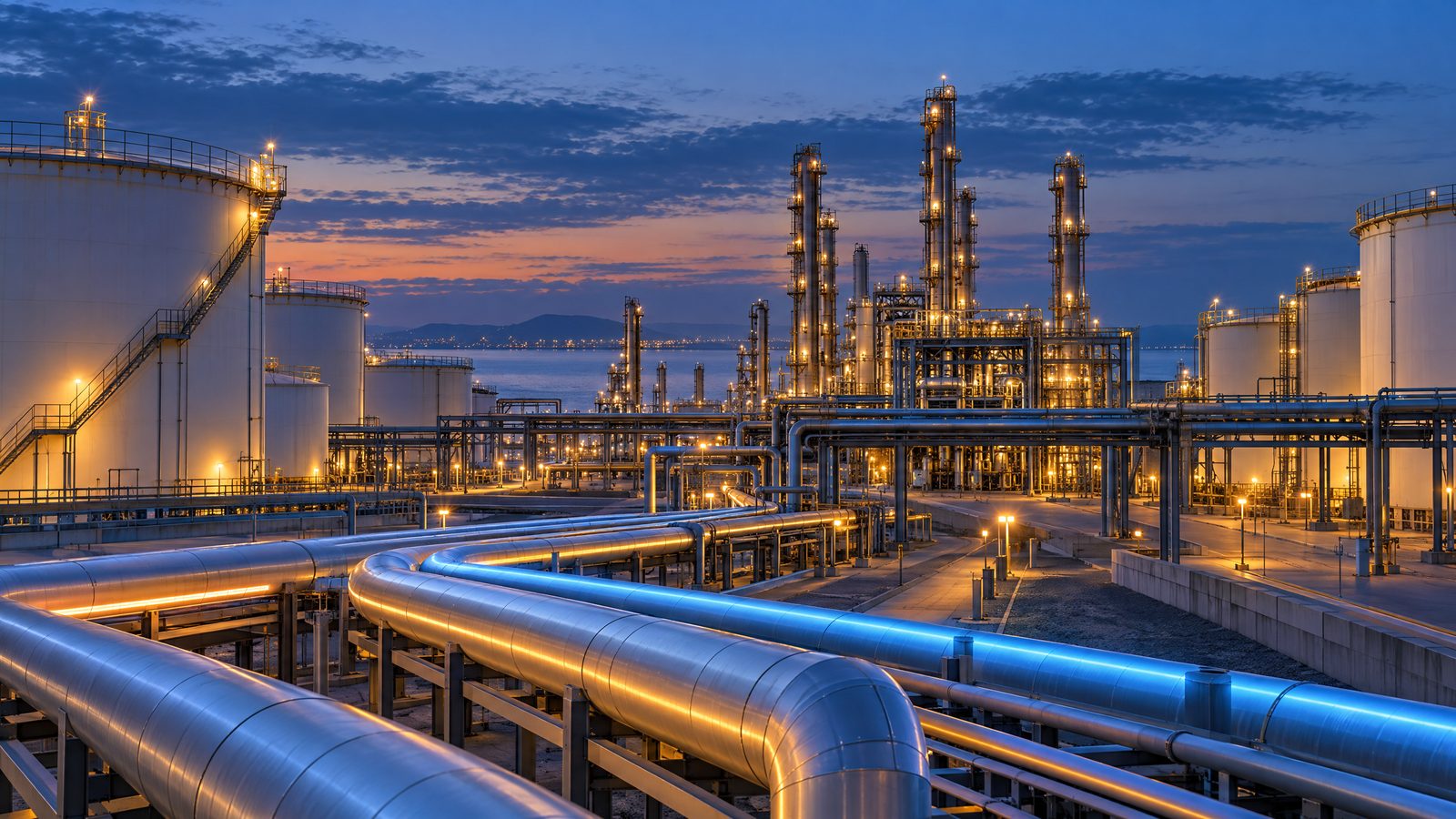

The European Union has opened a high-level dialogue with the oil-refining sector, bringing energy security, industrial competitiveness and the shift to lower-carbon fuels into the same policy discussion. The first meeting took place on 28 October and is intended to start a broader process rather than settle a package of measures immediately.
The session was co-chaired by Energy and Housing Commissioner Dan Jørgensen and Defence and Space Commissioner Andrius Kubilius. It brought together representatives of refineries, emerging-fuel producers, engineering businesses, technology providers, industry bodies and NATO. That mix reflects the broad role refineries play in the European economy: they are part of the civilian fuel system, but they also supply products used in aviation, road transport and defence.
Immediate fuel pressures and longer-term change
The dialogue has been launched while conflict-related disruption in the Middle East is adding pressure to fuel supply chains. Its short-term focus is on getting the most from existing European refining capacity, improving the resilience of supply routes and ensuring that sufficient fuel can be produced when demand rises sharply, including during a crisis.
That is particularly significant for diesel and jet fuel. EU refineries supply about 85% of the diesel and 70% of the jet fuel consumed across Europe. Both fuels remain central to everyday movement of people and goods, while also serving emergency services, aviation and military operations. Reliable refining capacity therefore has consequences beyond petrol-station prices or the balance sheets of individual operators.
At the same time, the industry faces a different set of pressures that cannot be solved simply by increasing output. High energy costs, international competition and the scale of investment required for new technologies are all part of the discussion. Refineries are being asked to remain capable of producing strategic fuels while adapting to a market expected to use more sustainable alternatives over time.
A roadmap is planned, not yet agreed
Participants are expected to work towards a joint roadmap on the sector’s transformation and its contribution to energy-security objectives. The stated areas include investment in sustainable biofuels and e-fuels, the long-term viability of European sites and the need to safeguard industrial employment and competitiveness.
The distinction between a dialogue and a completed policy is important. The first meeting did not establish a binding production target, funding programme or timetable for individual refinery projects in the material made public. It set out the issues to be worked through and opened a channel for the Commission and industry to identify common priorities and possible actions.
Any future measures will have to balance several objectives that can pull in different directions. Europe wants fuel supplies that are resilient in an emergency, but it is also pursuing a cleaner energy system and faces pressure to keep costs manageable for households and businesses. Operators considering investment will need clarity over regulation, future demand and the commercial case for producing alternative fuels.
Why the first meeting matters
The launch gives the refining sector a formal place in a wider debate about Europe’s economic security. For years, refineries have had to respond to changing demand, competition from outside the region and the costs of upgrading complex industrial sites. The new process places those challenges alongside concerns about supply resilience and defence readiness.
It does not guarantee that production will rise or that fuel costs will fall. Those outcomes depend on market conditions, infrastructure, investment decisions and the detail of any later action. The immediate development is the start of a structured discussion between public authorities and a sector that remains important to Europe’s transport, industry and security needs.
The next test will be whether that discussion produces practical priorities that can support existing capacity while giving companies a credible route towards lower-carbon fuels. Until then, the dialogue is best understood as the beginning of a policy process, not the conclusion of one.







