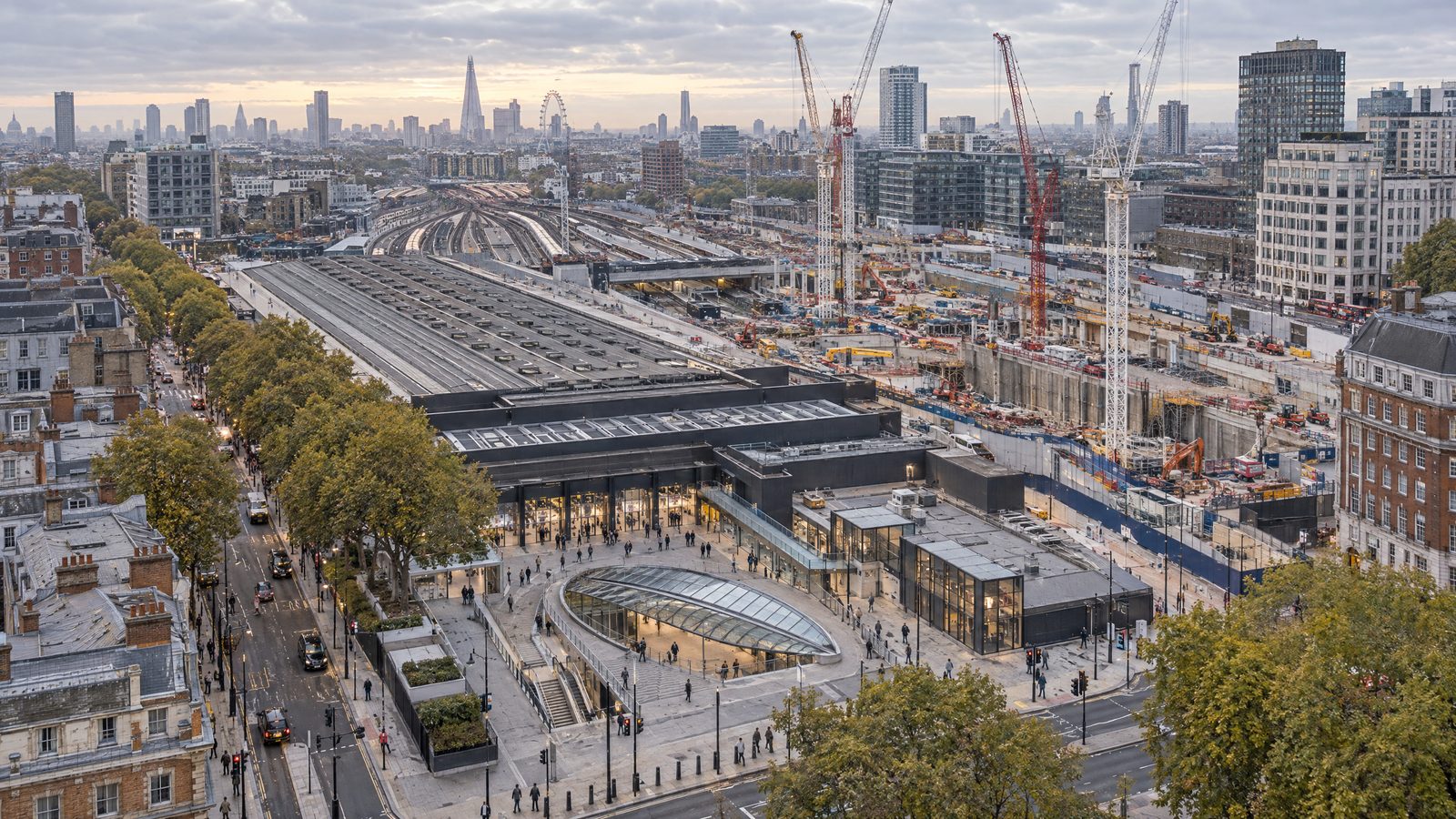

The body responsible for bringing together the redevelopment of Euston has set out plans for a specialist partner to test costs, timings and delivery risks across one of central London’s most complex transport programmes.
A new Department for Transport pipeline notice says the Euston Delivery Company intends to seek a Programme Challenge and Assurance Partner. The proposed role would support work on the integrated Euston programme, which combines the existing mainline station, London Underground, bus and taxi facilities, and the planned high-speed terminus.
The notice is an early signal to the market rather than a procurement outcome. No firm has been selected, no contract value has been published and the Department for Transport says the scope, route to market and timing remain under development.
A role focused on cost, schedule and delivery
The proposed partner would be asked to provide independent challenge across several parts of the programme. These could include forecasting the expected cost at completion, examining the factors driving spending and testing estimates against comparable work.
It could also review the programme’s sequence of work and the links between different projects. That matters at Euston because changes to one part of the campus can affect rail operations, station design, passenger routes, streets and the commercial development around them. The aim, according to the notice, would be to identify dependencies and help decision-makers improve the overall timetable.
Other possible responsibilities include value engineering, design and delivery integration, commercial advice and programme reporting. In practical terms, the appointed organisation could challenge whether designs are buildable, whether interfaces between delivery packages create avoidable risk and whether resources and contracts offer value for money.
What the notice does and does not confirm
The Department for Transport has described the potential arrangement as a long-term requirement, with indicative dates running from 1 September 2027 to 31 August 2042. It has also suggested that a tender notice could be published on 15 April 2027.
However, those dates are estimates, not a confirmed award timetable. The notice explicitly says that the work may be bought through a single long contract or procured again between programme phases. It also states that the Department for Transport and the Euston Delivery Company retain discretion over whether to start a procurement at all and whether to award a contract.
That distinction is important. A pipeline notice lets potential suppliers understand the direction of travel and gives public bodies an opportunity to refine a future requirement. It does not approve construction, secure new funding or commit the government to appoint a particular adviser.
Integrated approach to the Euston campus
The Euston Delivery Company has been created to coordinate a programme that extends beyond a single station building. Its remit is to bring together transport investment, commercial development, public realm changes and longer-term local benefits across the Euston campus.
Its work sits alongside organisations including HS2 Ltd, Network Rail, Transport for London, the Greater London Authority and Camden Council, as well as landowners, developers and local communities. The government has said the company will act as the programme’s single directing mind as it develops its capacity and governance.
The procurement notice says a public-private partnership model is being explored for the new high-speed terminus. It does not set out that model, identify private investors or confirm how any future development would be funded. The proposed assurance partner would instead be concerned with testing the programme’s affordability, deliverability and management as options are developed.
Why the next steps matter
Euston’s scale makes the quality of cost and schedule control particularly significant. The campus has to accommodate a functioning national rail station and Underground interchange while plans for the high-speed railway and wider regeneration are progressed. Decisions about design, construction sequencing and commercial arrangements can therefore have consequences for passengers, neighbouring communities and public finances.
For now, the immediate development is procedural: the Department for Transport has published a detailed outline of the assurance capability it may seek. The next substantive milestone would be a formal tender notice, currently indicated for April 2027. Until then, the role’s scope, value, and final procurement structure remain open.