
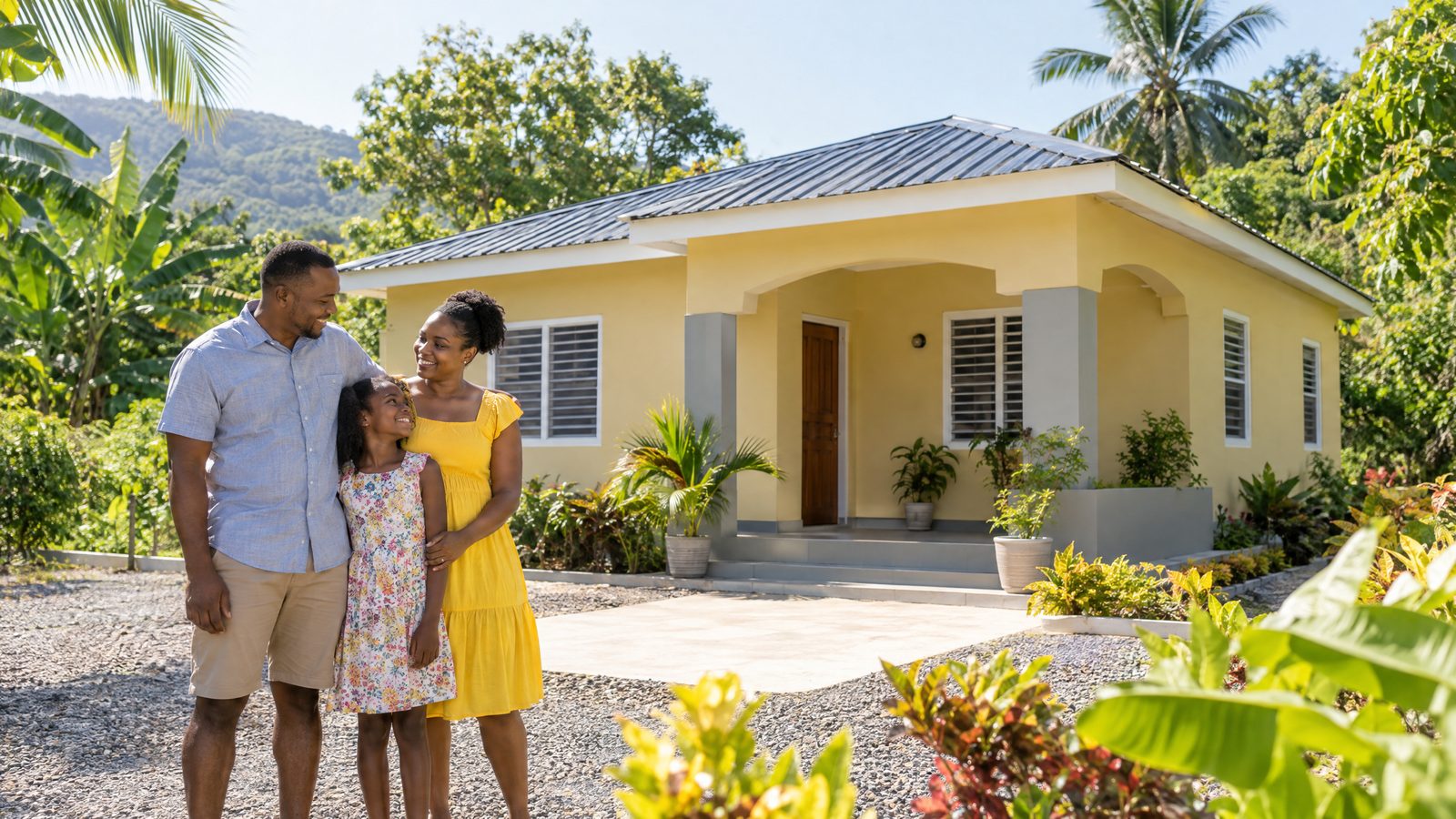

Five households in St James have received new homes through Jamaica’s New Social Housing Programme, with the handovers taking place on Friday 23 October. The homes were presented by Prime Minister Andrew Holness in a set of ceremonies that placed immediate housing delivery alongside the wider task of repairing homes damaged by severe weather.
The recipients were Olivia Waite, Barrington Dobson, Melbourne Shaw, Monica Bingham and Janice Solomon. Each handover concerned a completed home rather than a proposed future project. The announcement did not set out a separate construction timetable for the five properties, because the homes had already been delivered to the households.
One of the cases outlined was that of the Dobson family. Their household had been affected by Hurricanes Beryl and Melissa. Their new three-bedroom home is expected to accommodate eight people across three generations. That detail illustrates the scale of need that a single completed home can address, while also making clear that the wider recovery effort extends well beyond the five households recognised at the ceremonies.
The home handovers were accompanied by an update on public support for storm-damaged housing. The Government said that about J$12 billion had been allocated to the Restoration of Owner or Occupant Family Shelters programme, known as ROOFS. A further J$2 billion was expected in the coming days. The latter figure was an anticipated allocation, not a confirmed payment or a sum already received by households.
ROOFS is intended to assist homeowners and occupants whose houses were damaged by severe weather, particularly Hurricane Melissa. Its purpose is distinct from the New Social Housing Programme handovers. The information released with the ceremonies did not say that the roof-repair allocation paid for the five new homes, so the two strands should not be treated as the same intervention. They were discussed together because both concern the practical recovery of housing after damaging weather.
The funding update also requires a careful distinction between money allocated and money disbursed. An allocation identifies money set aside for a programme. It does not on its own show how much has reached individual households, how many repairs have been completed or how many applicants are still waiting for help. No current total for payments made to households, a waiting-list figure or a date for the expected additional J$2 billion was set out alongside the handovers.
That qualification matters for families whose homes still need repair. The J$12 billion figure describes the scale of funds allocated to the programme, while the prospective J$2 billion indicates that further support was being considered. It should not be read as confirmation that J$14 billion has been paid out, or that every affected household has already received assistance.
For the five named recipients, however, the immediate outcome is clear: they have received new homes through the social housing programme. For the wider recovery, the next substantive measures will be the amount of additional funding formally made available, the number of households helped through roof repairs and the pace at which support reaches people whose homes remain damaged.
The St James handovers therefore show two different parts of the housing response. One is a completed delivery of five homes to identified households. The other is the continuing repair programme for weather-damaged homes, where the announced allocation is significant but the proposed further funding remains prospective. Keeping those positions separate gives a clearer picture of what has been delivered and what is still expected.







