

By Jose Ucar & Derek Smith
Most founders do not lose investors because of their slides. They lose them because their presence collapses.
We have both seen it many times. A founder steps on stage and says, “I’m just the tech guy. My co-founder handles the business side.”
It is a credibility crash in one sentence.
The room switches off. Investors are not buying a deck. They are buying leaders who can carry the vision in any room.
Founder presence determines whether people lean in or disengage before the pitch has even begun.
Why pitching no longer wins trust
Pitching, as most founders understand it, is losing relevance.
According to Harvard Business Review (2025), fewer than three per cent of startup pitches secure funding. Investors have seen every version of the same deck. Slides no longer differentiate.
What investors respond to now is presence. The founder who owns the story rather than reads it. The leader who can explain the business clearly, confidently, and consistently without hiding behind structure.
Presence has replaced performance.
Why internal alignment is a growth strategy
Founder presence does not exist in isolation. It is amplified or weakened by how well the organisation understands and communicates its story.
Research consistently points to the same pattern.
PwC’s Connected Culture Report (2025) found that seventy one percent of employees perform better when they understand and can articulate company goals. Yet only thirty eight percent of people in startups feel confident explaining their organisation’s mission.
McKinsey’s High Performing Teams Survey (2025) showed that companies where employees can consistently describe their value proposition are more than twice as likely to achieve year on year growth.
Deloitte’s Future of Work Pulse (2025) warns that once a startup reaches around twenty people, message alignment breaks down quickly. Information gaps begin to erode trust and efficiency.
The takeaway is simple. If people inside the business cannot clearly explain what you do and why it matters, opportunities are already being lost.
The playbook mindset
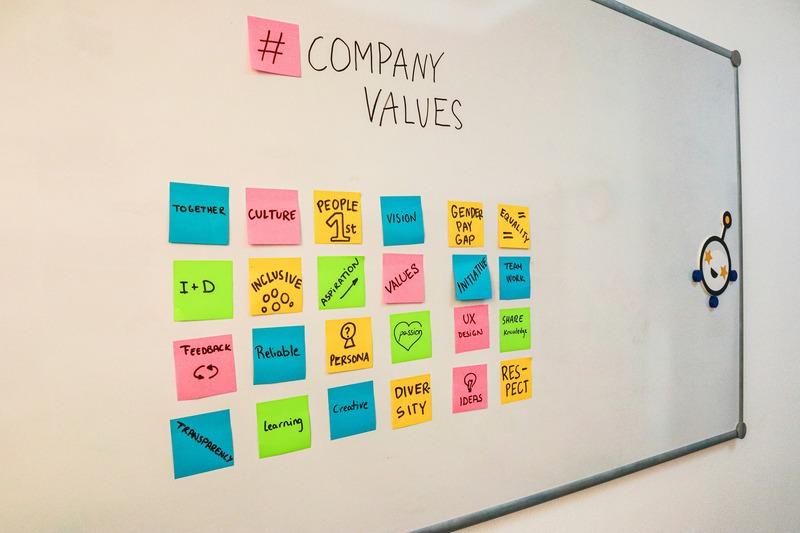
Every founder needs a living reference point. A shared playbook that defines the company’s story in clear, repeatable terms.
Not jargon. Not fluff.
At its simplest, that playbook includes:
- A one-line mission
If it takes more than ten seconds to explain, it is too long. - Ten key messages
The problems you solve, how you solve them, what sets you apart, and what comes next. - Prepared answers to hard questions
The ones investors, clients, or partners ask when timing is least convenient.
When everyone in the organisation knows the same story, from engineer to COO, the company projects stability and coherence. In crowded markets, that is presence.
What founder presence actually looks like
Presence is often confused with charisma. It is not.
Founder presence is alignment. It shows up when a leader can:
- Speak clearly about every part of the business, not just their own domain
- Match tone and energy to the message being delivered
- Share responsibility and risk rather than deflect it
Small companies often dismiss structured communication as something only large organisations need. That assumption is costly.
Startups that scale without clarity tend to stall when investors or customers ask basic questions the team cannot answer. According to Forbes and PwC’s Start Up Outlook (2025), strong communication alignment shortens due diligence cycles and increases deal momentum.
Why this matters now
If a co-founder, team member, or agency cannot confidently describe your market, mission, or offer, the problem is not the pitch.
It is present.
You do not need another deck. You need shared presence, where anyone connected to the business can carry the story forward when opportunity appears. On a stage, in a client call, or in a casual conversation that changes the company’s trajectory.
About the Authors
Jose Ucar (Venezuelan, based in London) and Derek Smith (Canadian, based in Portugal) help founders, leaders, and teams speak with impact and lead with presence – on stage, online, and across cultures. Together, they deliver workshops, keynotes, and coaching that turn voices into visibility, influence, and results.
Want your team to communicate with greater impact? Book Jose and Derek’s Communication & Presence Workshop, available online and in London.