
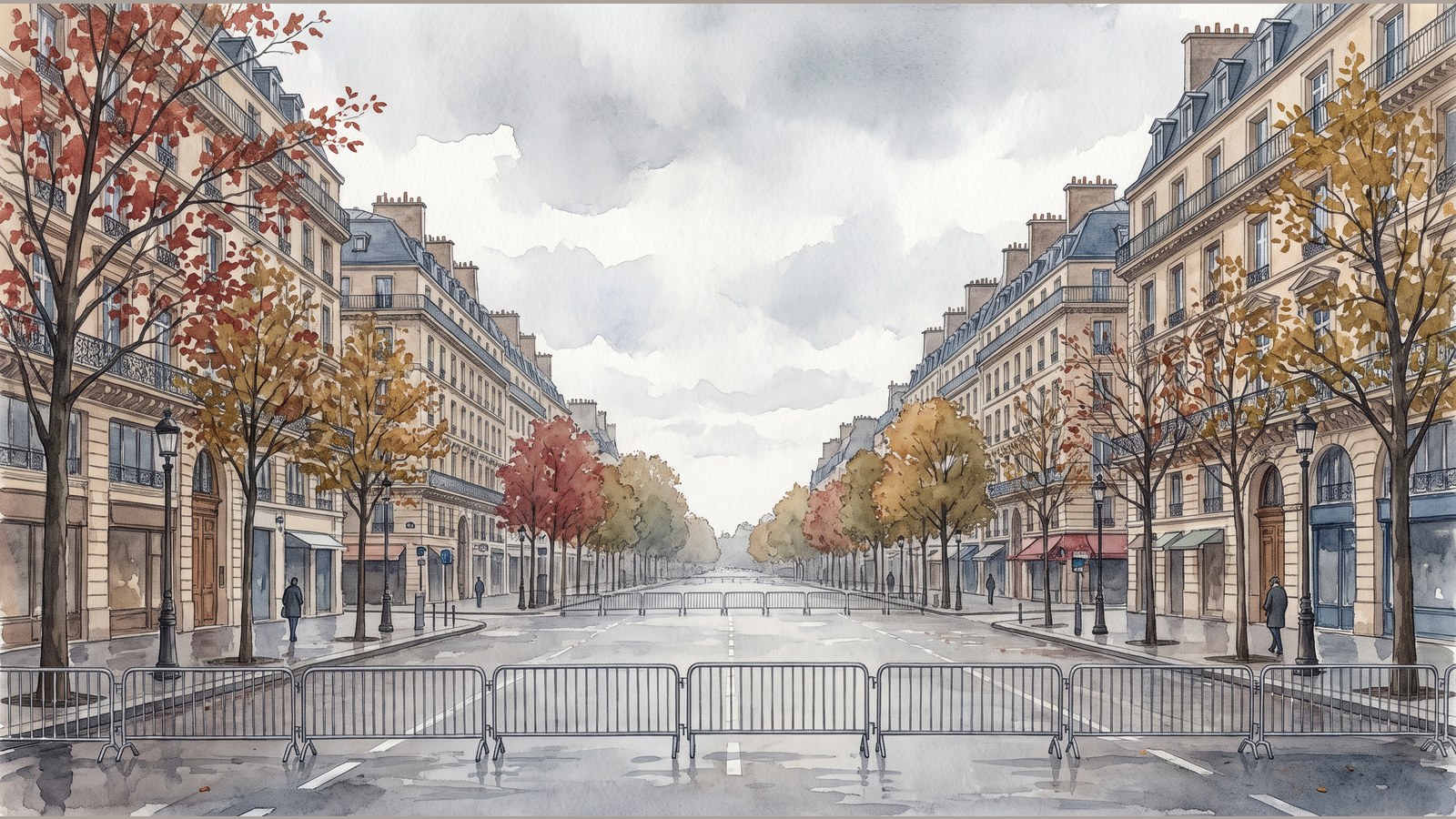

France sets security measures for 24 October protest day
French authorities have set out a fresh security framework for demonstrations planned on Saturday 24 October, following violence and looting that accompanied protests in several cities a week earlier. The measures combine nationwide directions to local state representatives with orders made in Paris on 22 October. The available official material sets out preparations for the day; it does not establish what happened during the mobilisation.
Checks on organisers and routes
The Interior Ministry has asked prefects to examine proposed demonstrations and calls to protest with particular care. In judging how to prevent public-order problems, they have been told to consider whether organisers can identify people able to uphold agreed arrangements and can provide an appropriate stewarding service. Incidents connected with earlier events organised by the same people may also be considered.
Proposed routes are to receive separate scrutiny. Prefects have been asked to consider shops along a route, including premises affected on 17 October or considered at risk of looting or damage at the margins of a march or gathering. Where there is a risk of further looting or destruction, a demonstration may be prohibited in the relevant area. Routes are also to be discussed closely with mayors. If discussions with organisers do not produce a satisfactory result, a prefect may impose a route considered suitable for local conditions.
Transport checks and operational resources
On the day itself, prefects have been instructed to put in place operational checks on the movement of people, particularly at stations and along transport routes. The stated aim is to detect materials that could be used for violence, stop and identify their carriers, and identify people who are not permitted to take part in demonstrations.
The ministry said the security deployment had been strengthened by calls for personnel to return to service. It said Centaure armoured vehicles and units from RAID, BRI and GIGN would be deployed. It also said interventions over attacks on people or property would be systematic. The judicial response is to be adapted nationwide with prosecutors so that suspected offences can be recorded, evidence gathered and detained people dealt with quickly through the justice system.
The ministry reiterated that the use of intermediate-force equipment must be proportionate and comply with the legal and regulatory framework. That instruction is important because the announcement concerns both prevention before a march and operational decisions should incidents occur. It does not amount to a finding that any individual or group will commit an offence on 24 October.
Orders in Paris and neighbouring departments
The Paris Prefecture of Police listed several orders dated 22 October alongside the wider preparations. They include orders prohibiting demonstrations in Paris on 23, 24 and 25 October, and a curfew applying in certain Paris sectors from 22 to 26 October. The order index does not make the curfew a citywide measure.
Other orders apply from 23 to 26 October in Paris and the neighbouring departments of Hauts-de-Seine, Seine-Saint-Denis and Val-de-Marne. They temporarily restrict the carrying or transport without a legitimate reason of weapons and objects that could be used as weapons. Separate measures cover individual fuel containers, fireworks and certain protective equipment. The index also lists an administrative closure of the Louvre’s north and south ticket counters in connection with the 24 October mobilisation.
The distinction between the national instructions and the Paris orders matters. The national framework directs how prefects should assess protests, routes and policing across the country. The Paris measures are formal orders with their own geographic and time limits. Neither set of measures provides a verified account of turnout, disruption, arrests, injuries or damage on 24 October. Those matters would require separate confirmed information after the day.







