
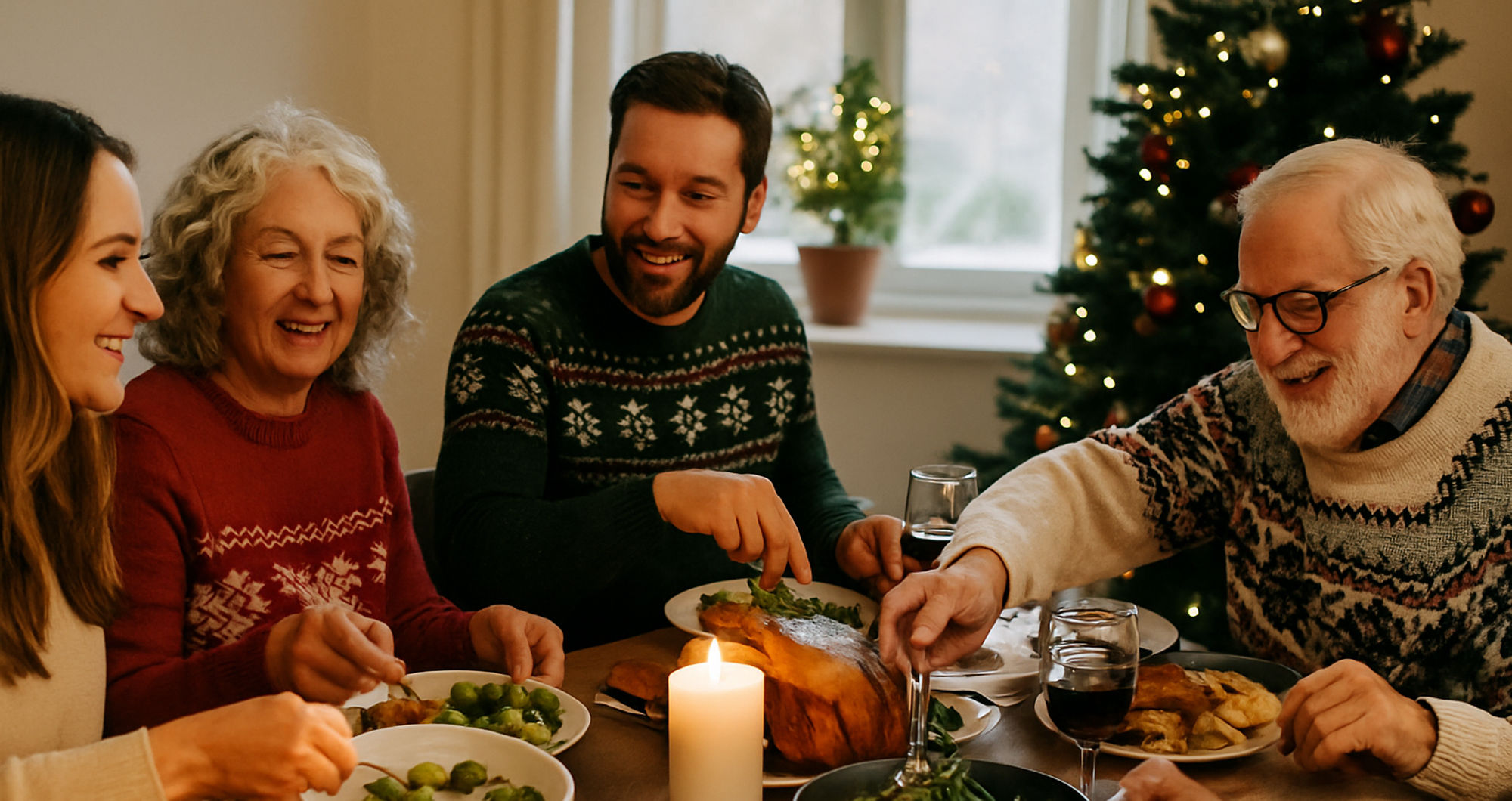

Christmas is a time for connection, comfort, and — let’s be honest — food. Tables piled high with roast dinners, tins of chocolates within arm’s reach, and the steady flow of festive drinks can make December feel like a nutritional free-for-all. For many people, this leads to a familiar cycle: enjoy now, worry later.
But eating well over Christmas doesn’t mean skipping the mince pies or surviving on lettuce leaves. It’s about balance, awareness, and letting go of the idea that health has to be “all or nothing”.
First, Let’s Clear Something Up
One or two indulgent meals don’t undo months of healthy habits. In fact, it’s rarely Christmas Day itself that causes issues — it’s the weeks of mindless snacking, irregular meals, and “I’ll start again in January” thinking that can leave people feeling sluggish, bloated, and low on energy.
The good news? A few simple nutrition principles can help you enjoy the festive season and feel good in your body.
Don’t Skip Meals to “Save Up”
A common mistake is skipping breakfast or lunch to compensate for a big Christmas dinner. While it sounds logical, it often backfires.
Going into a large meal overly hungry makes it harder to tune into fullness cues, leading to overeating and discomfort. Instead, aim for regular meals throughout the day, with some protein and fibre included. Think eggs, yoghurt, fruit, soups, or leftovers from the day before.
You’ll still enjoy your roast — just without the food coma.
Protein Is Your Festive Secret Weapon
Protein tends to disappear during the holidays, replaced by beige snacks and sweet treats. Including protein at meals helps keep blood sugar levels steadier and supports energy, digestion, and satiety.
At Christmas, this doesn’t have to be complicated. Turkey, salmon, beef, nuts, cheese, lentils, and even yoghurt-based desserts all count. Building meals around protein makes it easier to enjoy festive foods without constantly grazing.
Eat the Foods You Love — On Purpose
Labelling foods as “bad” or “naughty” only adds guilt, which often leads to overeating. Instead of trying to avoid festive favourites, choose them intentionally.
Ask yourself: Do I actually want this, or is it just there?
Saying yes when you genuinely want it — and no when you don’t — is a powerful skill.
That box of chocolates tastes better when you’re present, not distracted and halfway through the second layer without noticing.
Alcohol Counts More Than You Think
Mulled wine, prosecco, cocktails — alcohol flows freely at Christmas. While there’s nothing wrong with enjoying a drink, alcohol can quietly add up, affecting sleep, hydration, digestion, and energy levels.
A simple approach is to alternate drinks with water, set a loose limit for yourself, or choose alcohol-free options some of the time. Small tweaks can make a big difference to how you feel the next day.
Keep Some Structure (But Not Perfection)
Routines tend to disappear over Christmas, which can be refreshing — but total chaos rarely feels good. Keeping some gentle structure helps anchor your days.
This might look like:
- Eating at roughly similar times
- Including vegetables in most meals
- Going for daily walks
- Drinking enough water
You don’t need to be perfect. You just need a few steady habits that support your wellbeing while everything else is festive and flexible.
Think Beyond January
The aim isn’t to “get through” Christmas and fix everything later. It’s to build a healthier relationship with food that works all year round — including celebrations.
This is where guidance really matters. Nutrition advice isn’t about rigid rules; it’s about understanding how food supports your body and lifestyle. For best results, consider working with a Personal Trainer who has completed a Nutrition Course and understands how to tailor advice to real life, not just textbook plans.
Enjoy Christmas — Fully
Food is part of culture, memory, and joy. Eating well over Christmas doesn’t mean missing out — it means feeling satisfied, energised, and present enough to enjoy the season properly.
So have the mince pie. Savour the mulled wine. And remember: health isn’t what you do between Christmas and New Year — it’s what you do consistently, with kindness, the rest of the time.







