

For decades, Bali has built one of the world’s most recognisable tourism brands.
Its beaches, temples, rice terraces and centuries-old traditions attract millions of international visitors every year. Yet behind the postcard-perfect scenery, the island is beginning to invest in something far less visible, but arguably far more important to its long-term future.
It’s people.
While discussions about Bali’s tourism often focus on new resorts, airports and visitor numbers, leaders at Bali’s largest public university believe the island’s greatest investment for the coming decades will be education, innovation and cultural resilience.
Speaking during a media briefing in Denpasar, Udayana University Rector Professor I Ketut Sudarsana said Bali’s international reputation also brings responsibility.
“Bali is Indonesia’s showcase. Many international visitors who come to Bali also want to see what Indonesian universities look like. Udayana University must demonstrate the quality of Indonesian higher education to the world,” he said.
His remarks reflect a broader ambition that extends well beyond campus boundaries.
Rather than viewing education as separate from tourism, Udayana University sees universities as part of the ecosystem that shapes how Bali will be experienced by future generations of travellers.
Hospitality, innovation, environmental awareness, cultural preservation and skilled professionals all begin long before visitors arrive. They begin in classrooms, research centres and communities preparing young Balinese for an increasingly complex world.
That vision is now being translated into several major initiatives.
The university is expanding access to higher education through Bali’s One Family, One Graduate Scholarship Programme (SKSS), enabling more students from lower-income families to attend university.
At the same time, Udayana is developing its Smart System Integrated & Technologies Laboratory, designed to support research in artificial intelligence, advanced computing, digital innovation and technology entrepreneurship.
While such projects may appear unrelated to tourism at first glance, Professor Sudarsana believes they are essential for preparing a workforce capable of supporting Bali’s future economy.
“We are preparing human resources who understand technology and the development of artificial intelligence. In the future, we hope to see technology-based startups and graduates who can contribute to Bali’s development,” he said.
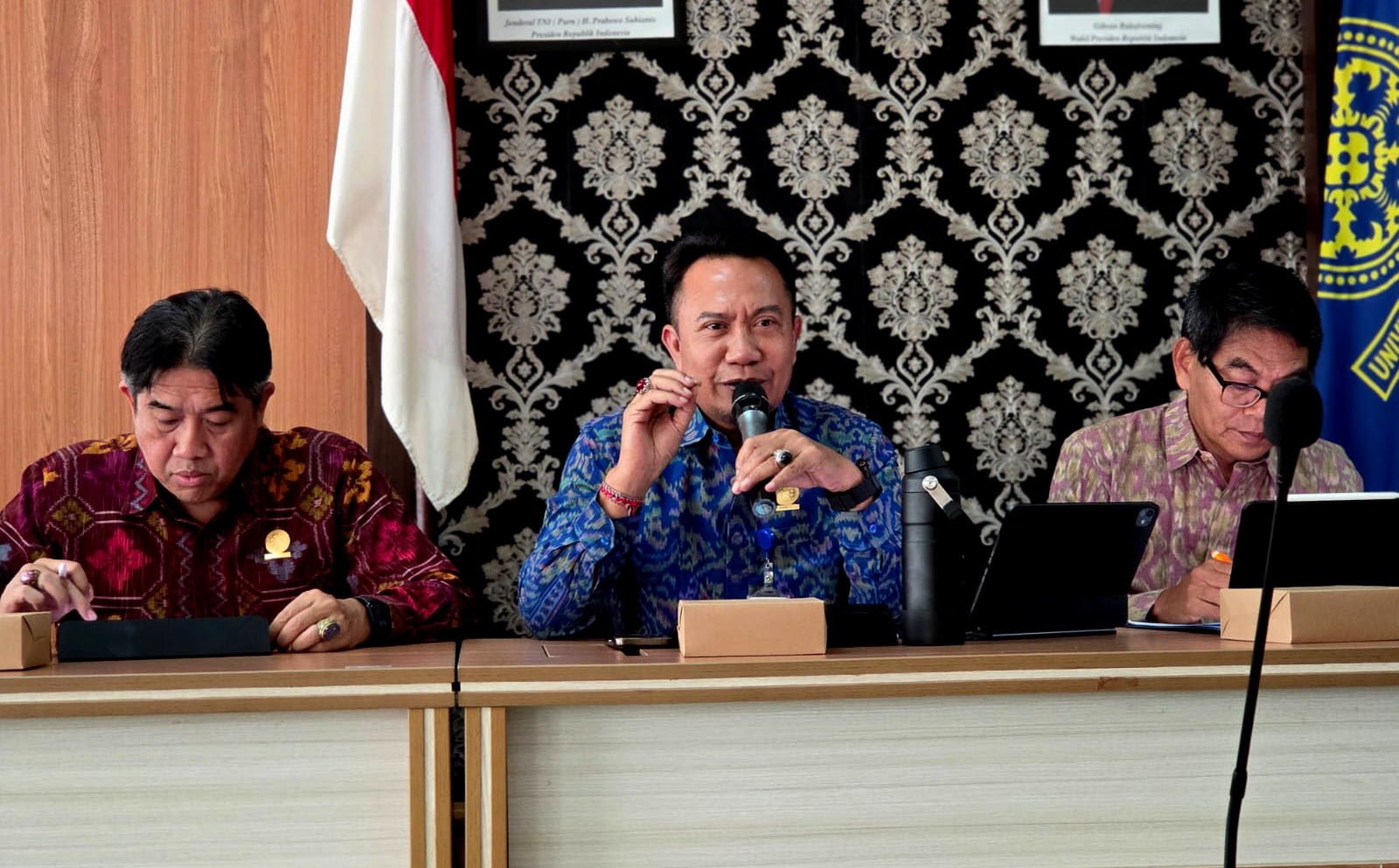
Udayana University Rector Prof. I Ketut Sudarsana (Hey Bali News)
Yet technology is only half of the story.
The university is equally focused on preserving Bali’s cultural identity through education rooted in Tri Hita Karana, the Balinese philosophy of harmony between humanity, nature and the spiritual world.
That philosophy continues to shape the university’s academic approach while also inspiring initiatives such as the digital preservation of ancient Balinese manuscripts and new cultural spaces celebrating King Udayana, one of Bali’s most influential historical figures.
Professor Sudarsana believes this combination of innovation and cultural identity offers something distinctive to international academic partners.
Rather than competing solely through rankings or research output, he wants Udayana University to become a place where global collaboration is built upon shared values as well as scientific progress.
“We invite universities and educational institutions around the world to collaborate with Udayana University. We have strong academic resources, a strategic location, and an educational philosophy based on Tri Hita Karana, a philosophy that is increasingly recognised internationally,” he said.
For international universities, Bali offers more than a tropical location.
It offers an opportunity to explore how local wisdom can coexist with technological innovation, sustainability and global education.
For international travellers, however, the story is equally significant.
Visitors rarely remember a destination only because of its hotels.
They remember conversations with local people, knowledgeable guides, authentic cultural experiences, and the warmth of the communities that welcome them.
Those experiences are created by people, not buildings.
As global tourism becomes increasingly competitive, Bali appears to recognise that protecting its reputation will require more than building another luxury resort.
It will require investing in the people who will shape the island’s future.
Because the future of tourism is not built only with infrastructure.
It is built with educated communities, cultural confidence and the next generation of people who will welcome the world to Bali.