
Two major health funders have announced a $100 million programme to test approaches intended to prevent stillbirths, beginning with partners in sub-Saharan Africa. The initiative, called Uzima, is a commitment to investigate and validate possible interventions; it is not evidence that stillbirth rates have already fallen.
The Gates Foundation and Wellcome Leap are each committing $50 million during the programme’s first three years. That initial phase will identify and validate promising innovations, with a longer-term ambition to show that stillbirth rates can be halved over the next decade in selected countries. The target is an aim, not a guaranteed result.
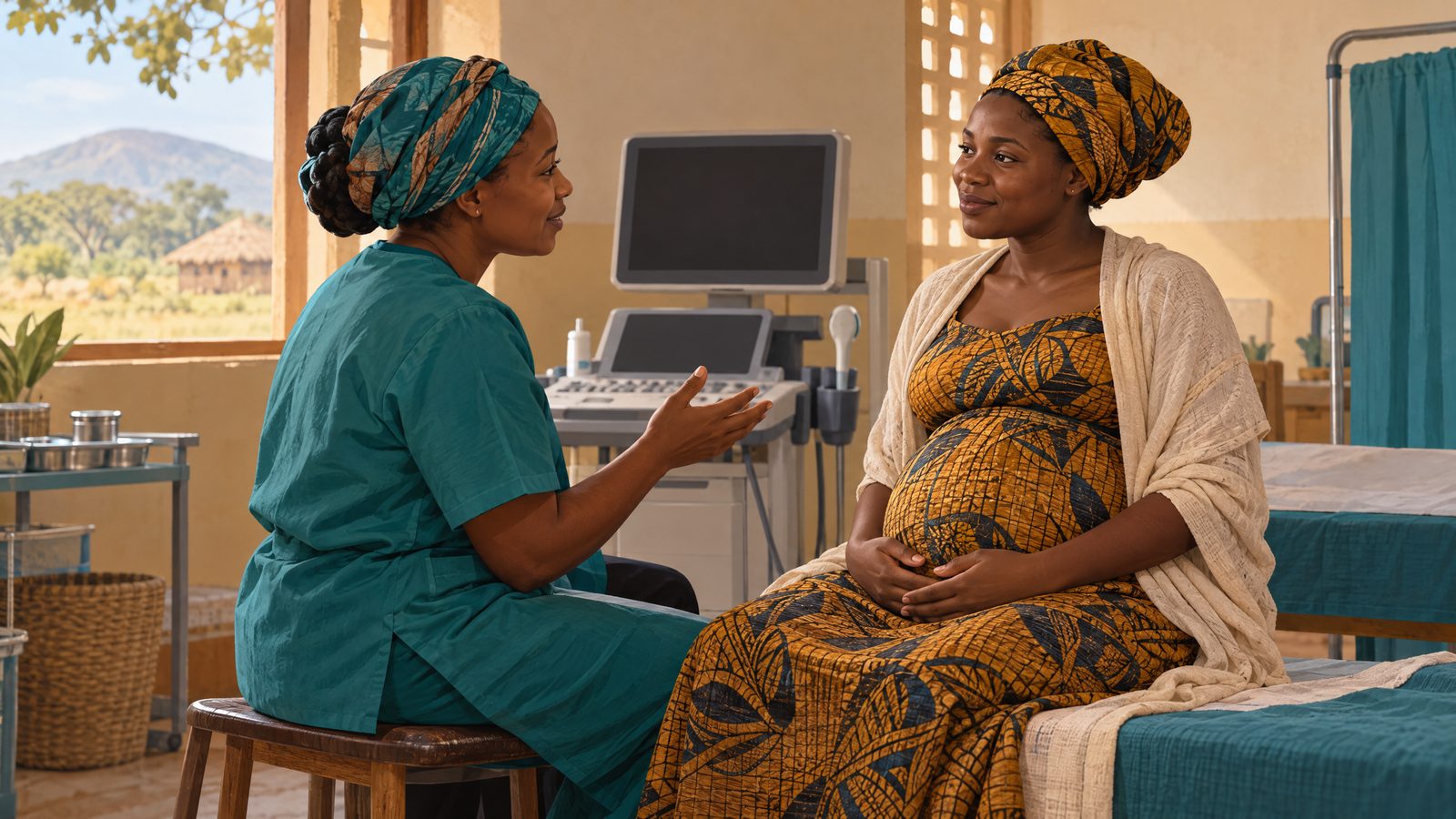
Uzima will focus on helping families and health workers spot risks earlier and respond to complications during pregnancy and childbirth. The proposed work spans early detection, clinical assessment and monitoring during labour. The organisations say participating countries will help shape the programme around local priorities and health-system needs.
Testing a range of tools
Potential areas include diagnostic approaches using biomarkers or imaging to identify complications such as pre-eclampsia and gestational diabetes. Artificial-intelligence-assisted ultrasound and other screening methods are also under consideration, particularly where trained staff and equipment are limited.
Other possibilities include sensors to monitor labour, decision-support systems that help clinicians interpret warning signs, and personalised support or patient-navigation services for mothers, families and community health workers. These are areas the programme plans to explore, rather than a list of interventions already selected for widespread use.
The initiative is intended to establish which approaches work when integrated into health services. Country partners are expected to help determine which tools fit their settings, and evidence from that work is meant to guide any later expansion. The funders say the innovations could also be relevant to underserved or rural communities in middle- and high-income countries.
Early plans and a wider funding need
Uzima expects to identify an initial package of innovations by early 2027 and says it plans to announce its first participating country partner in the coming months. The initial commitment covers the first three years of identifying and validating candidates. Additional funding and partners will be needed to expand approaches that prove effective.
After that initial phase, the programme intends to work with participating countries on implementation and expansion of the most effective approaches. The announcement does not specify which countries will take part, how much of the total will go to each innovation, or which tools will ultimately be adopted. Those decisions and the results of testing remain ahead.
The funders cite an estimated global toll of nearly two million stillbirths each year, with almost half occurring in sub-Saharan Africa. That burden is the reason the programme says it will begin in the region, while aiming to develop evidence that could eventually be used more widely. The central question for Uzima is whether new and existing tools, applied within local health systems, can produce measurable improvements in outcomes.
By placing substantial funding behind testing and implementation, the initiative creates a route from potential technologies to evidence-informed practice. But its announced ambition should be read as a research and delivery objective, not as a claim of proven impact. The next milestones are the selection of innovations, identification of country partners and evaluation of whether interventions work in practice.