
Greenwich adopts 2050 vision and four-year plan with 110 commitments
The Royal Borough of Greenwich has adopted its first long-term borough vision, setting a course to 2050 alongside a four-year Corporate Plan for 2026 to 2030. Councillors approved both documents on Wednesday 21 October, turning proposals published earlier in the month into the council’s stated commitments for the period ahead.
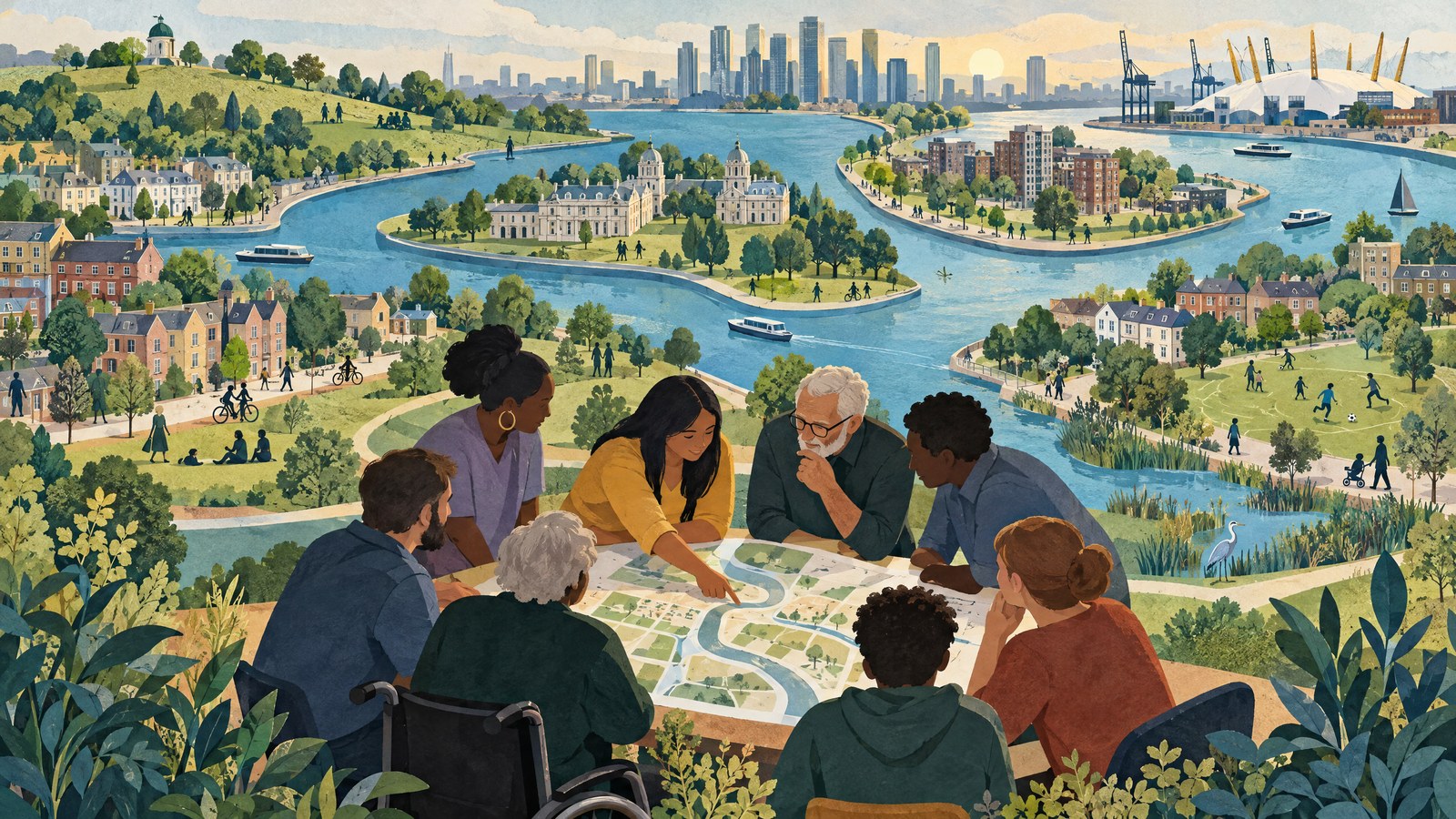
The vision, titled Greenwich: the borough that creates, is intended to guide council decisions and growth over the coming decades. It centres on opportunity, belonging, joy, wellbeing and neighbourhoods. The Corporate Plan is described as the first four-year step towards that longer-term direction, with 110 commitments grouped across seven themes.
Housing and youth services among headline commitments
One of the largest targets is to support the creation of 6,000 new council, social-rent and low-rent homes over the next decade. This is a future target, not a claim that the homes have already been built or that all are funded and under construction. The plan also promises action on fly-tipping and a reduction in bulky-waste charges.
For young people, the council says it will provide five youth hubs open seven days a week through NextGen Greenwich, backed by a £1.6 million youth grant. The plan also includes £150 bike vouchers for young people. These measures are commitments in the adopted plan; their delivery will take place over time.
A separate £1 million fund is intended for local causes through the Greenwich Neighbourhood Growth Fund. The council has also included advocacy for major infrastructure and development ambitions, including a Docklands Light Railway extension, unlocking Charlton Riverside and delivering Thamesmead’s New Town. These are stated priorities and advocacy, rather than confirmation that external bodies have approved or funded those projects.
Public input and annual reporting
The council says more than 1,300 contributions from residents, partners and staff informed the vision during engagement over the summer. Residents took part through community forums in Plumstead, Eltham, Greenwich and Blackheath, as well as local events and online. Earlier draft papers were published on 15 October and remained subject to approval; the vote on 21 October is the material change that gives the vision and plan adopted status.
Public accountability is part of the framework. The council says progress will be shown on a public dashboard and reported to Cabinet each year alongside the budget. The arrangement is designed to make progress against the plan visible, although publication of a dashboard does not itself establish that any particular target has been met.
The adopted documents connect long-range aspirations with actions intended for the current council term. Some commitments, such as reducing bulky-waste charges or opening youth provision, concern services residents may experience locally. Others depend on longer delivery periods, future decisions or cooperation beyond the borough council. The 6,000-home ambition extends across ten years, while the Corporate Plan covers 2026 to 2030.
That distinction matters when assessing the plan. Its adoption establishes the council’s policy direction and its own commitments; it does not mean that all promised services, homes or infrastructure are already in place. The annual Cabinet reporting and public dashboard are the mechanisms identified for tracking progress as the plan moves from approval into delivery.