
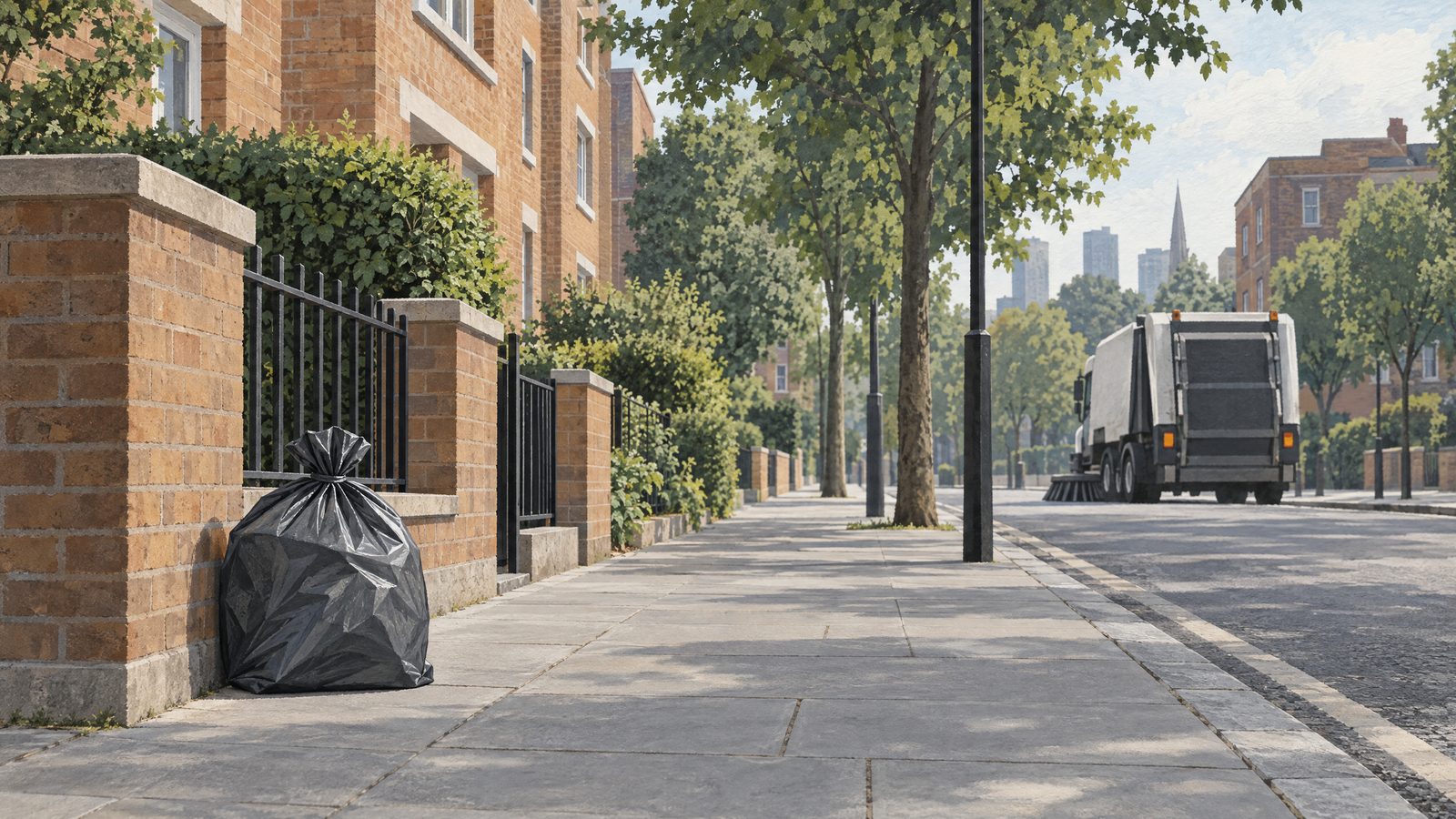

Hackney Council says it has cut the average time taken to remove fly-tipped waste to 2.37 days after accelerating clearances by 0.28 days, while issuing 805 fixed penalty notices for waste-related offences between April and August.
The council said the number of notices was 71 per cent higher than in the same five-month period a year earlier. The figures cover waste-related offences, so they should not be read as 805 penalties for fly-tipping alone.
A separate measure focused on commercial waste. From May to August 2026, the council recorded a 15 per cent reduction in black sacks illegally dumped on main roads by high-street businesses. It estimated that the reduction saved more than £26,000 in disposal costs and helped keep pavements clear.
The council attributed the changes to work by its behaviour-change and fly-tipping enforcement teams with residents and businesses. It has not published a breakdown showing how many of the 805 notices related to businesses, how many resulted in payment, or how many were challenged. The published figures therefore show enforcement activity, rather than the number of cases finally resolved.
More reports, quicker removals
The faster clearance time comes as reported fly-tipping in Hackney has risen. The council said reports increased by 52 per cent last year to almost 8,000 incidents. Its new account does not specify whether the 2.37-day average applies to every kind of waste, or describe the precise start and end points used to calculate removal time.
Nationally, local authorities in England recorded 1.26 million fly-tipping incidents in 2024/25, a 9 per cent increase on the previous year. The national total is distinct from Hackney’s borough figures. The borough and national numbers refer to reported incidents; they do not represent a complete count of dumping that went unreported.
Waste left on streets creates work for clearance teams and can obstruct pavements. The council’s reported reduction in business black sacks on main roads is narrower than an overall borough-wide measure: it covers a particular waste type, location and four-month period. It does not establish that fly-tipping as a whole fell, especially alongside the increase in reports.
Advice for residents
The council is asking residents who pay a private trader to remove bulky items to check that the waste carrier is licensed. It also directs residents to its own bulky-waste collection service. The warning forms part of a national fortnight of activity running from 12 to 25 October, which focuses on traders who advertise as legitimate operators but may dump the waste they collect.
Residents who witness suspected dumping are encouraged to report it to the council. Reports can help the authority identify incidents and take enforcement action, although the latest figures do not state how many reports led to a notice or other outcome.
Hackney’s results point to two distinct measures of the response: more waste-related penalties and a shorter reported clearance time, alongside a reduction in one category of business dumping. The figures also show the limits of the improvement: reported incidents have risen, and the council has not provided a detailed breakdown of the enforcement outcomes. Further reporting periods will show whether the faster removals and business-waste reduction continue.







