
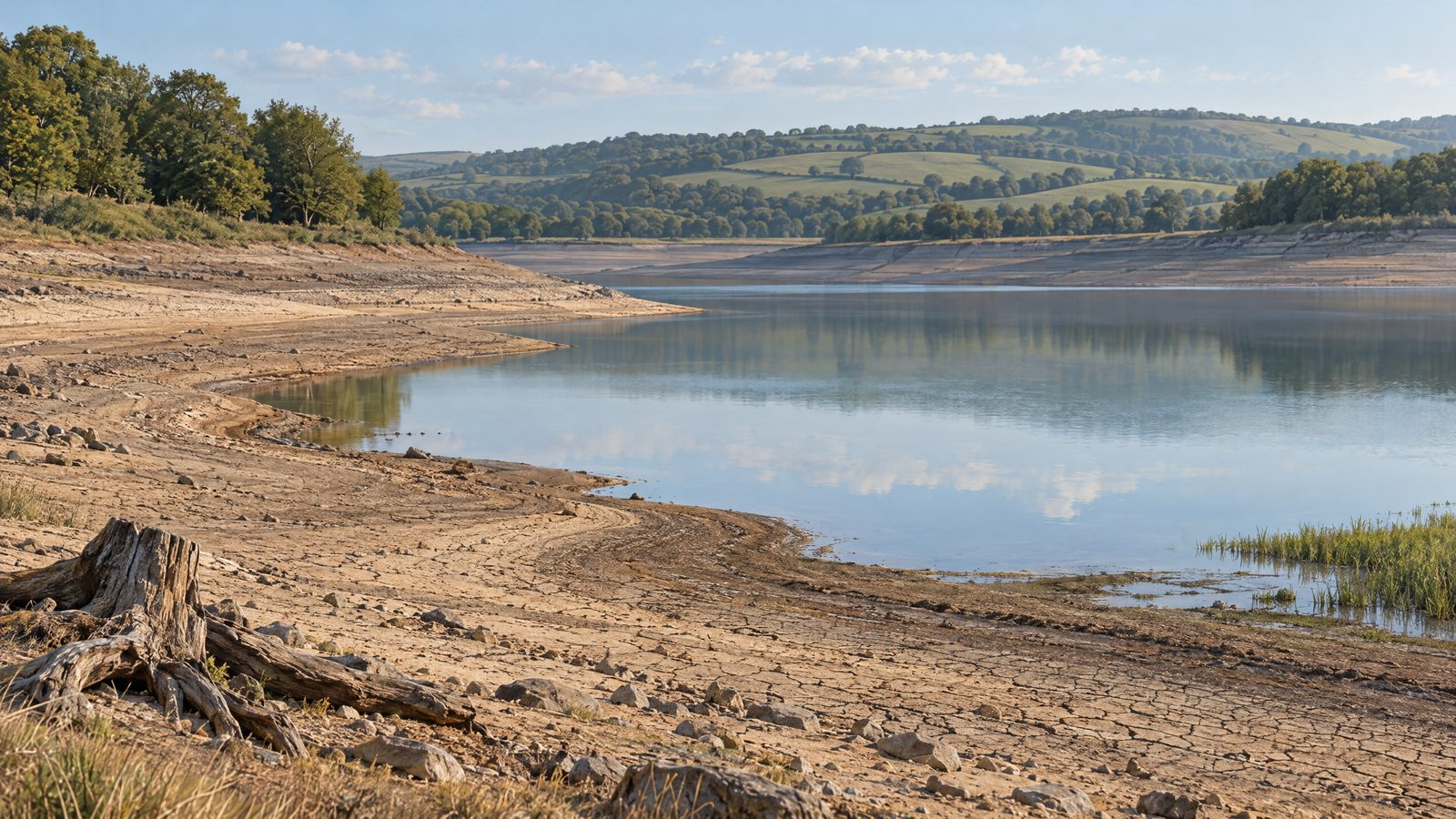

Parts of East and West Sussex have been placed in England’s highest drought category, prompting stepped-up checks on water supplies and businesses that take water from rivers and other natural sources. The declaration was made on 15 October as prolonged dry weather left reservoirs under pressure across southern England.
The designation applies to defined areas around Ardingly Reservoir in West Sussex and Wimbleball Reservoir in Somerset. It covers homes and businesses supplied by those reservoirs, rather than every address across the named counties. London is not included in the severe-drought declaration, but the Sussex areas bring the development close to the capital’s wider South East region.
What changes under the declaration
Water companies have been instructed to monitor reservoir and river levels every day and increase water-quality monitoring. The regulator is increasing compliance checks on businesses that abstract water from natural sources, to ensure they do not take more than their permits allow. Local Resilience Forums have also been activated so public bodies and response partners can coordinate support if it is needed.
The Government says household water supplies remain uninterrupted. Severe-drought status does not itself impose a new hosepipe ban or mean that an emergency has been declared. It signals that the risk to essential resources is serious enough to require additional coordination and action. Water companies may still introduce further measures if conditions require them, and affected customers would be contacted directly.
Reservoirs at the centre of concern
Officials identify Ardingly in West Sussex and Wimbleball in Somerset as the key supply concerns behind this particular escalation. The South East and South West recorded their driest April-to-September period in more than a century. They say the summer was exceptionally hot and dry, and that the usual autumn rainfall had not yet arrived.
For Sussex, the significance is practical as well as regional: Ardingly serves customers in East and West Sussex, and existing drought measures have already been focused on protecting supply. The new declaration is distinct from earlier local restrictions and the temporary drought permit associated with the reservoir. It now brings a wider, formal response package across the affected areas; it does not mean earlier restrictions have automatically ended or that every Sussex household faces the same rules.
Balancing public supply and the environment
The response includes a direction to give priority to public water supplies in specified severe-drought areas where there is an unavoidable conflict with environmental rules. In practice, this allows water companies to retain more water in depleted reservoirs. The regulator says it will continue overseeing water companies, scrutinising their drought plans and monitoring vulnerable water resources and habitats.
That balance matters because reducing pressure on reservoirs can also affect rivers and wildlife. Officials say recovery depends on rainfall as well as how much water people and businesses use. Their public advice is to use water carefully, while their monitoring and enforcement work is intended to track both supplies and environmental conditions.
Residents should check any instructions issued by their own water company rather than assume the county-wide announcement applies identically to every property. The declaration is a warning of heightened risk and a trigger for coordinated planning, not confirmation that household taps are about to run dry.







