
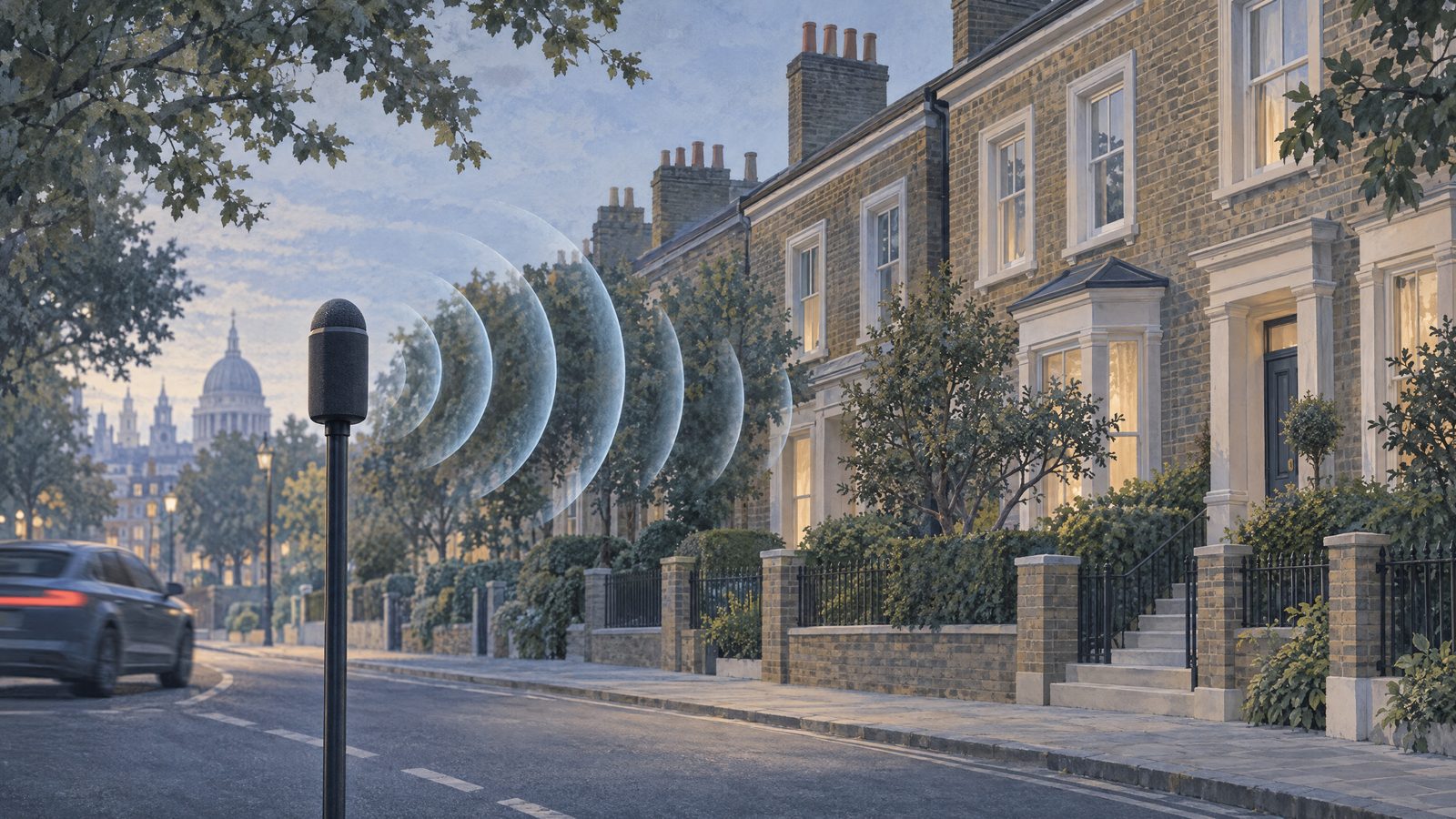

Nine acoustic cameras in Kensington and Chelsea recorded 1,386 activations over August and September, leading to 334 Fixed Penalty Notices, the borough council said in a report published on 15 October.
The figures cover 1 August to 30 September 2026. The council said the cameras were triggered at an average of about 23 times a day across the period. The highest recorded noise level was 113.7 decibels.
Activations are not the same as proven offences or fines. A camera trigger records an event for review; council officers assess the evidence before deciding whether to take enforcement action. The 334 notices are the number the council says were issued, not a count of every activation or necessarily a final account of payments, challenges or outcomes.
How the system is used
The council says the acoustic cameras capture evidence when triggered and that officers can review it without needing to be present at the roadside. That allows possible nuisance driving to be investigated at different times of day and night. The published figures do not specify how many notices arose from each camera, where the devices are positioned, or why the other activations did not result in a notice.
A £100 notice can be issued for breaching the borough-wide Public Spaces Protection Order, or PSPO. The order prohibits engine revving, rapid acceleration, racing and vehicle stunts when they cause a public nuisance. The stated condition matters: the order does not make every loud vehicle or every camera activation automatically an offence.
The council’s lead member for resident services, planning and enforcement, Johnny Thalassites, said excessive vehicle noise could disturb people at home and argued that the results showed why the authority had invested in the cameras. He compared the loudest reading with the volume of a rock concert. The 113.7-decibel figure is the highest reading reported by the council for this two-month period; it is not a measure of typical street noise.
A policy that began with a pilot
Kensington and Chelsea says it began piloting acoustic-camera technology in 2020 after residents complained about noisy vehicles in Sloane Street and Pont Street. During that initial pilot, the cameras were triggered almost 2,000 times, according to the council. The authority says the current camera programme operates alongside its wider nuisance-vehicle enforcement.
The latest figures follow other action this summer against late-night car meets affecting parts of the borough. The council said it secured a High Court injunction with Westminster City Council and the Metropolitan Police. That action is distinct from the two-month camera totals: the council’s report does not say that the 334 notices relate to those meets.
For residents, the new figures indicate that recorded noise events can lead to formal notices even when an officer is not standing nearby. They do not, on their own, establish how much the scheme has reduced noise, how many drivers repeat the behaviour, or whether particular streets have seen improvement. The council has not published a breakdown of outcomes for the notices alongside the activation total.
The data therefore show both the reach and the limits of this enforcement measure. More than a thousand recorded activations resulted in hundreds of notices, while the gap between those counts reflects a review process rather than proof that every trigger was an offence. The order’s nuisance condition and the evidence review remain central to how the council says it applies the rules.







