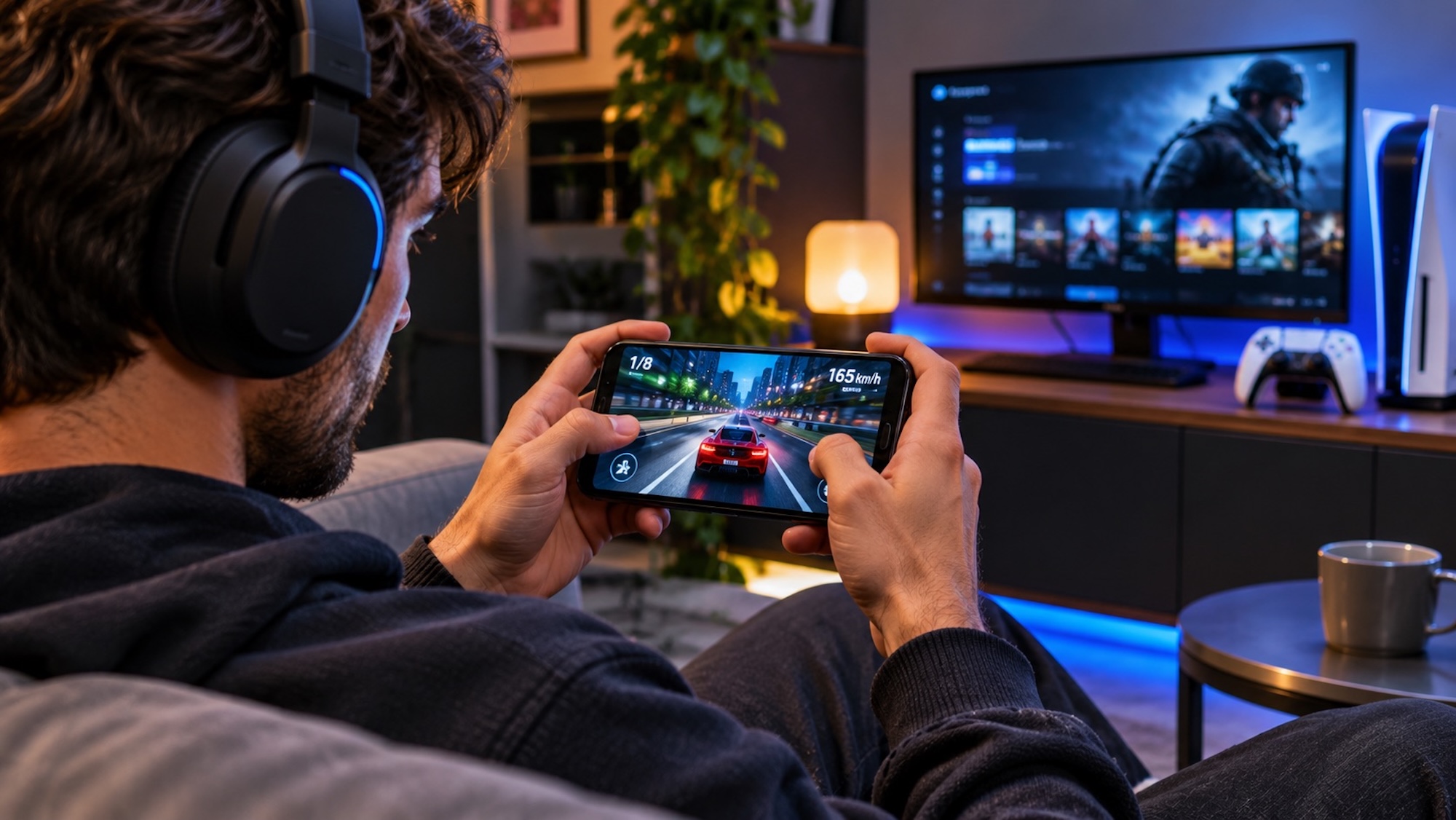

If someone were to describe a typical gamer, the image might still be of someone sitting in front of a computer or console rather than someone playing cards on their phone, completing digital crosswords or taking part in an online quiz. The distinction is interesting because these activities have a lot in common. They involve rules, choices and challenges, yet they are associated with very different ideas about leisure and identity.
Meanwhile, the games industry has grown into a significant part of the entertainment economy. Digital distribution platforms, mobile phones and new gaming models have made it possible to reach people who might never previously have considered buying a gaming console.
Gaming Has Become More Common, but Growth Has Not Been Consistent
Digital gaming was once seen as a specialised hobby associated with dedicated equipment and people who spent hours immersed in games. Today, new titles are released continuously, established games receive regular updates and platforms compete for people’s leisure time. It is easy to get the impression that interest in gaming is constantly growing. But there is a difference between how many people actually play, how much time they spend doing so and which activities are considered gaming in the first place.
According to research by the UK’s media regulator Ofcom, 53% of the adults in the UK played digital games in 2024, compared with 39% in 2019. However, the increase has not been uninterrupted. In 2020, during the pandemic, 60% reported playing games, a proportion that subsequently declined. The figures therefore show both that gaming has become more widespread than it was before the pandemic and that participation fluctuates over time.
There are also considerable differences between age groups. Among 16- to 24-year-olds, 85% played digital games, compared with 25% of people aged 65 and over. The devices people use for gaming also reveal important differences in how people play. Mobile phones were the most common gaming platform, used by 34% of UK adults, compared with 24% who played on consoles.
When gaming no longer requires a dedicated console or computer, several practical barriers to participation disappear. The same device used for communication, work and everyday tasks can also provide entertainment. At the same time, the boundaries between different forms of digital entertainment have become less distinct. When games are offered alongside films and television programmes, they become another option among the many ways people spend their leisure time.
More Gaming, or More Ways to Play?
The games industry also encompasses considerably more types of experiences than the word gaming suggests. There are straightforward mobile games that require little previous experience, as well as games in which participants spend considerable time developing skills, collaborating or exploring extensive virtual worlds.
There are also digital versions of much older forms of entertainment. Chess, card games and bingo have been part of people’s leisure activities for generations, but digitalisation has given them new ways to reach audiences. Casino games have moved from predominantly physical environments to online platforms such as Videoslots casino. What these different forms of gaming have in common is that they are now offered through digital interfaces, allowing users to choose from a large number of titles and formats.
Gaming has also become more culturally visible beyond the activity itself. Live-streamed tournaments, game-related films and social media make it possible to follow gaming culture without actively participating. Someone may be interested in a particular game, follow its development and watch other people play without spending much time playing it themselves. The cultural significance of gaming does not necessarily grow at the same rate as the number of active players.
Ofcom’s figures show that digital gaming has a considerably broader audience than it did a few years ago, but also that its growth has not followed a simple upward trajectory. Gaming now takes more forms and is less closely associated with a particular identity. As the boundary between games and other digital activities becomes less distinct, our understanding of what it means to be a player is changing too.