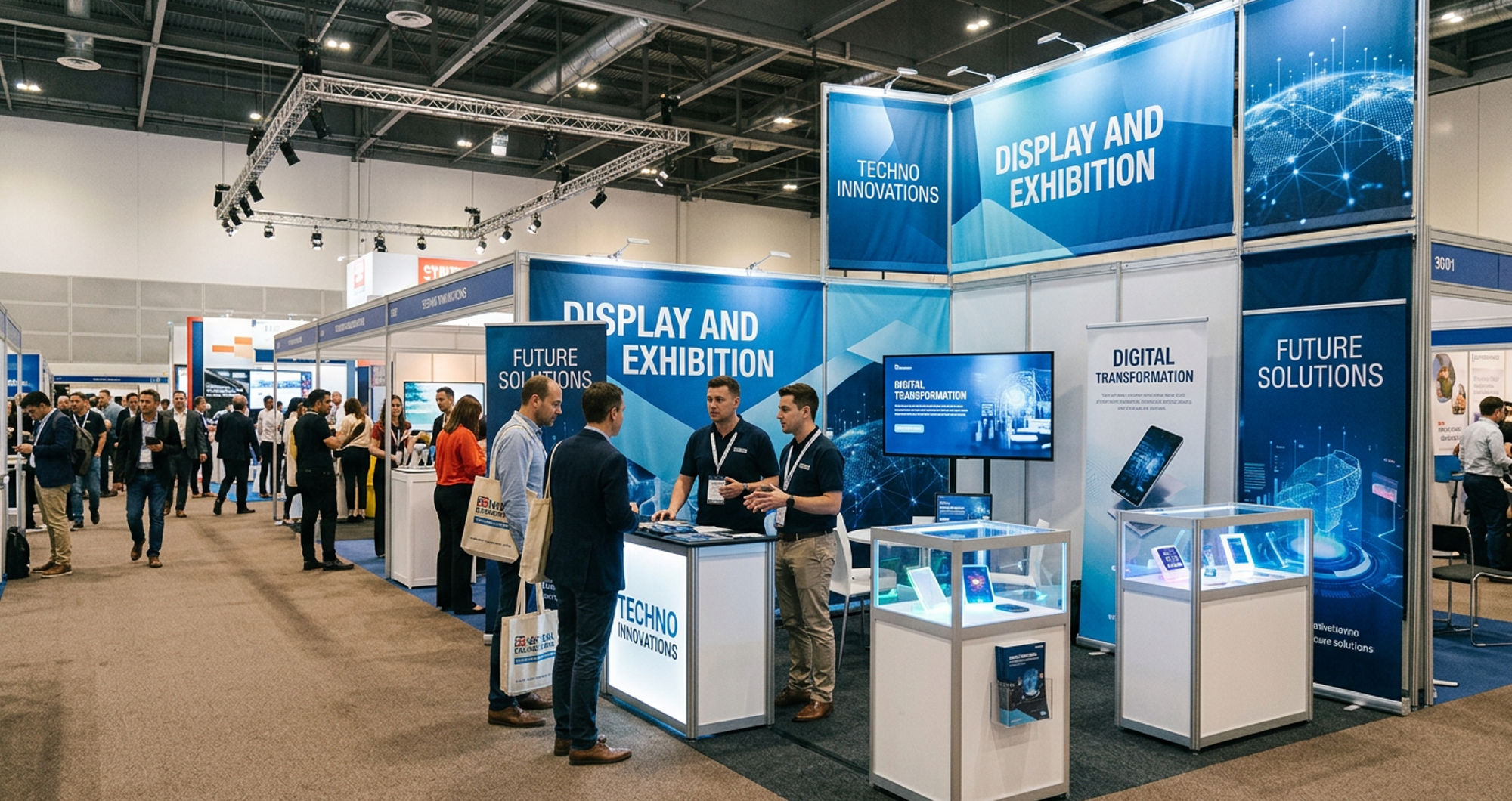

Brand consistency is rarely lost in design studios. It is lost on exhibition floors.
On screen, everything aligns. Colours match. Logos sit perfectly. Spacing feels intentional. Once that same brand enters live events, control weakens quickly. Floor sizes change. Sightlines shift. Lighting behaves unpredictably. Teams assemble stands under pressure. Graphics are reused, adapted, stretched, or trimmed.
What begins as a controlled identity becomes something negotiable.
This is not a failure of branding. It is a failure of structure.
Modular Stretch Fabric display systems exist largely to address this gap not by enforcing sameness, but by providing continuity when conditions refuse to cooperate.
Why Exhibition Environments Disrupt Brand Consistency
No two events behave the same way, even when floor plans appear identical.
One venue may have uneven flooring. Another may restrict height. One show may allow early build-up. Another may compress installation into a few rushed hours. These changes do not sound dramatic, but they quietly alter how a brand appears.
A backdrop that worked perfectly last month suddenly feels cramped. A message positioned high becomes unreadable. Graphics designed for width feel forced into narrow bays.
Over time, brands begin to look different not because they intend to — but because every event pushes them slightly off alignment.
Consistency fades through small compromises rather than large mistakes.
Why Rebuilding Displays Each Time Creates Visual Drift
Many businesses approach exhibitions as isolated moments.
A stand is designed for one show. Then another design is created for the next. Then another variation follows. Each looks fine individually. Together, they tell no coherent story.
Colours shift slightly. Proportions change. The logo appears higher one time, lower the next. Background imagery grows busier. White space disappears.
None of this is planned inconsistency. It is cumulative adaptation.
Without a structural system beneath the visuals, identity becomes flexible in the wrong direction.
What Modular Display Systems Actually Stabilise
Modular systems do not fix branding problems directly.
They stabilise the environment in which branding appears.
Frames repeat. Heights remain familiar. Connection points behave the same way. Graphic zones sit in predictable relationships to one another.
Even when the layout changes, the structure feels recognisable.
That recognition matters more than identical visuals.
Visitors rarely remember exact graphics. They remember shape, proportion, and presence.
Modularity supports those elements quietly.
Structural Familiarity Builds Brand Memory
Brand memory forms through repetition.
Not repetition of content — repetition of experience.
When audiences encounter the same brand across multiple events and instinctively recognise it before reading anything, structure is doing the work.
Modular systems create that recognition by maintaining visual rhythm.
The stand may be larger. Or smaller. Or configured differently. Yet something about it feels known.
This familiarity increases trust without demanding attention.
Why Size Changes Should Not Redesign Identity
One of the biggest challenges exhibitors face is fluctuating stand size.
A 6×3 space one month. A 3×2 the next. A corner stand later in the year.
When display systems are not modular, each size change forces redesign. Graphics must be rebuilt. Layout logic collapses. Messaging becomes compromised.
Modular systems allow identity to scale without distortion.
Elements rearrange rather than reinvent. The brand adjusts without breaking.
This alone protects consistency across an entire exhibition calendar.
How Modular Displays Support Reuse Without Fatigue
Reusing the same system does not mean showing the same stand repeatedly.
Modular frameworks allow variation within limits.
Graphics can change while proportions remain steady. Messaging updates without altering layout hierarchy. Seasonal campaigns sit within the same structure.
This avoids two common problems:
– repetition fatigue
– constant reinvention
The brand remains fresh without losing recognition.
What Exhibition Teams Learn After Repeated Use
Over time, teams develop instinctive knowledge of their display systems.
They know how long assembly takes. Where minor adjustments are needed. Which sections draw attention. Which elements anchor the space.
Modular systems reward this familiarity.
Setup becomes smoother. Decisions become quicker. The stand feels easier to manage.
This operational comfort translates visually.
A stand assembled confidently always appears more composed — regardless of design complexity.
Why Consistency Depends on Assembly Behaviour
Brand consistency is not only visual. It is behavioural.
If a system assembles differently each time, alignment shifts. Angles vary. Graphics stretch unevenly.
Modular systems reduce this variability by guiding assembly naturally. Components fit where they belong. Height and spacing are pre-determined.
Less interpretation means fewer inconsistencies.
This matters most when different team members assemble the stand at different events.
Modular Systems and Graphic Discipline
Modularity influences how graphics are designed.
Designers begin thinking in sections rather than canvases. Messaging is structured in zones. Visual anchors repeat intentionally.
This discipline strengthens identity beyond exhibitions.
Brand language becomes clearer because it must function across formats.
Modular constraints often improve clarity rather than restrict creativity.
How Modular Design Protects Against Last-Minute Changes
Display and Exhibitions rarely unfold exactly as planned.
Spaces are adjusted. Fire regulations change layouts. Neighbouring stands obstruct sightlines. Height restrictions appear unexpectedly.
Modular SEG Fabric systems allow reactive adjustment without visual chaos.
Panels can be repositioned. Configurations adapted. Messaging reordered.
The brand remains coherent even when circumstances change suddenly.
This resilience is where consistency
Why Familiar Structure Builds Credibility
Repeated exposure builds credibility.
When visitors recognise a brand instantly — even before reading messaging — confidence increases.
The stand feels established. The brand feels organised.
Modular systems enable this recognition without overt repetition.
The structure becomes a visual signature.
Final Perspective
Brand consistency at exhibitions is not achieved through perfect design execution. It is achieved through structural continuity that survives change.
Modular display systems provide that continuity by allowing brands to adapt without drifting, evolve without fragmenting, and repeat without becoming repetitive.
They support recognition not through sameness, but through familiarity.
This is why businesses that exhibit regularly begin to view modular systems not as temporary displays, but as long-term brand infrastructure — supported by experienced UK production partners such as I YOU PRINT, who understand that consistency is not created at one event, but built across many.