
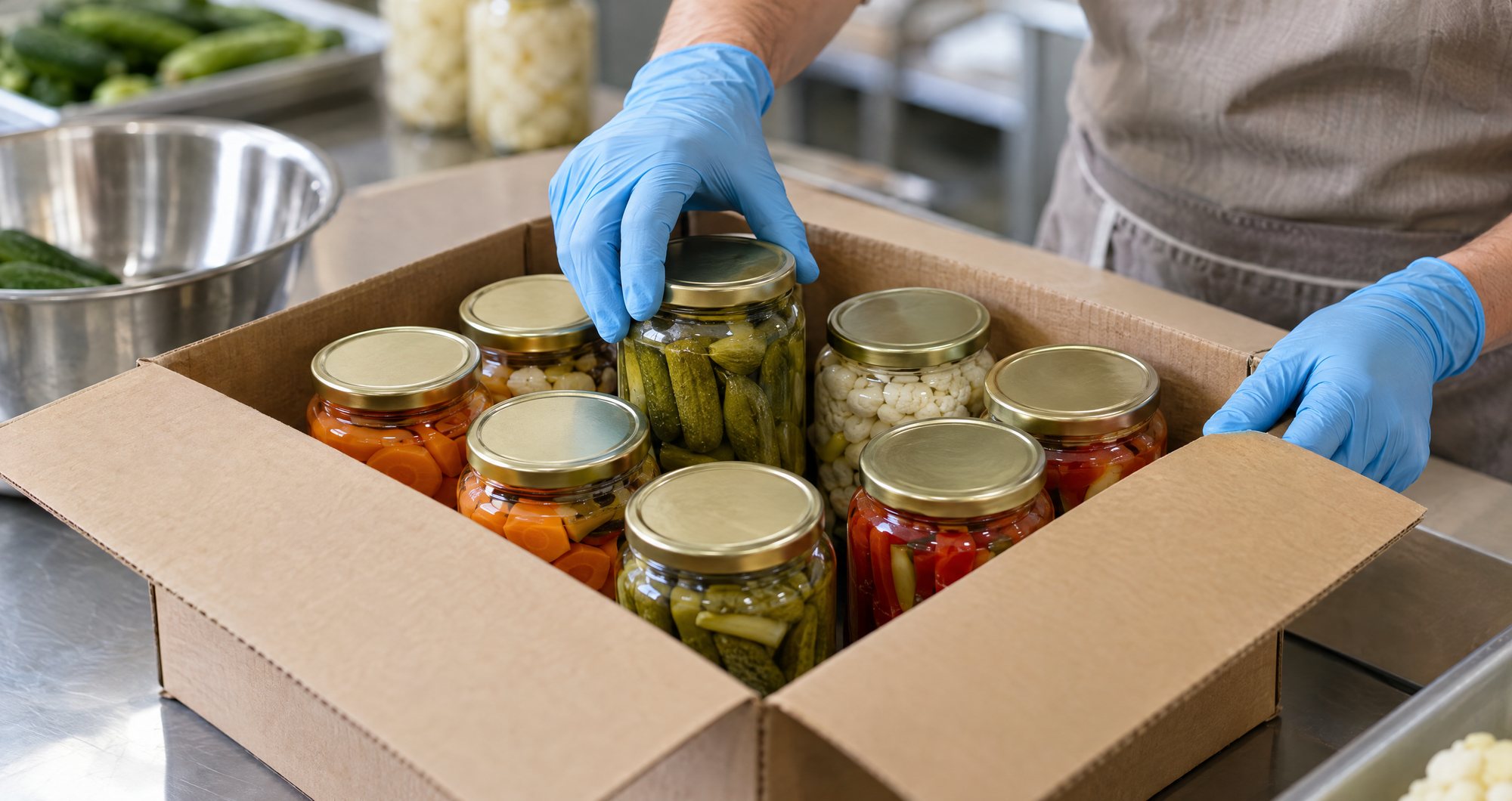

More than half of the small and medium-sized food and drink manufacturers surveyed that export to the European Union reported lower profitability following the introduction of new trading requirements in January 2021.
The finding applies to 55 per cent of the surveyed EU exporters, not to all manufacturers or to the size of the decline in their profits. Among surveyed businesses importing from the EU, 47 per cent reported lower profitability after the changes.
The findings, released on 13 November, come from research covering 600 small and medium-sized manufacturers in England, Scotland and Wales. It combined a survey with interviews with trade bodies and a review of existing evidence. The responses describe businesses’ own experiences; they do not by themselves measure the precise effect of the trading changes on profits.
The total of 600 is not the number of firms behind each individual result. Exporters and importers are separate analytical groups, although a firm could be in both, and their respective sizes have not been established.
Paperwork and delays
Businesses identified administrative demands and border friction as obstacles to EU trade. Asked what would make the biggest difference to developing or starting exports, respondents highlighted less paperwork, lower trading costs and fewer border delays. The respective figures were 79 per cent, 78 per cent and 71 per cent.
For importing, the same three changes were identified, with figures of 68 per cent for less paperwork, 65 per cent for lower costs and 64 per cent for fewer delays. These are responses about the changes firms believe would help, rather than measurements of the savings any individual company would make.
For a small manufacturer, trade administration can sit alongside the ordinary work of producing, packing and delivering goods. A delay at a border can also matter when a product has a limited shelf life. The effect on any shipment depends on the goods involved and the requirements that apply to them.
Among surveyed businesses that had stopped trading with the EU since 2021, 69 per cent of former exporters and 55 per cent of former importers identified Brexit as a major reason. Those percentages relate to firms that had already stopped the relevant trade, not to all 600 participants.
Firms differ in their exposure
The research also points to differences by business size. Among the businesses studied, 58 per cent of medium-sized manufacturers both imported from and exported to the EU. The equivalent figures were 20 per cent for small businesses and four per cent for micro businesses.
That does not mean firms outside those groups had no EU trade: the figures specifically describe businesses doing both. It does show why a proposal aimed at existing cross-border trade may affect businesses differently depending on their current relationships with suppliers and customers.
Some 58 per cent of the surveyed manufacturers said a new UK–EU food and drink agreement could help them increase, resume or start exporting within a year; half said the same about importing. These are stated possibilities, not commitments to trade or a forecast that those increases will happen.
The wider assessment also suggests that easier rules may be most useful to businesses already trading with the EU, or close to doing so. An agreement alone is unlikely to create new EU trade among firms that have never traded with the bloc.
What a proposed agreement could change
The findings arrive ahead of a UK–EU summit scheduled for 20 November. A draft agreement on food and agricultural trade has been prepared, with the aim of reducing checks and certification requirements. It is not yet in force, and the practical effects will depend on the final terms and implementation.
The proposed arrangement concerns sanitary and phytosanitary rules: measures relating to food safety and animal and plant health. The draft would involve the UK observing and adapting to EU rules in the areas covered. Supporters see a route to easier trade, while critics of closer alignment question the implications for Britain’s ability to set its own rules.
A parliamentary committee has also raised questions about the scope of alignment, animal welfare, scrutiny and the time needed to prepare for a different border regime. These considerations sit alongside the possible benefits of fewer checks; they cannot be settled by the survey responses alone.
Environment Secretary Dame Angela Eagle has said the government wants an agreement to reduce administrative barriers and ease pressure on food price inflation. Any effect on prices remains uncertain, and a reduction in trade costs would not automatically determine what households pay. For businesses, clearer guidance on any future rules will be important as well as the terms of the agreement itself.







