

There’s a particular type of expertise that doesn’t translate well to video, and most online course creators have experienced this firsthand. You know your subject deeply. You can explain it clearly in writing, in conversation, in a workshop setting where you can read the room and adjust in real time. But sit you down in front of a camera with a script, ask you to also think about framing and lighting and pacing and whether your audio is clipping, and something gets lost. The explanation that flows naturally in every other context becomes stilted and self-conscious on camera. The knowledge is still there; the medium is working against it.
This is not a failure of expertise. It’s a genuine incompatibility between what deep subject-matter knowledge requires and what traditional video production demands. The cognitive load of performing for a camera while also teaching clearly is significant, and it competes with the very thing that makes you worth learning from. I’ve watched talented educators produce technically competent but pedagogically flat video courses because the production demands consumed the mental bandwidth that should have gone to teaching.
The solution that’s emerging isn’t to make course creators better on camera, though that helps. It’s to reduce the dependence on camera presence entirely — to let the knowledge lead and use AI video generation to build the visual layer around it.
What Explainer Videos Actually Need to Do
Before getting into how AI video generation fits into this, it’s worth being precise about what makes an explainer video work, because the requirements are different from other video categories and the differences matter for how you approach production.
A good explainer video needs to do three things simultaneously: maintain the viewer’s attention, communicate information clearly, and build the credibility of the person teaching. Attention is a function of pacing and visual interest — the video needs to move, to give the eye something to follow, to avoid the static-talking-head problem that causes even motivated learners to zone out. Clarity is a function of how well the visual layer supports the verbal explanation — whether the images on screen reinforce and illustrate what’s being said rather than competing with it or existing as unrelated decoration. Credibility is partly about the production quality itself, which signals to the learner whether the creator takes their own content seriously enough to present it well.
All three of these can be served by AI video generation in ways that are genuinely useful rather than superficially cosmetic.
The Talking Head Problem and How AI Sidesteps It
The talking head format — a person on camera, speaking directly to the audience — is the default for online courses because it’s the easiest thing to produce. You need a camera, decent lighting, acceptable audio, and someone willing to sit in front of it. The format works when the presenter is naturally engaging on camera, which some people are and many people are not.
The limitation of the talking head format is that it puts the entire engagement burden on the presenter’s charisma and delivery. When that delivery is uneven — which it is for most people who aren’t trained broadcasters — the video becomes an exercise in tolerating awkwardness in exchange for information. Learners will do that if the information is valuable enough, but they’ll do it with lower completion rates and more fatigue than they would if the video were structured differently.
AI-generated visual content offers an alternative structure. Instead of a presenter on screen, you have visual sequences that illustrate the concepts being explained — animated representations of abstract ideas, scene-setting footage that grounds the viewer in the context being discussed, visual metaphors that make the explanation more concrete. The narration carries the teaching; the visuals carry the engagement. The cognitive load of the learner drops because they’re processing information through two channels simultaneously rather than depending entirely on one.
How Veo 4 Fits Into a Course Production Workflow
The practical integration of AI video generation into a course production workflow is more straightforward than it might initially seem. The starting point is a well-written script — which most course creators who are strong writers or explainers already produce anyway. The script defines what the video needs to communicate; the AI generation builds the visual layer that accompanies it.
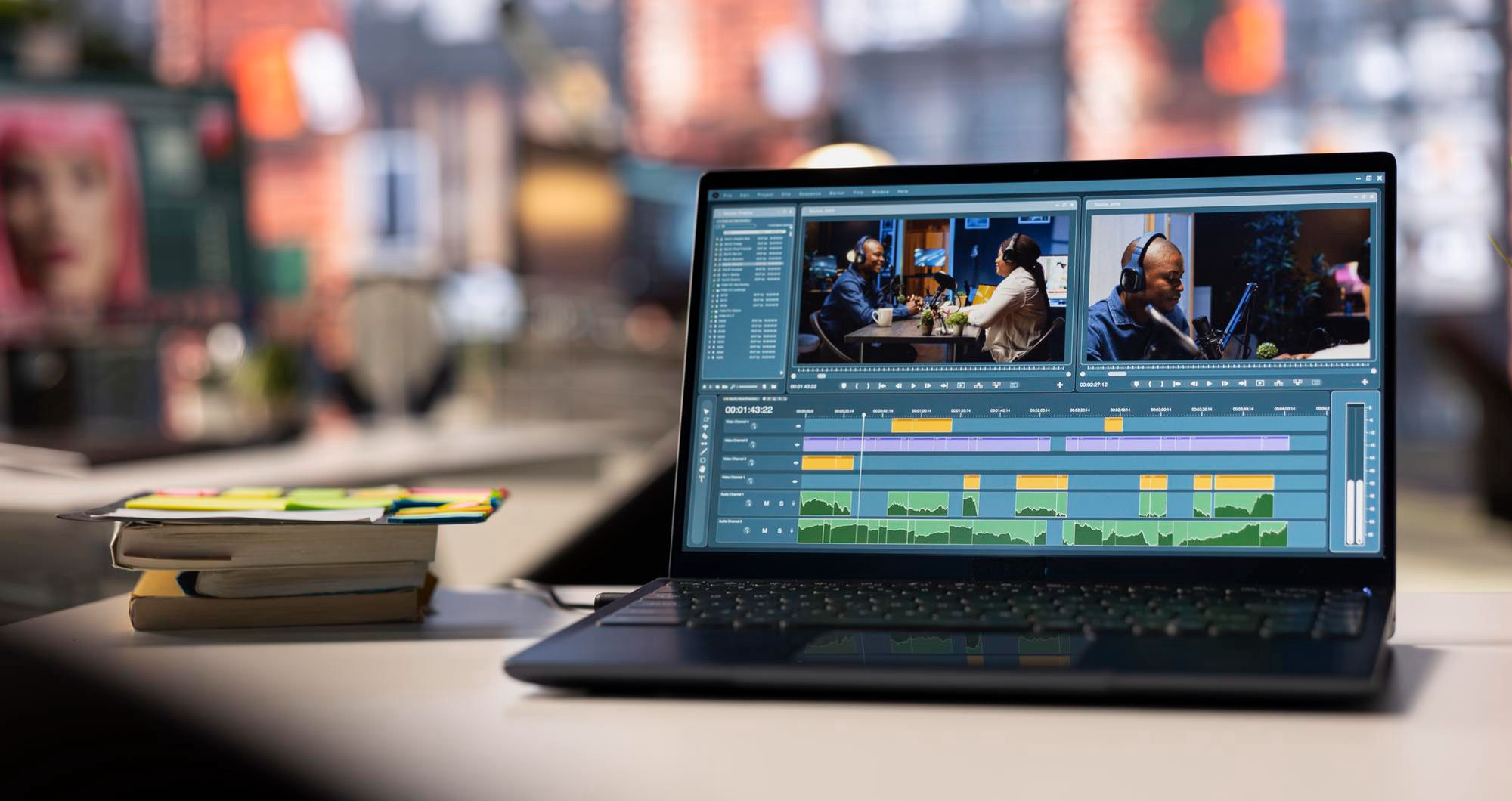
For each segment of the script, the creator develops a visual direction: what imagery would best illustrate this concept, what atmosphere should the viewer be in while receiving this information, what does the visual metaphor for this idea look like. Those directions become generation prompts, and the resulting clips get assembled around the narration track in an edit.
Veo 4 is particularly useful in this context because its multi-modal input — text, image, and audio combined — allows the visual generation to be precisely calibrated to what the course segment requires rather than being a generic stock-footage substitute. The difference between footage that was generated with a specific pedagogical intent and footage that was grabbed from a library because it vaguely relates to the topic is significant in the viewer’s experience, even if they couldn’t articulate why. Generated footage can be exactly what the explanation needs; library footage is an approximation that the viewer’s brain has to work harder to connect to the content.
The Credibility Signal That Production Quality Sends
There’s a dimension of course production that doesn’t get discussed enough, which is what production quality communicates about the creator’s relationship to their own material. A course that is clearly produced with care — thoughtful visuals, clean audio, well-paced editing — signals that the creator took the communication of the knowledge as seriously as the knowledge itself. That signal affects how learners approach the content before they’ve evaluated a single idea in it.
This is particularly important in markets where learners have choices. The online education space is crowded, and learners are making purchase and enrollment decisions based on previews, sample lessons, and overall presentation quality before they’ve had a chance to assess the actual content quality. A course that looks like it was produced thoughtfully competes differently from one that looks like it was recorded on a webcam in a spare room, even if the underlying teaching is equally strong.
AI video generation raises the production floor for course creators who have strong content but limited production resources. The ceiling is still determined by the quality of the teaching, but the floor — the minimum presentation quality needed to be taken seriously in a competitive market — becomes achievable without a production team.
Updating and Iterating Without Reshooting
One of the practical advantages of AI-generated course content that I don’t see discussed enough is how much easier it makes updating. Courses built on talking-head footage have a specific problem with updates: if the information changes — a tool gets updated, a process evolves, statistics become outdated — you have to reshoot the segment, which means scheduling camera time, recreating the setup, and doing a new edit. The friction of reshooting is high enough that many creators leave outdated content in their courses far longer than they should.
A course whose visual layer is AI-generated has a different update dynamic. The narration track gets rerecorded for the changed segment — which can be done in an hour — and the visual clips get regenerated around the new audio. The course stays current without requiring a production day. For courses on topics that evolve quickly — software tools, business practices, technical workflows — that agility has real value for both the creator and the learner.
What the Best Course Creators Are Doing With This
The pattern I see among course creators who are getting the most from AI video generation is a clear division of labour: they put their energy into the content and the explanation, and they let the generation handle the visual production. The scripts are carefully written. The narration is recorded with attention to pacing and clarity. The prompting for the visual generation is done with genuine thought about what will best serve the learner. And the edit assembles all of that into something that feels coherent and purposeful.
What they’re not doing is treating AI generation as a shortcut for thinking about the course. The best AI-assisted course content I’ve seen is still the product of a creator who thought carefully about their learner’s journey — what they need to understand at each stage, what the common sticking points are, what visual representation of an idea would make it click in a way that words alone don’t achieve. The generation executes on that thinking; it doesn’t substitute for it.
For course creators who have been putting off video production because the production requirements felt incompatible with what they’re actually good at, that division of labour is the key shift. You don’t have to become a videographer. You have to become a better director — someone who knows what they want the visual layer to do for the learner and can communicate that through prompts rather than through a camera. That’s a different skill, and for many educators, it’s a much more natural one.







