

A sheet metal bracket quote is shaped by more than its weight or order quantity. Geometry, material, bends, hardware, finish, inspection, and delivery all influence what a buyer ultimately pays. A structured RFQ makes it easier to compare suppliers and identify whether a proposed cost reduction preserves the part’s function.
Why quantity alone cannot explain the price
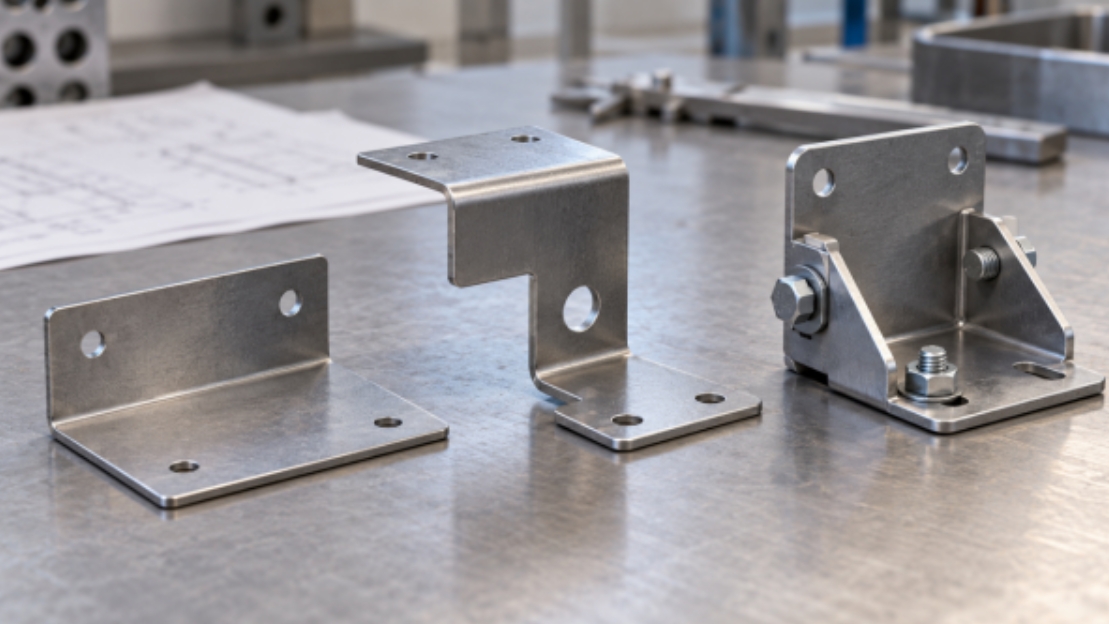
Two brackets ordered in the same quantity can receive very different quotes. One may be a simple flat plate with two holes; another may require multiple bends, captive hardware, a cosmetic coating, tight positional tolerances, and individual inspection. Material, geometry, process sequence, batch size, and delivery scope all contribute. A useful comparison begins with a clear definition of the finished part rather than a price-per-piece number in isolation.
For a prototype, preparation and setup may be a significant share of the total. In repeat production, that effort can be distributed across more parts, while material utilisation, cycle time, finishing batches, and inspection remain relevant. The goal is not to force every shop into the same costing model. It is to make sure each quote covers the same drawing revision, quantity, quality requirements, and delivery terms.
Separate recurring and one-time costs
Ask the supplier to distinguish one-time engineering or setup charges from recurring part costs. Setup may include drawing review, programming, fixture preparation, tooling, or first-article checks. Recurring costs can include raw material, cutting, forming, hardware, welding, finishing, packaging, and inspection. The boundary varies by supplier, so request a clear scope rather than assuming that a line item is included.
For prototypes, a low unit price may not indicate the total project cost if setup, expedited freight, or finishing is excluded. For production, compare the quoted price at each volume break and confirm whether the same process and inspection plan apply. If the design or quantity is likely to change, ask how revisions or additional setup will be handled.
Material and blank size influence the starting point
Material grade, thickness, stock format, and blank dimensions affect both raw-material cost and processing. A large flat pattern may use more sheet area than the visible finished bracket suggests. Nesting efficiency, grain direction, protective film, corrosion requirements, and available stock sizes can affect yield. A design that leaves unusual scrap shapes may cost more even when the final part is light.
On the drawing, specify material by a recognised grade and standard, plus thickness and any required condition. Identify cosmetic faces and whether mill finish is acceptable. If substitutions are permitted, define acceptable equivalents and the evidence required. This avoids comparing a quote for one grade with a lower-cost material that has different strength, corrosion, or forming behaviour.
Cutting, bends, and tolerances set process effort
Cutting cost is affected by the number and length of cut paths, hole size, corner geometry, material thickness, edge quality, and deburring requirements. Forming adds operations and depends on bend count, angle, radius, flange length, access, tooling, and springback. A bracket with many short flanges may require more handling and setup than a larger part with a simpler profile.
Tolerances should be tied to function. Tightening every dimension can add inspection effort and limit the available process window without improving assembly. Call out critical hole locations, mounting faces, bend angles, and fit requirements. If a tolerance is important only after assembly, explain the datum scheme or provide the mating-part relationship so the supplier can propose a meaningful inspection method.
Hardware and joining can add hidden steps
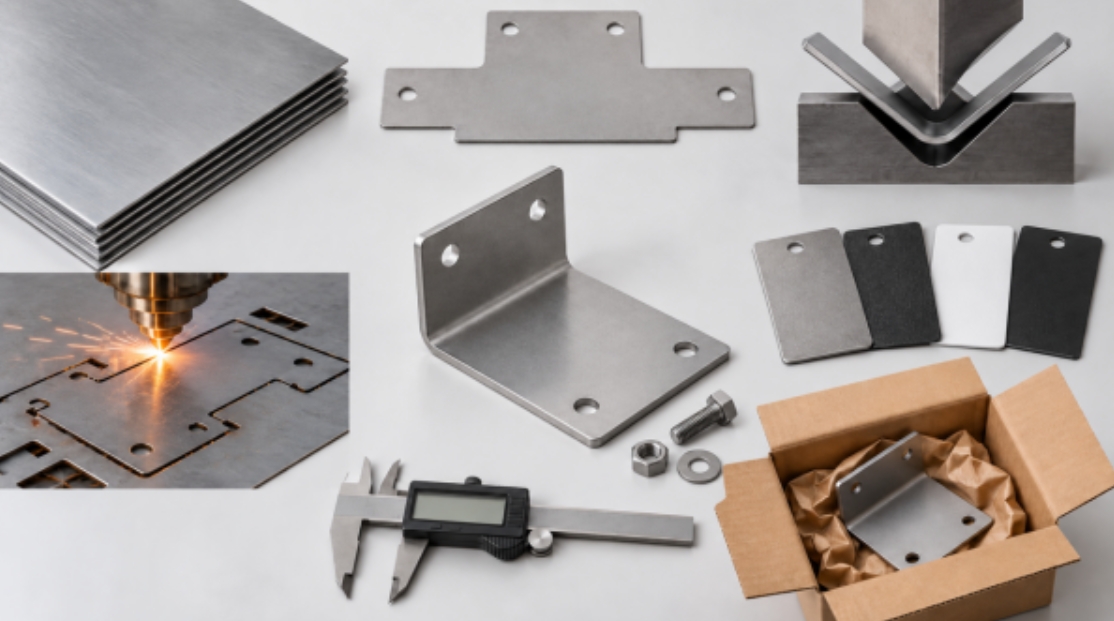
Fasteners, captive hardware, weld nuts, inserts, spot welds, and threaded features may require purchasing, installation, verification, or secondary machining. Identify part numbers, material, finish, orientation, and whether hardware must be flush, captive, or removable. If the bracket is part of an assembly, show the mating components or provide a clear interface drawing.
Welding can introduce distortion, cosmetic changes, heat tint, and post-process cleanup. Rivets or adhesives may require access, surface preparation, or cure time. The best method depends on load, access, corrosion, serviceability, and appearance. A supplier should quote the actual joining sequence and inspection level, rather than treating every attachment as an equivalent operation.
Finishing, inspection, and packaging need definitions
Finishing can include deburring, edge rounding, bead blasting, plating, coating, painting, passivation, or other specified treatments. State the specification, colour, gloss, thickness where relevant, masking zones, cosmetic faces, and corrosion expectations. Also clarify whether coating is applied before or after hardware installation and how threaded areas are protected.
Inspection scope affects cost and should match risk. Identify critical dimensions, sampling requirements, first-article approval, material certificates, and any special test reports. Packaging can matter for coated or cosmetic parts; specify individual bags, separators, corrosion protection, labels, and carton requirements if needed. Ask whether the quoted price includes packaging and export documents, and keep freight and destination charges visible as separate landed-cost items.
Prepare an RFQ that supports a fair comparison
A complete RFQ package includes the latest 2D drawing, 3D model if useful, revision, material and finish requirements, quantity by release, annual forecast if known, inspection level, packaging, ship-to location, requested lead time, and quote validity. Note whether the supplier may suggest design changes. If a prototype is needed before production, quote those stages separately so the approval gate is clear.
When reviewing custom sheet metal bracket cost, normalise the offers against the same scope. Compare setup, unit pricing by quantity, material, finishing, inspection, packaging, freight, destination charges, lead time, and exclusions. Confirm that each bidder used the same revision and that any alternate process or material is called out. This makes a lower quote easier to evaluate and reduces the chance of discovering missing operations after an order is placed.
Look for design changes that reduce cost without weakening function
Cost reduction should start with functional requirements. Can hole sizes use common tooling? Can bends share a consistent radius? Can unnecessary tight tolerances be relaxed? Can multiple components be combined or separated to simplify forming, welding, or finishing? Can the blank be nested more efficiently? These questions may reveal savings while preserving strength, fit, and serviceability.
Every change should be reviewed for load path, stiffness, access, corrosion, assembly sequence, and inspection. A thinner material or fewer welds may lower price but create deflection or durability problems. Ask the supplier to explain the expected effect and validate the revised design with a sample or first article. The best result is a quote based on a manufacturable specification and a part that still performs its job.







