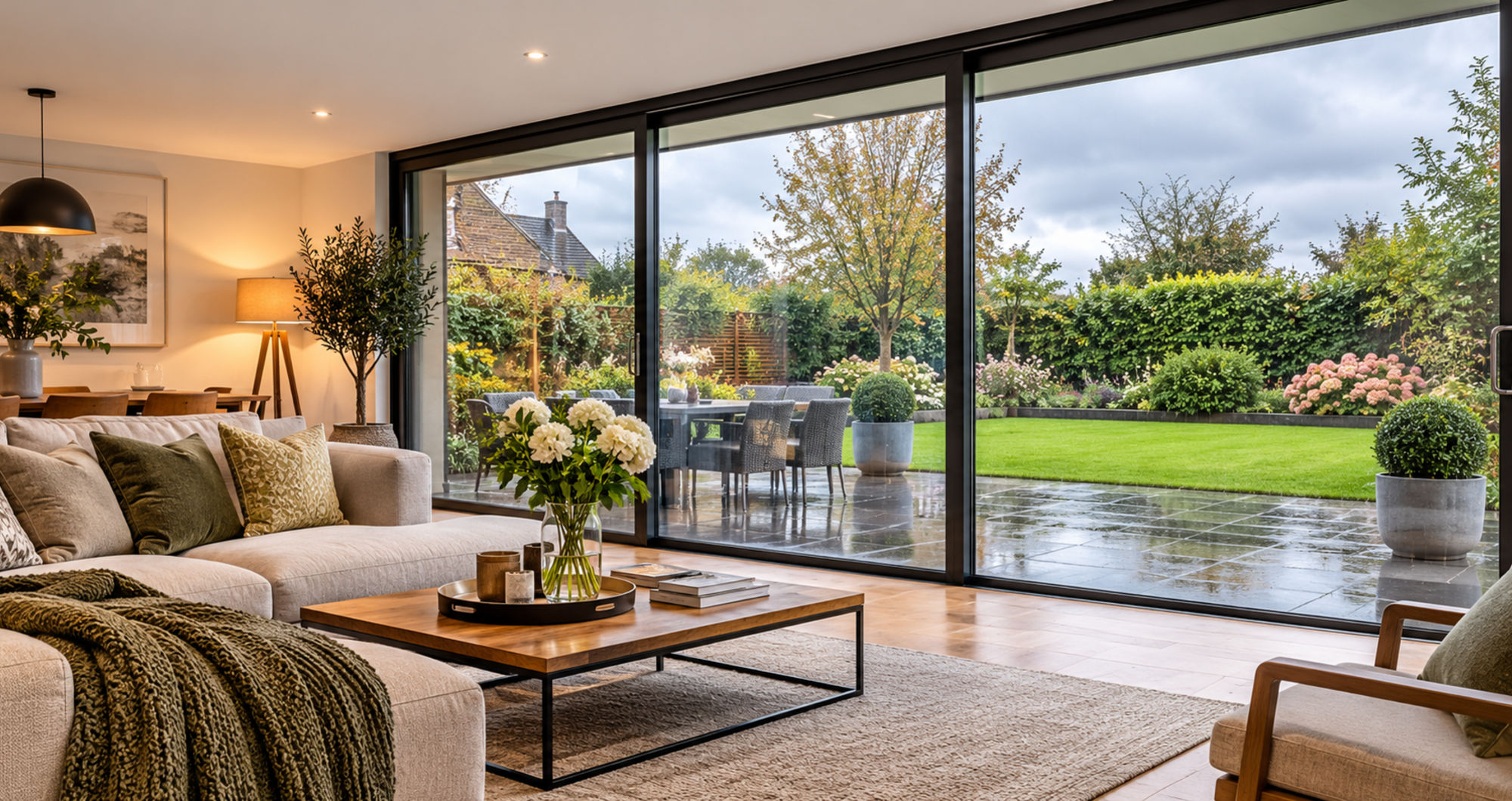

A glass wall is indeed beautiful when viewed in sunny June afternoon but the trouble begins in February when the rain comes crashing sideways against it and still the room has to be kept warm. The trouble comes yet again in August when a southerly aspect living room starts to resemble something comparable to a greenhouse. Indoor-outdoor living is a continuous British design concern that needs to be taken care of through the year, not just in summer.
Minimal frame sliding door systems are a popular answer because they give you more glass and a wider view. But a slim frame doesn’t change the weather. This article looks at what British conditions ask of large sliding doors and what to check before you commit.
What British Weather Asks of a Sliding Door
Driving rain, damp air, cold snaps and strong summer sun all arrive at the same few components: the glass, the frame, the seals and the threshold. A sliding door that copes with one season can struggle in another, so it needs to be judged against all of them.
What Slim Frames Change, and What They Don’t
With less visible aluminium, the glass does more of the work, which makes the glazing specification more important. Aluminium conducts heat, so check that the frame has an effective thermal break. Large panes are also heavy, so the hardware and the surrounding structure have to be designed for that load.
A slim sightline doesn’t remove the need for good drainage at the threshold or reliable seals. When you compare minimal frame sliding door systems, ask for performance data for the specific system and configuration, not general claims.
|
Weather challenge |
Where it shows up |
What to check |
|
Driving rain and wind |
Threshold, seals, meeting stiles |
Drainage path, seal quality, test data |
|
Cold winters |
Glass edges, frame |
Glazing specification, thermal break, warm edge spacers |
|
Hot summers |
Glass, south and west-facing rooms |
Solar control glass, shading, ventilation |
|
Damp and condensation |
Glass edges, track |
Ventilation, thermal break, regular track cleaning |
Keeping Rain Out and Warmth In
A flush threshold looks clean, but it only works if water has somewhere to go. Ask how the threshold drains and how you will clear leaves and grit from it. Sliding panels also rely on seals, which should be checked from time to time.
Glazing makes a big difference to winter comfort. Double or triple glazing, low-emissivity coatings and warm edge spacers all help keep the inner surface warmer, but the right specification depends on orientation and how the room is used.
Staying Comfortable in Summer
Big glass faces gain heat. Solar control glass, external shading and openings that allow cross-ventilation all help. In England, Approved Document sets standards for reducing overheating risk in new residential buildings. How it applies to your project depends on the work, so check with building control early.
Planning the Wider Design
If the doors are part of a larger glazed addition, such as a frameless glass extension, the doors, roof glazing and structure need to be planned together. Large glazed openings also fall under the Building Regulations, which the guide to UK Building Regulations for architectural glazing projects covers in more detail.
Before you finalise a design, ask yourself:
- Which way does the opening face?
- Where will wind and rain hit it hardest?
- How will the threshold drain?
- What shading and ventilation will you use in summer?
- Who will look after the track and seals?
Designing Sliding Doors for the Whole Year
Slim frames give you the view, but the weather decides how well the doors perform. Glazing, drainage, shading and ventilation matter just as much as sightline width, and they are easier to get right at design stage than to fix after installation.
If you are planning a large glazed opening, Finepoint Glass designs, manufactures and installs bespoke glazing with in-house teams. Talk to them about your project and the conditions the doors will face.
Frequently Asked Questions
Are slim-framed sliding doors suitable for British weather?
They can be, when the system, glazing, threshold drainage and seals are right. Ask for performance information for the specific configuration you are considering.
Do large glass doors cause overheating?
They can increase solar gain, particularly on south and west-facing elevations. Solar control glass, shading and good ventilation help manage it.
How do I keep a sliding door track working through the year?
Keep the track and drainage channel clear of leaves and grit, check the seals from time to time, and follow the manufacturer’s maintenance advice.