
Award winning tech company Altrix Labs has launched a new App which analyses sport performance on a smartphone with unprecedented accuracy – increasing access to sports lab-grade objective insights and revolutionising training decisions for everyone from gym goers to elite athletes and coaches, and applicable to typical exercises from jumps to power cleans.
Closing the gulf between raw talent and sports science, PeakLines utilises the smartphone camera everyone carries in their pocket to measure the power, speed and technique of athletes’ jumps and lifts to deliver professional-grade biomechanical metrics, removing the need for expensive facilities and hardware (such as wearables).
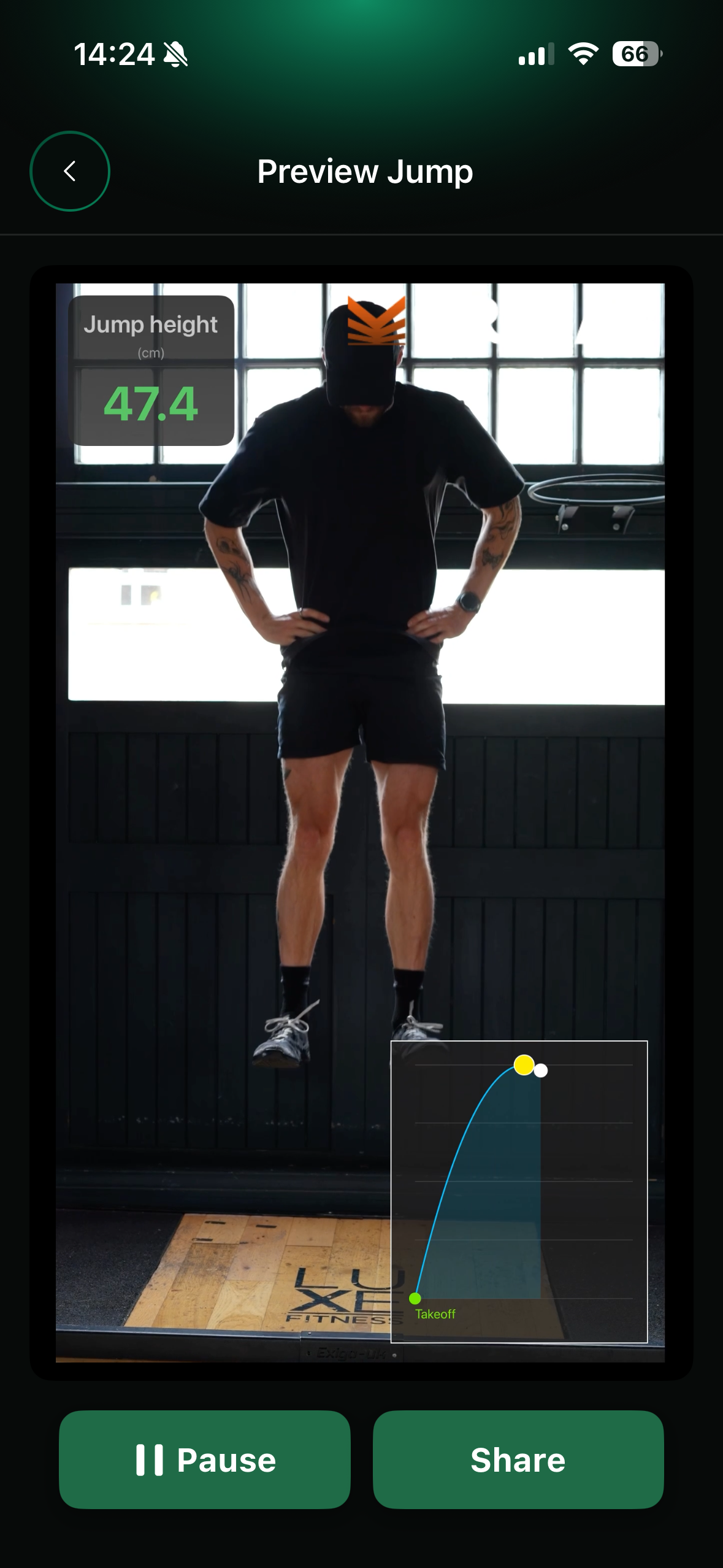
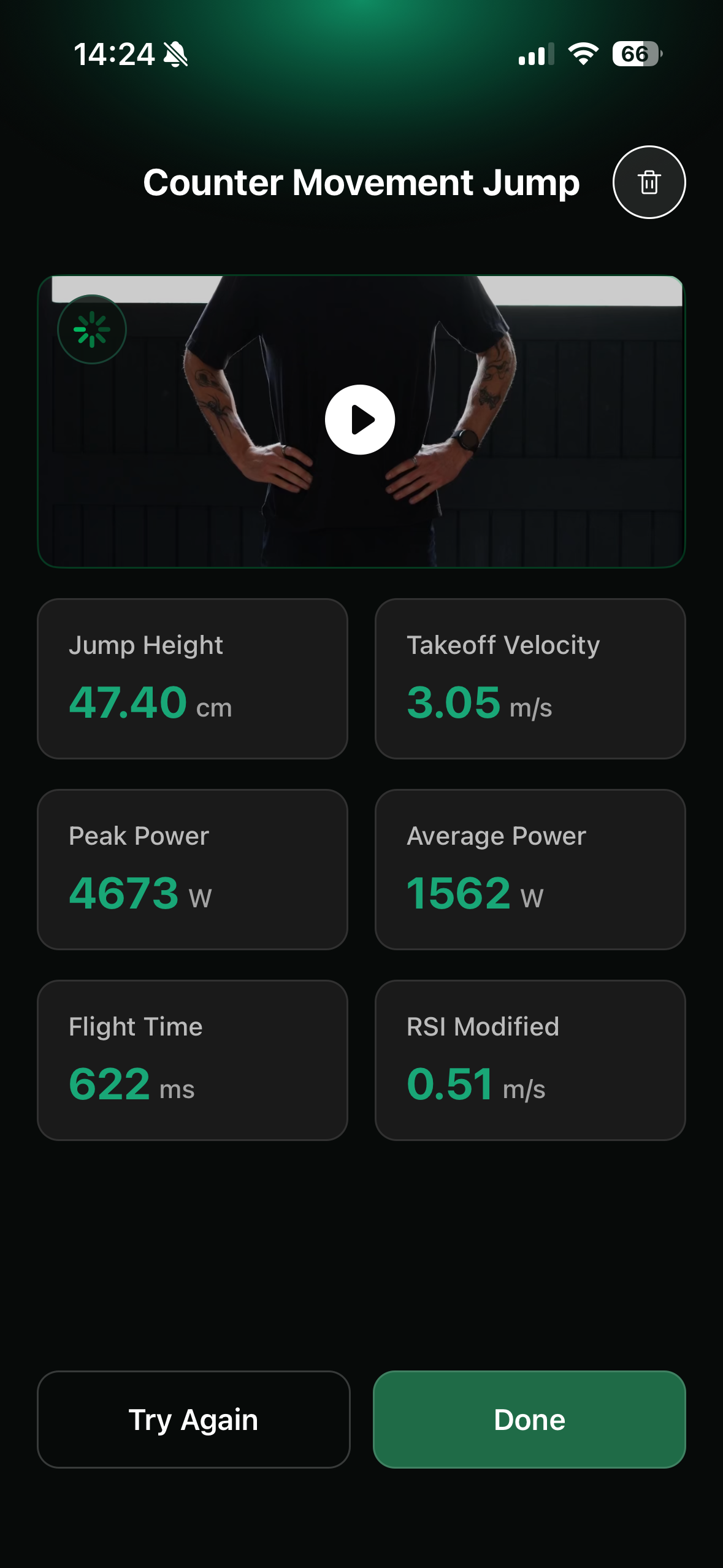
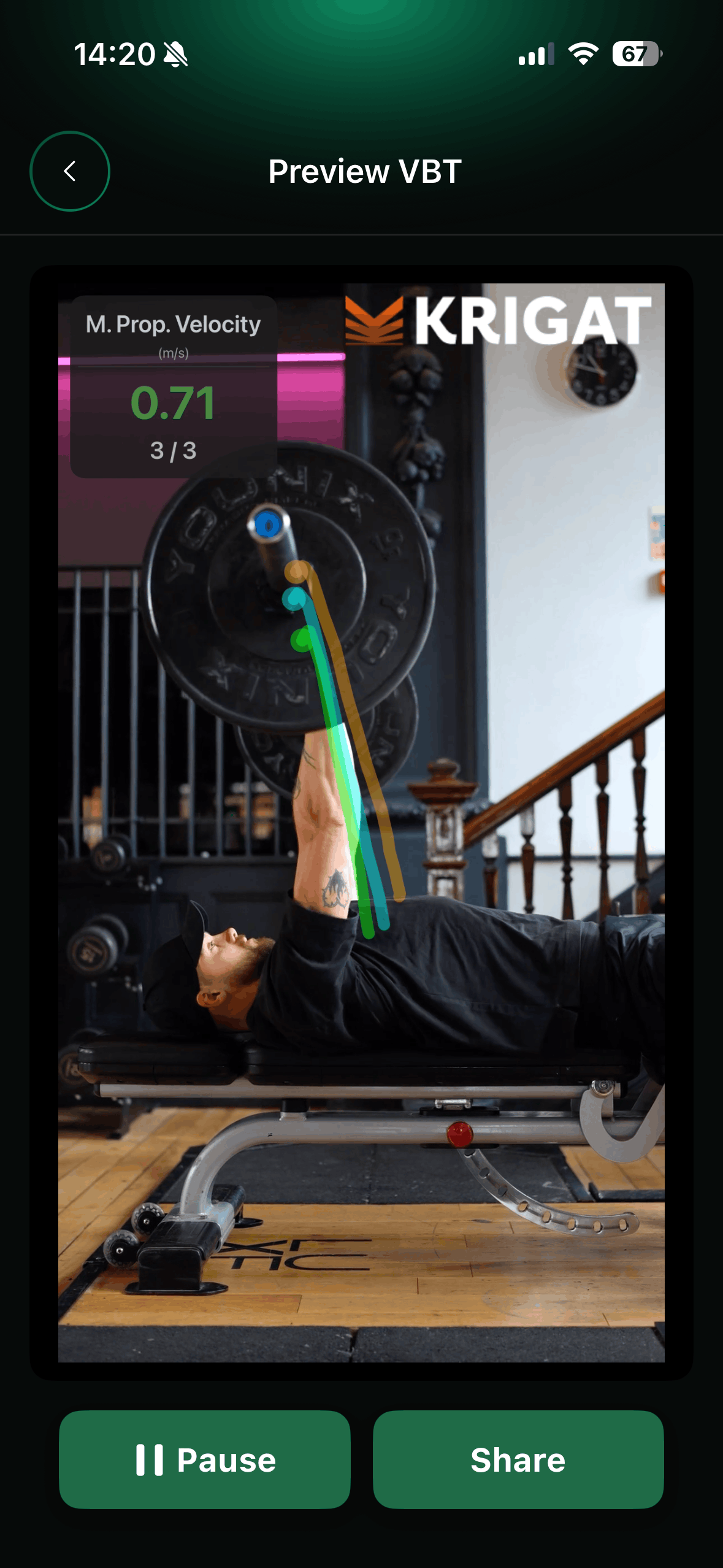
Independent validation against industry-leading forceplate technology demonstrates outstanding accuracy, reliability and consistency, with Intraclass Correlation Coefficient (ICC) values of up to 0.988 and a mean absolute error of approximately 1.19 cm. This means PeakLines consistently measures movement with almost 99% accuracy, substantially surpassing previously achieved accuracy limits on a smartphone and significantly exceeding the ICC 0.90 threshold required for “excellent” clinical or lab-based reliability.
Early adopters of the App, which can be trialed for free, include English Premier League Rugby player, Olympian and Commonwealth Games medalist Deborah Wills, and former Super League player Shaun Lunt, who’s currently a talent scout and Leeds Rhinos Academy coach.
It measures power, speed and technique on every rep and gives athletes of every level the objective insights that typically require a sports lab and a performance coach.
Based on Altrix Lab’s Krigat technology, the PeakLines App utilises computer vision and AI-supported analysis to assess performance across nine exercises, jumps and lifts so that adjustments can be made immediately. It means any athlete – from those training alone in gym to those sending data to coaches – can access vital data, precise measurements and feedback outside traditional elite environments, while coaches can make better informed and instant training decisions; a game changer for those working remotely. For clubs, academies and also schools, the App makes talent identification and assessment much more accessible, so that much more potential can be realised.
Altrix Labs was the overall winner of the Supernova AI MEA startup competition in Cairo earlier this year, when it first presented its Krigat Technology, and was triumphant over 74 other finalists from more than 30 countries. Krigat’s leadership team comprises former Team GB Olympic sprinter Allyn Condon, biomechanic expert Dr. Aditya Chhabra and tech strategist Parantha Narendran.
Allyn Condon commented: “We’re immensely proud of this world-first technology because it removes the costly hardware barrier to sports science, so that many more athletes and coaches across the world can access accurate performance insights through phone tech they already own.
The speed, strength and power exercise data can be used by athletes of all ages and abilities to optimise training sessions and keep progressing safely, while also providing a global benchmark score – like a very high-tech bleep test – to give a much more holistic picture on sporting levels and potential.”
Dr. Aditya Chhabra added: “Setting an unprecedented standard for biomechanical assessment on a mobile, our efficient system proves that software can reliably replace hardware so that coaches, athletes and anyone without access to high-speed cameras can capture lab-grade kinetic data on a standard smartphone. The system completely automates movement detection and accurately processes continuous files without requiring manual video trimming, overcoming a fundamental workflow bottleneck in competing apps.”
PeakLines not only records height and symmetry/movement data but recommends objective insights for athletes to optimize their training to progress faster towards performance goals, with reduced risk of injury. PeakLines is intended to augment coaching, not replace it. Its AI-supported insight can provide additional details to help coaches understand performance and progression, while coaching expertise remains central to how that information is used.
The wider ambition is to broaden opportunity and pathways in sport and create a globally recognised standard – a place where all athletes and coaches can instantly compare real-time, accurate data.
PeakLines is available on the App Store on both iOS and Android versions. For further information visit: https://krigat.com/peak-lines
The app allows a limited free use version, but for coaches or teams interested in the product, a bespoke setup can be agreed via [email protected].
About Krigat: Krigat is computer vision technology developed by AltrixLabs. It uses standard cameras to analyse human movement and provide AI-supported insights across performance and health applications. The team behind Krigat spans two continents.
In the UK Allyn Condon is an Olympic-level sprinter and co-founder of the Luxe Fitness gym chain. Allyn had spent years watching talented athletes make training decisions based on feel rather than data. Alongside telecom and technology strategist Parantha Narendran, they set out to bridge the gap between elite performance science and everyday athletes.
In India, technologist Dr. Aditya Chhabra and designer Priyanshi Tater built the AI and computer vision infrastructure to make that vision real.
Dr Aditya Chhabra is a computational biomechanics researcher and AI technologist with a PhD in AI and biomechanics from IIT Delhi. His research focuses on human movement analysis, biomechanics and performance assessment, with publications through IRCOBI, SAE International and leading international conferences. He contributed to the €3.9m European Commission-funded PIPER project, developing human-body personalisation and positioning tools for safety research. During five years at Stryker, he worked on Mako robotic-assisted surgery technology and received a Technical Excellence Award for innovation in robotic cloud systems. Combining scientific research with real-world product development, he brings deep expertise in biomechanics, motion analysis and applied AI to jump performance and movement assessment.